With more than 10‑year industry experience, Shandong Headpowder delivers full‑service pneumatic‑conveying systems and blowers, undertaking nationwide turn‑key powder‑handling projects.
Barium sulfate, commonly known as barium white, is a widely used inorganic compound with excellent whiteness and stability. In industrial applications, the efficient and reliable transportation of barium sulfate is crucial for production processes. Pneumatic conveying, as a key technology for material handling, plays a vital role in the handling of barium sulfate. This article will introduce the working principle of barium sulfate pneumatic conveying and its classification applications, providing a comprehensive understanding of this technology.
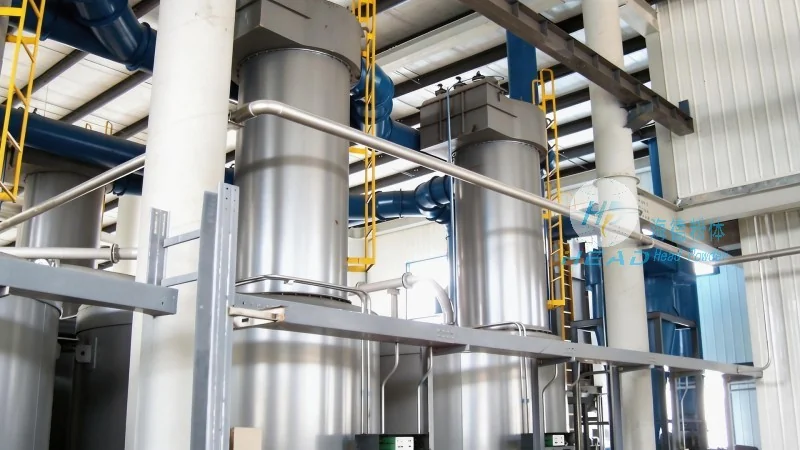
HeadPowder Engineering Co., Ltd. is a professional enterprise specializing in the research, development, and production of pneumatic conveying systems. The company is located in Shandong, China, and has accumulated rich experience in the design and application of material handling solutions. With a focus on technological innovation and customer needs, HeadPowder provides high-quality pneumatic conveying equipment and services for various industries, including chemical, pharmaceutical, and food processing.
Pneumatic conveying is a method of transporting bulk materials by using air as the conveying medium. The working principle of barium sulfate pneumatic conveying involves several key steps. First, the barium sulfate powder is fed into the conveying system through a hopper or feeder. Then, a fan or blower generates a high-pressure air stream, which carries the powder particles along the pipeline. The air and powder mixture moves through the pipeline to the destination, such as a storage silo or processing equipment. The system typically includes components like a feeder, a conveying line, a separator, and a receiver. The separator is used to separate the powder from the air, ensuring that the powder is collected efficiently and the air is recycled or discharged. The entire process is controlled by a system of valves, sensors, and control panels to maintain stable operation and prevent blockages or other issues.
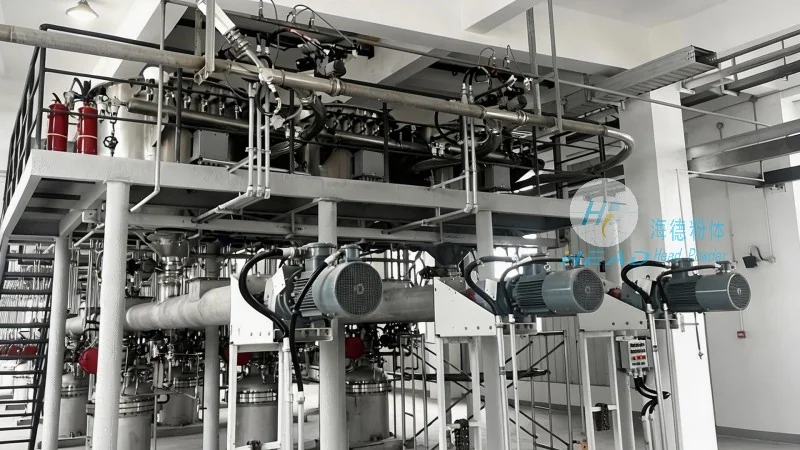
Barium sulfate pneumatic conveying systems are classified based on different factors, including the conveying distance, material properties, and application requirements. The main classifications include dense phase conveying and dilute phase conveying. Dense phase conveying is suitable for materials that are prone to segregation or agglomeration, such as barium sulfate, as it reduces the velocity of the material and minimizes particle damage. This method is commonly used in applications where the material needs to be transported over long distances or through complex pipelines. Dilute phase conveying, on the other hand, is more suitable for short-distance or low-concentration applications, where the material is carried in a high-velocity air stream. The choice of conveying method depends on the specific requirements of the application, such as the particle size, flow rate, and the need for material separation.
In the chemical industry, barium sulfate is widely used as a filler and pigment in various products, including paints, plastics, and rubber. The pneumatic conveying system is essential for transporting barium sulfate from storage to production lines. For example, in the production of white pigments, the barium sulfate is conveyed from the storage silo to the grinding and mixing equipment. The system ensures that the material is transported without contamination and with minimal loss. In the pharmaceutical industry, barium sulfate is used as an X-ray contrast agent in medical imaging. The pneumatic conveying system is used to transport the powder to the manufacturing line, where it is mixed with other ingredients to form the final product. The system must meet strict hygiene and safety standards to ensure the quality of the pharmaceutical product.
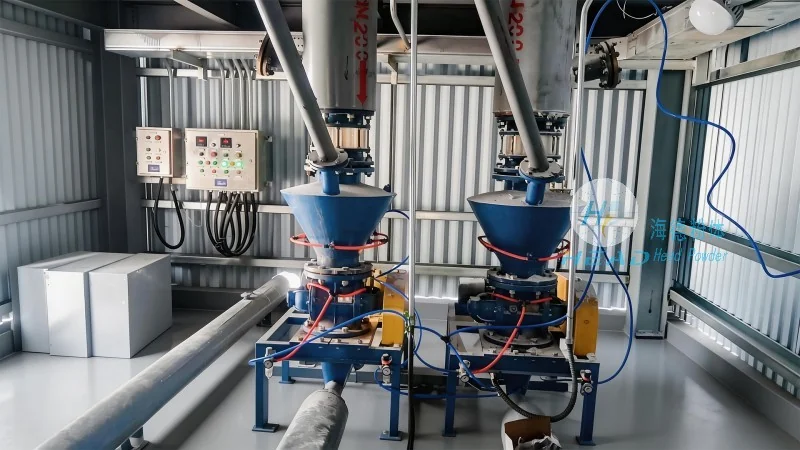
Barium sulfate is a critical component in medical imaging, particularly in barium contrast agents used for X-ray examinations. The pneumatic conveying system is used to transport the powder from the storage area to the production facility. The system must be designed to maintain the purity and sterility of the material, as any contamination could affect the safety and effectiveness of the medical product. The conveying process is typically carried out under controlled conditions, with filters and cleaning systems to prevent the entry of foreign particles. The system also includes safety features to prevent accidental release of the material, ensuring the safety of the operators and the environment.
Although barium sulfate is not commonly used in food products due to its toxicity, it is sometimes used as a filler in certain food additives. The pneumatic conveying system is used to transport the powder to the production line, where it is mixed with other ingredients. The system must meet the strict regulations of the food industry, including the use of stainless steel components and hygienic design. The conveying process is typically performed under vacuum or low-pressure conditions to prevent the contamination of the material. The system also includes monitoring and control systems to ensure that the material is transported at the correct flow rate and without any blockages.
Pneumatic conveying systems for barium sulfate offer several advantages over traditional methods, such as belt conveyors or bucket elevators. One of the main advantages is the ability to transport materials in a closed system, which prevents dust pollution and ensures a clean working environment. The system also allows for the transportation of materials over long distances and through complex layouts, which is difficult with other methods. Another advantage is the flexibility of the system, as it can be easily adjusted to accommodate changes in production requirements. The system can also be integrated with other equipment, such as mixers and grinders, to form a complete production line. Additionally, pneumatic conveying systems are energy-efficient and can reduce labor costs compared to manual handling methods.
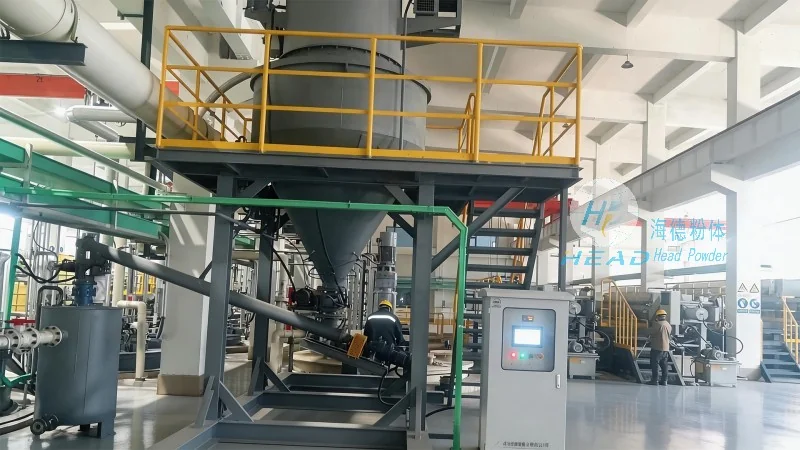
Despite the advantages, pneumatic conveying systems for barium sulfate also face some challenges. One of the main challenges is the potential for material blockages, especially in dense phase conveying. This can be caused by the agglomeration of particles or the presence of foreign objects in the system. To address this issue, the system is equipped with cleaning mechanisms, such as air cannons or vibration devices, to clear blockages. Another challenge is the wear and tear of the components, particularly the conveying line and the separator. The use of high-quality materials, such as stainless steel and wear-resistant coatings, can help to extend the life of the system. Additionally, regular maintenance and inspection are necessary to ensure the proper operation of the system and to prevent any issues from arising.
As technology advances, the pneumatic conveying systems for barium sulfate are also evolving. One of the future developments is the use of intelligent control systems, which can optimize the operation of the system based on real-time data. This includes monitoring the flow rate, pressure, and temperature of the system, and adjusting the parameters accordingly. Another development is the use of advanced materials, such as high-strength polymers and composite materials, to improve the durability and efficiency of the system. Additionally, the integration of automation and robotics in the system can reduce the need for manual labor and improve the safety of the operation. These developments will further enhance the efficiency and reliability of barium sulfate pneumatic conveying systems, making them an even more important part of industrial material handling.

 Shandong Headpowder Engineering Co., Ltd.
 156-6277-7102(Manager Zhang)
  0531-83386006
  Zhangqiu District, Jinan City, Shandong Province, China
telephone
WeChatconsult
top