With more than 10‑year industry experience, Shandong Headpowder delivers full‑service pneumatic‑conveying systems and blowers, undertaking nationwide turn‑key powder‑handling projects.
Polyethylene pneumatic conveying systems are a critical component in material handling and processing industries, particularly for the efficient transport of polyethylene materials. These systems utilize air or gas as the conveying medium to move polyethylene particles from one location to another, offering advantages such as low maintenance, flexibility, and the ability to handle a wide range of particle sizes and densities. The fundamental working principle of polyethylene pneumatic conveying involves creating a pressure differential between the conveying line and the ambient environment. By generating a vacuum or pressure within the system, polyethylene particles are drawn or pushed through the pipeline, ensuring reliable and continuous material transport.
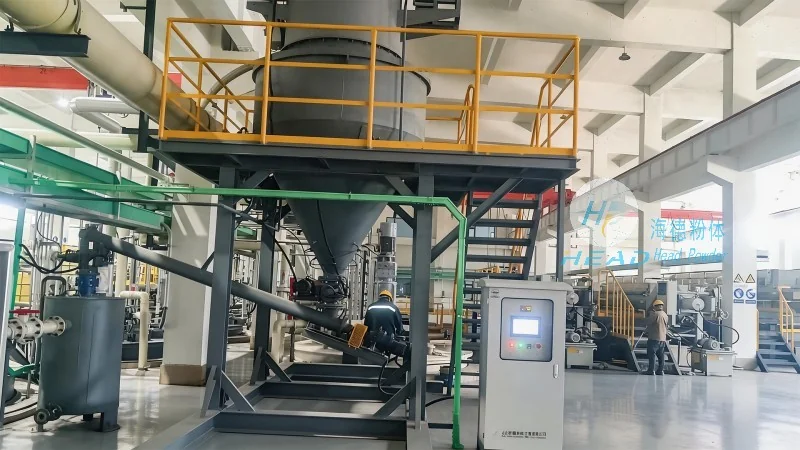
The operation of polyethylene pneumatic conveying systems is based on several core principles that ensure effective material movement. The primary mechanism involves the use of air or gas to create a flow that propels polyethylene particles. This is achieved through either pressure or vacuum systems. In pressure systems, compressed air is introduced at the material inlet, creating a positive pressure that forces the particles through the pipeline. Conversely, vacuum systems use a suction mechanism to draw particles into the system. The choice between pressure and vacuum depends on factors like the distance to be covered, the particle characteristics, and the system layout. Additionally, the design of the conveying line, including the use of bends, elbows, and expansion joints, is crucial for maintaining particle flow and preventing blockages. Proper air velocity and flow rate are also critical to ensure that polyethylene particles are carried efficiently without excessive wear or degradation.
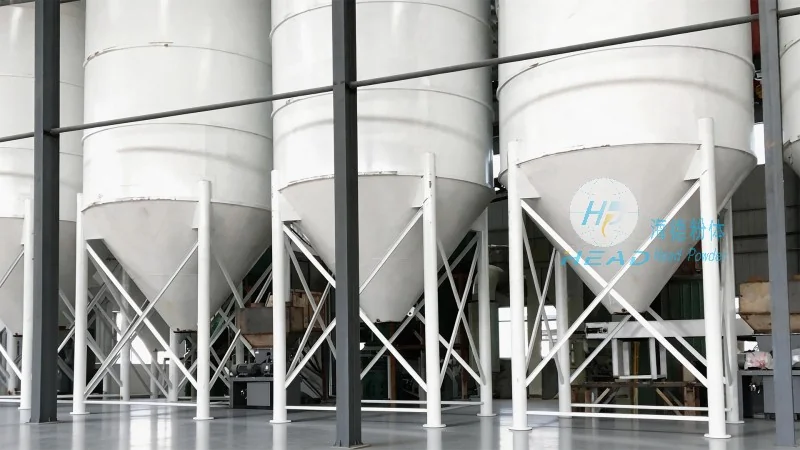
Polyethylene pneumatic conveying systems can be classified into several types based on their operational characteristics and application requirements. The main categories include dilute-phase and dense-phase systems. Dilute-phase systems operate at higher air velocities, typically transporting particles in a dispersed state, making them suitable for short to medium distances and low to medium particle loads. Dense-phase systems, on the other hand, operate at lower air velocities, where particles are conveyed in a more concentrated form, often with a higher solids-to-air ratio. This type is ideal for longer distances and higher particle loads, as it reduces the risk of particle degradation and system blockages. Another classification is based on the direction of material flow, with horizontal, vertical, and inclined systems available. Horizontal systems are used for transporting materials over relatively short distances in a straight line, while vertical systems are employed for lifting polyethylene particles to elevated levels. Inclined systems combine elements of both, handling materials over varying elevations and distances. Furthermore, systems can be categorized by the type of air flow, such as positive pressure, negative pressure, or a combination of both, depending on the specific operational needs and environmental considerations.
Polyethylene pneumatic conveying systems find extensive applications across various industries due to their versatility and efficiency. In the plastics manufacturing sector, these systems are commonly used to transport polyethylene pellets or granules from storage silos to processing equipment, such as extruders or injection molding machines. This ensures a continuous and controlled supply of raw materials, enhancing production efficiency. The food and beverage industry also benefits from polyethylene pneumatic conveying, particularly for handling polyethylene-based packaging materials or components, where hygiene and contamination control are paramount. In the chemical industry, polyethylene pneumatic conveying is utilized for transporting polyethylene powders or flakes, which may be mixed with other chemicals or additives. This application requires systems that can handle potentially abrasive or corrosive materials, often with specialized components to prevent wear and maintain material integrity. Additionally, in the construction and material handling sectors, polyethylene pneumatic conveying systems are employed for transporting polyethylene-based construction materials, such as plastic pellets or granules, to storage or processing facilities. The ability to handle large volumes of polyethylene materials efficiently makes these systems indispensable in modern industrial operations.
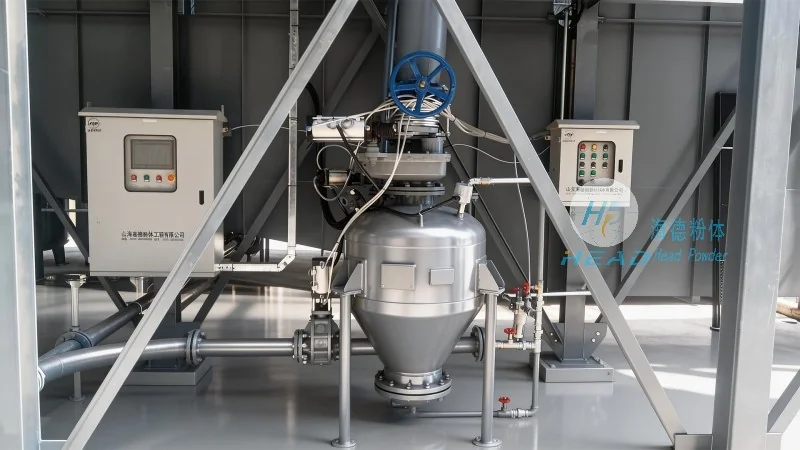
Shandong HeadPowder Engineering Co., Ltd., commonly known as headpowder, is a leading provider of polyethylene pneumatic conveying solutions. With a focus on innovation and quality, the company specializes in designing, manufacturing, and installing advanced pneumatic conveying systems tailored to the unique needs of its clients. HeadPowder's expertise lies in understanding the specific requirements of polyethylene materials and the operational challenges faced by industrial processes, enabling the development of customized solutions that optimize material handling efficiency. The company's facilities are located in Shandong, China, where it leverages local resources and industry knowledge to deliver reliable and cost-effective solutions. By adhering to strict quality standards and employing experienced engineering teams, HeadPowder ensures that its polyethylene pneumatic conveying systems meet the highest industry benchmarks, providing long-term performance and durability for its clients.

 Shandong Headpowder Engineering Co., Ltd.
 156-6277-7102(Manager Zhang)
  0531-83386006
  Zhangqiu District, Jinan City, Shandong Province, China
telephone
WeChatconsult
top