With more than 10‑year industry experience, Shandong Headpowder delivers full‑service pneumatic‑conveying systems and blowers, undertaking nationwide turn‑key powder‑handling projects.
Clay powder, a common material in various industrial processes, requires efficient and reliable transportation methods to ensure smooth operation. Pneumatic conveying, a technology that uses air pressure to move powders, has become a preferred solution for handling clay powders due to its advantages in safety, hygiene, and process control. This article provides an overview of the working principles, classification, and practical applications of clay powder pneumatic conveying systems, highlighting the importance of understanding these aspects for optimizing material handling in industrial settings.
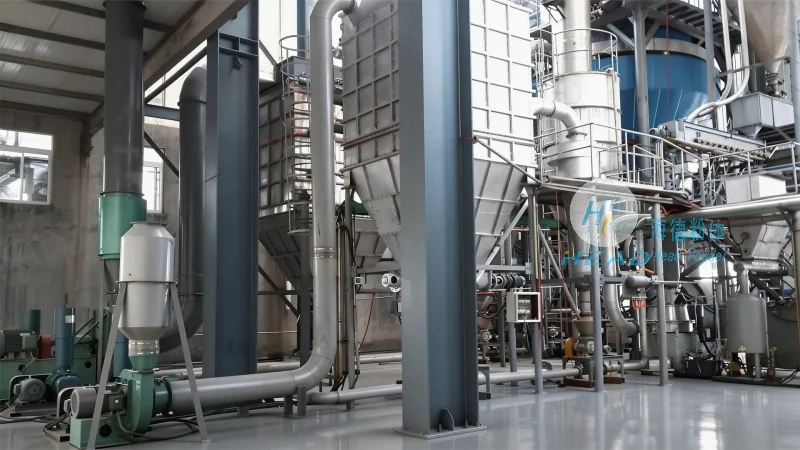
The core principle of pneumatic conveying is to transport bulk materials through a pipeline using compressed air. In the case of clay powders, the system typically operates by creating a pressure differential between the inlet and outlet of the conveying line. A blower or compressor generates the necessary air pressure, which then pulls or pushes the clay powder particles along the pipeline. The movement of the powder is facilitated by the air flow, which can be either positive pressure (where air pushes the material) or negative pressure (where air pulls the material). For clay powders, which often have fine particles and can be prone to caking or agglomeration, the design of the conveying system is crucial to maintain flowability and prevent blockages. Key components of a pneumatic conveying system for clay powders include the material hopper, feeder, air compressor, conveying line, and receiver. The feeder ensures a consistent flow of clay powder into the system, while the air compressor provides the pressure needed to move the material. The conveying line is designed with appropriate diameter and length to minimize pressure drop and energy consumption. The receiver collects the conveyed clay powder and may include features like a dust filter to ensure clean air discharge.
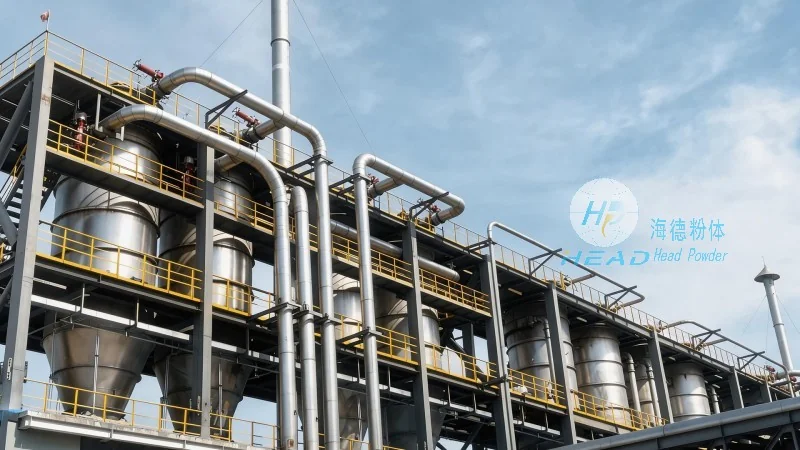
Pneumatic conveying systems for clay powders can be classified based on several factors, including the pressure used, the direction of material flow, and the system design. The main classifications are positive pressure systems and negative pressure (or vacuum) systems.
Positive pressure systems operate by blowing air into the conveying line, pushing the clay powder forward. These systems are suitable for long-distance conveying and can handle materials with higher moisture content or larger particle sizes. They are often used in applications where the material needs to be delivered to a specific location with high pressure. Positive pressure systems typically have higher energy consumption compared to negative pressure systems but offer better control over the material flow and can handle more challenging materials.
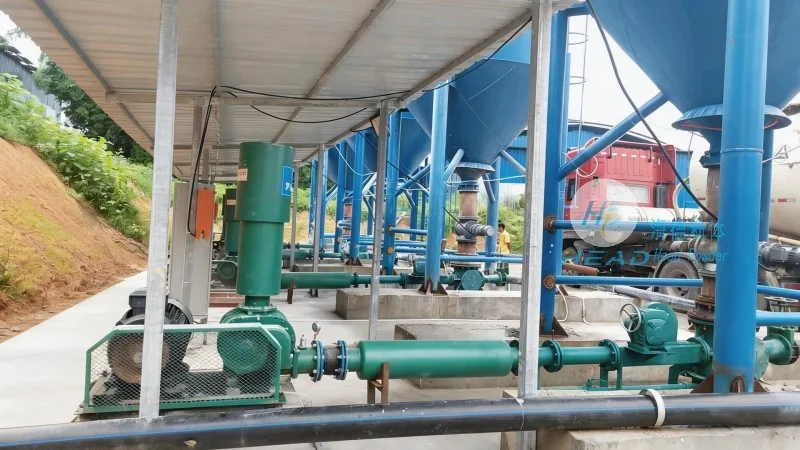
Negative pressure systems, on the other hand, operate by creating a vacuum in the conveying line, pulling the clay powder from the source. These systems are ideal for applications where the material needs to be collected from multiple points or where the environment requires minimal dust emission. Negative pressure systems are generally more energy-efficient for short to medium distances and are commonly used in industries where dust control is critical, such as pharmaceuticals or food processing. The choice between positive and negative pressure systems depends on factors like the distance to be covered, the material properties, and the environmental requirements of the application.

 Shandong Headpowder Engineering Co., Ltd.
 156-6277-7102(Manager Zhang)
  0531-83386006
  Zhangqiu District, Jinan City, Shandong Province, China
telephone
WeChatconsult
top