With more than 10‑year industry experience, Shandong Headpowder delivers full‑service pneumatic‑conveying systems and blowers, undertaking nationwide turn‑key powder‑handling projects.
Understanding the fundamentals of catalyst pneumatic conveying systems is crucial for industries that rely on efficient material handling and processing. This system, widely used in chemical and petrochemical sectors, facilitates the transport of catalyst powders and other fine particulate materials through a pressurized air or gas stream. The technology ensures precise and controlled movement of these critical components, which are essential for various catalytic reactions in industrial applications. The system's design and operation are tailored to maintain the integrity and quality of the catalyst, making it an indispensable tool for modern industrial processes.
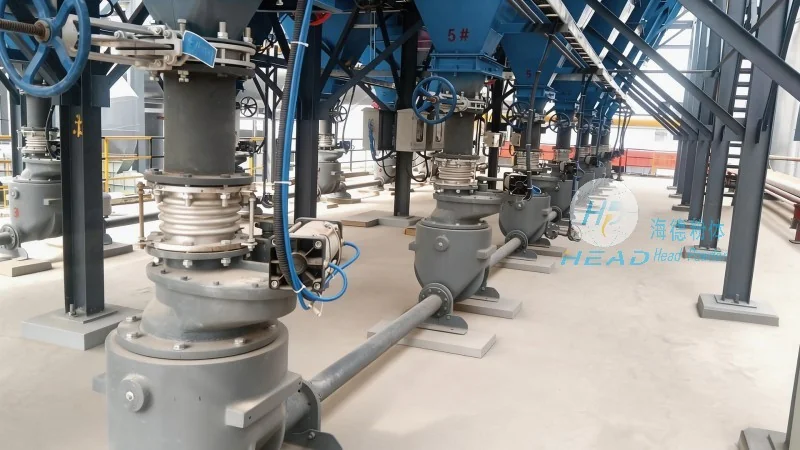
The catalyst pneumatic conveying system consists of several integral components that work in tandem to ensure efficient operation. These include a material hopper or feeder, a conveying line (typically made of stainless steel or other corrosion-resistant materials), a venturi or airlock mechanism, and a receiver or discharge hopper. The material hopper is designed to store and feed the catalyst powder into the system, with features such as a level indicator and a discharge valve to control the flow rate. The conveying line, often equipped with bends and elbows, is engineered to withstand the pressure and temperature of the air stream while preventing material buildup or corrosion. The venturi or airlock ensures that the material is properly accelerated and directed toward the receiver, preventing blockages and maintaining consistent flow rates. The receiver then collects the conveyed catalyst, typically with a dust collection system to capture any airborne particles and ensure environmental compliance.
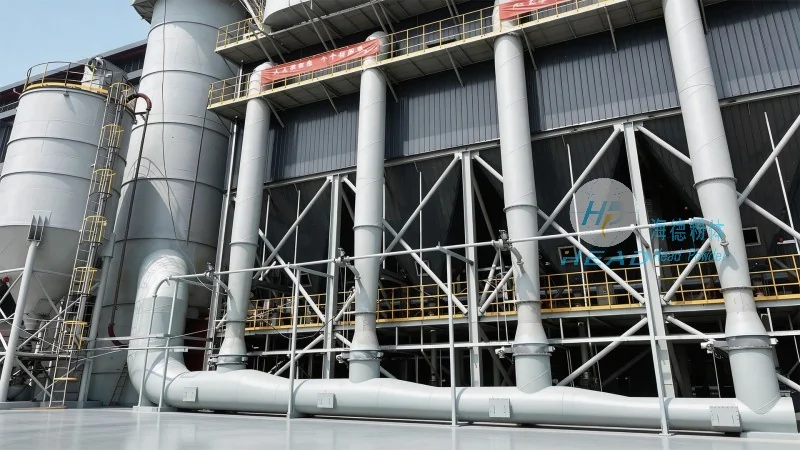
The operation of a catalyst pneumatic conveying system is based on the principle of fluidization and pneumatic transport. The system generates a high-pressure air or gas stream, which is introduced into the conveying line at a controlled velocity. As the air flows through the venturi or airlock, it creates a low-pressure zone that draws the catalyst powder from the hopper into the air stream. The powder is then carried along the line as a slurry, suspended by the air flow. The velocity and pressure of the air are carefully controlled to maintain a stable and uniform flow, ensuring that the catalyst particles are not damaged or agglomerated during transport. The system's design allows for precise control over the flow rate, pressure, and temperature, which are critical parameters for maintaining the quality and integrity of the catalyst. For example, in high-shear applications, the air velocity is adjusted to prevent particle breakage, while in low-shear applications, the velocity is reduced to minimize energy consumption.
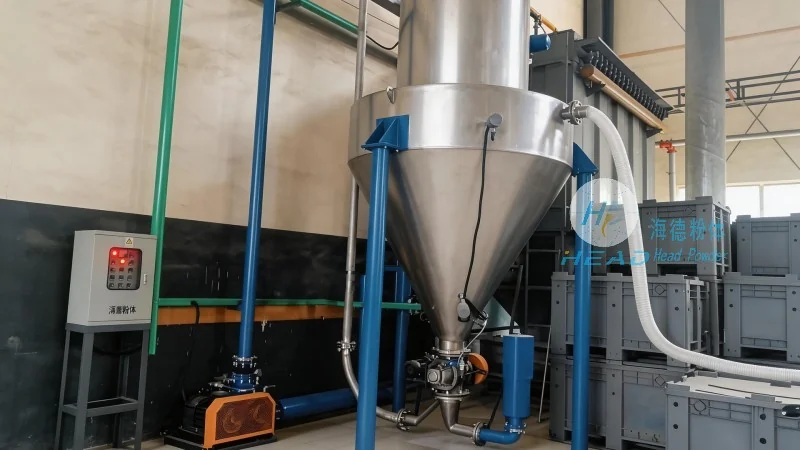
Implementing a catalyst pneumatic conveying system offers numerous advantages over traditional material handling methods. One of the primary benefits is the ability to transport catalyst powders over long distances with minimal loss and contamination. The enclosed system prevents dust emissions and cross-contamination, which is essential for maintaining product purity and meeting stringent environmental regulations. Additionally, the system allows for precise dosing and control of the catalyst, enabling consistent and repeatable processing results. This is particularly important in pharmaceutical and food industries, where product quality and safety are paramount. The reduced need for manual handling also enhances workplace safety and operational efficiency, as operators are no longer exposed to dust or hazardous materials. Furthermore, the system's compact design and automated operation minimize labor costs and operational downtime, making it a cost-effective solution for industrial applications. For instance, a typical system can handle up to 10 tons of catalyst per hour with minimal maintenance, resulting in significant cost savings over time.

 Shandong Headpowder Engineering Co., Ltd.
 156-6277-7102(Manager Zhang)
  0531-83386006
  Zhangqiu District, Jinan City, Shandong Province, China
telephone
WeChatconsult
top