With more than 10‑year industry experience, Shandong Headpowder delivers full‑service pneumatic‑conveying systems and blowers, undertaking nationwide turn‑key powder‑handling projects.
HeadPowder, an industry leader in material handling solutions, specializes in the design and manufacturing of advanced pneumatic conveying systems tailored for high-value powders like kaolin. Based in Shandong, China, the company has established itself as a trusted partner for businesses seeking efficient and reliable methods to transport fine powders in industrial applications.
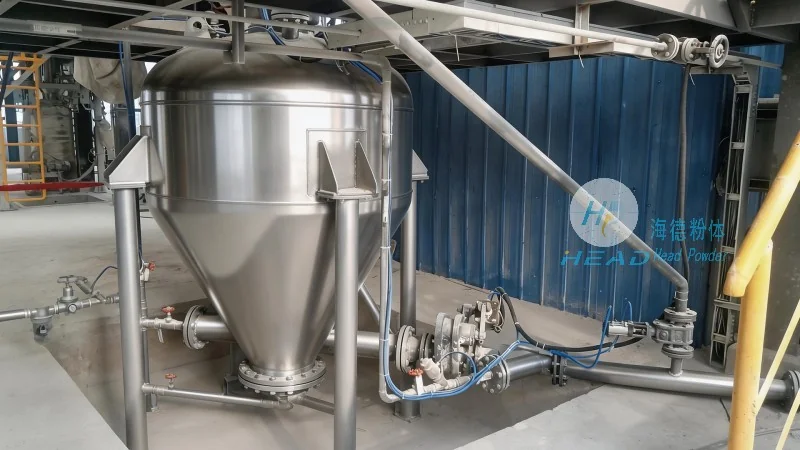
Our core product, the Kaolin Powder Pneumatic Conveying System, is engineered to address the unique challenges of handling kaolin—a soft, white clay mineral widely used in ceramics, paper, and coatings industries. The system combines precision engineering with robust construction to ensure optimal performance, minimal downtime, and consistent material quality throughout the conveying process.
The Kaolin Powder Pneumatic Conveying System comprises several critical components that work in tandem to achieve efficient material transport. The primary elements include a hopper for material storage, a rotary valve or feeder to control the flow rate, a conveying line (often equipped with pressure vessels or ducts), and a receiver or collection unit. Each component is designed to withstand the specific demands of kaolin powder, ensuring durability and long-term operational efficiency.
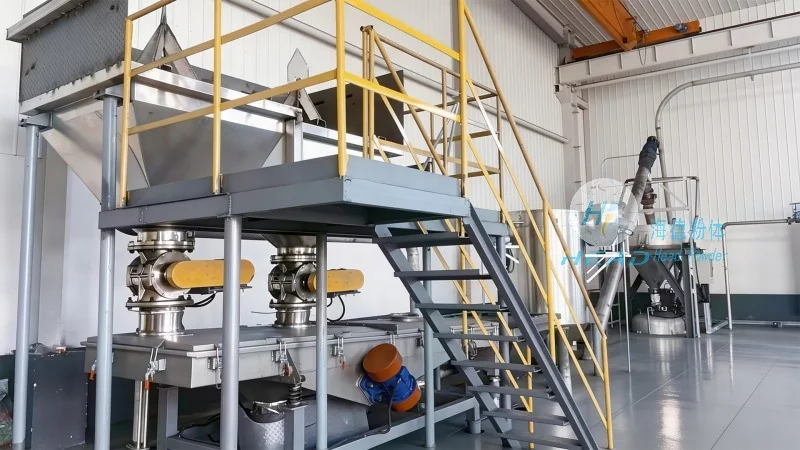
At the heart of the system is the conveying line, which can be either positive pressure or negative pressure, depending on the application requirements. Positive pressure systems use a blower or compressor to push the material through the line, while negative pressure systems use a vacuum to draw the material. For kaolin powder, positive pressure is often preferred due to its ability to handle higher material loads and maintain consistent flow rates, minimizing the risk of clogging or material degradation.
The operation of the Kaolin Powder Pneumatic Conveying System is based on the fundamental principle of fluidization and suspension of the powder particles in a carrier gas. As the carrier gas (typically air) is introduced into the hopper, it creates a low-pressure zone that draws the kaolin powder into the conveying line. The gas velocity is carefully controlled to maintain the powder in a suspended state, preventing it from settling or clogging the ductwork.
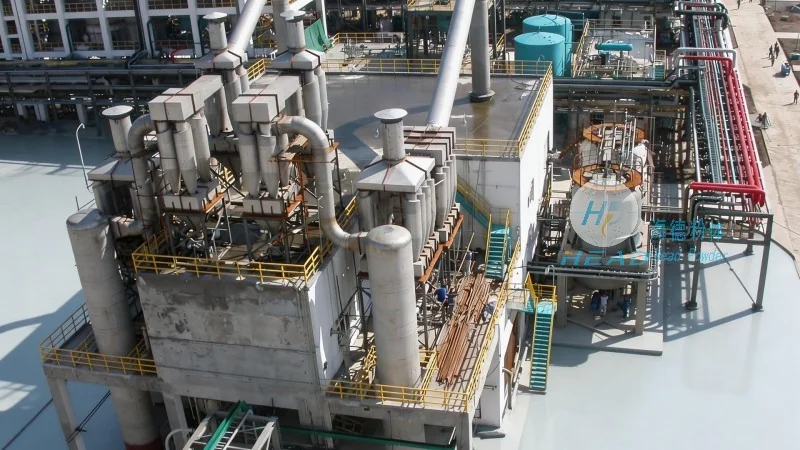
Once the powder is suspended, it is transported through the conveying line to the receiver. The receiver is equipped with a dust collection system to capture any fine particles that may escape during the process, ensuring environmental compliance and product purity. The system’s control mechanisms, including variable speed drives and pressure sensors, allow for real-time monitoring and adjustment of the conveying parameters, optimizing performance based on the specific characteristics of the kaolin powder being handled.
Implementing a pneumatic conveying system for kaolin powder offers numerous advantages over traditional methods such as belt conveyors or manual handling. The primary benefits include improved material handling efficiency, reduced labor costs, and enhanced product quality. By eliminating the need for manual handling, the system minimizes the risk of contamination and product damage, which is critical for applications where kaolin purity is paramount.
Additionally, the system’s ability to handle fine powders without clogging or segregation ensures consistent material flow and reduces maintenance requirements. The enclosed design of the system also improves workplace safety by preventing dust exposure and minimizing the risk of accidents associated with manual material handling. For industrial facilities, these advantages translate into increased productivity, lower operational costs, and improved overall operational efficiency.
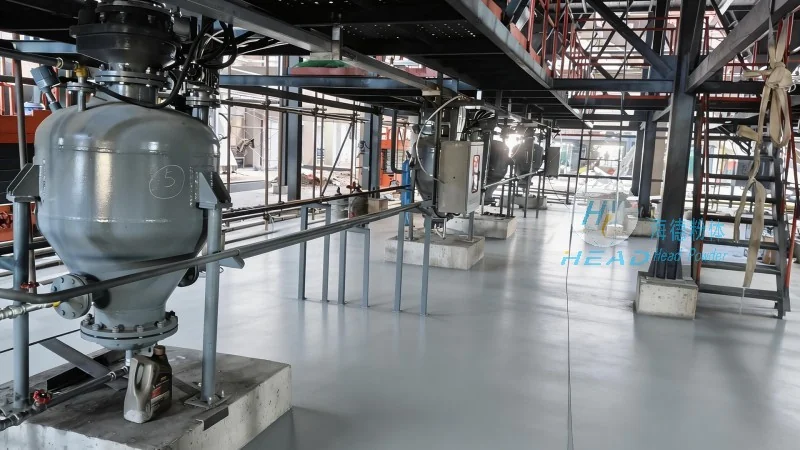
HeadPowder understands that each industrial application has unique requirements, and our Kaolin Powder Pneumatic Conveying System is designed to be highly customizable. We offer a range of options, including different hopper sizes, conveying line lengths, and pressure ratings, to accommodate various production scales and material handling needs. Whether for small-scale laboratory applications or large-scale industrial production lines, our systems can be tailored to meet specific performance criteria and operational constraints.
Furthermore, our team of engineers works closely with clients to assess their material characteristics, production volumes, and operational environment to design a system that maximizes efficiency and reliability. This collaborative approach ensures that the final solution is not only technically sound but also aligned with the client’s long-term business objectives and budget considerations.

 Shandong Headpowder Engineering Co., Ltd.
 156-6277-7102(Manager Zhang)
  0531-83386006
  Zhangqiu District, Jinan City, Shandong Province, China
telephone
WeChatconsult
top