With more than 10‑year industry experience, Shandong Headpowder delivers full‑service pneumatic‑conveying systems and blowers, undertaking nationwide turn‑key powder‑handling projects.
Aluminum nitride (AlN) is a high-performance ceramic material widely utilized in the semiconductor, electronics, and optical industries due to its exceptional thermal conductivity, electrical insulation properties, and chemical stability. The efficient and reliable transportation of AlN powder is essential for preserving product quality and optimizing manufacturing processes. Pneumatic conveying systems, particularly those engineered for AlN, provide a solution that combines precision, safety, and adaptability. This article delves into the fundamental principles underlying aluminum nitride pneumatic conveying machines and highlights the key characteristics of their operational environments.
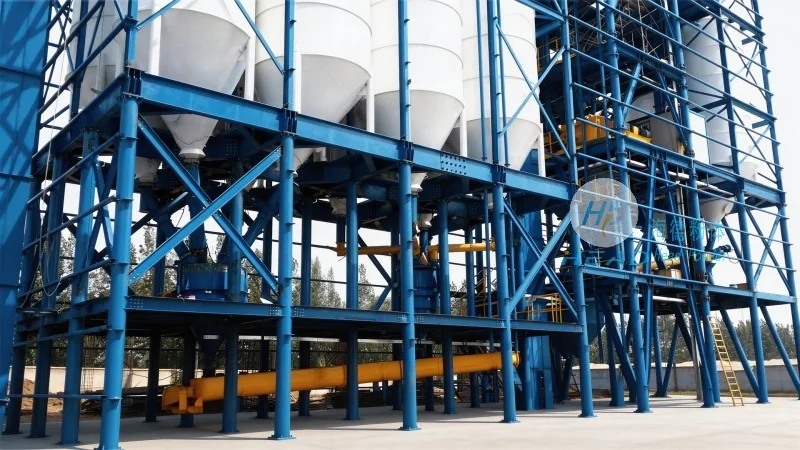
Pneumatic conveying, also known as air conveying, is a method of transporting bulk materials—including powders like aluminum nitride—using a stream of air or gas. The core principle involves creating a pressure differential or utilizing vacuum to move the material through a pipeline. For aluminum nitride, specialized equipment is required to accommodate the material's characteristics, such as its high purity requirements and potential reactivity with certain surfaces. The system typically comprises a hopper, a blower or vacuum pump, a conveying line, and a collection bin. The process commences when the AlN powder is fed into the hopper, where it is then drawn into the conveying line by the moving air. The air velocity is meticulously controlled to ensure the powder particles are fully suspended and transported without clogging or degradation. This approach is especially effective for materials that are challenging to handle with traditional mechanical conveyors, as it minimizes direct contact with equipment, reducing the risk of contamination and preserving the material's integrity.
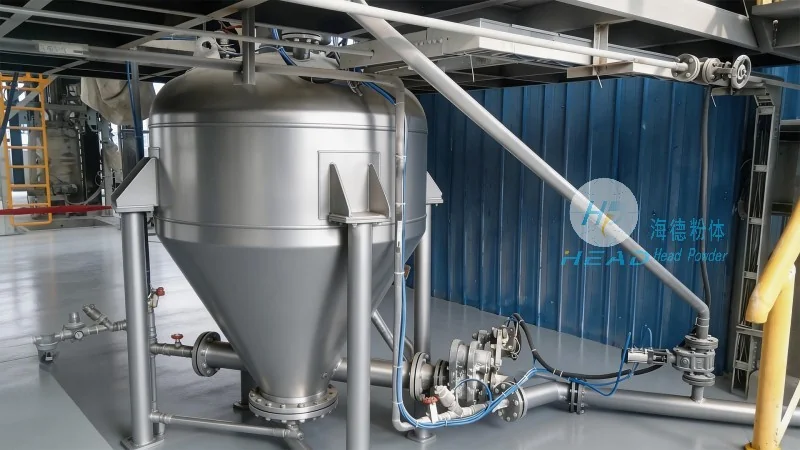
The operational environment of aluminum nitride pneumatic conveying systems is tailored to meet the stringent requirements of high-tech manufacturing. These systems are commonly deployed in cleanroom facilities, where contamination control is paramount. The design of the equipment—including sealed hoppers and enclosed conveying lines—helps maintain a dust-free and controlled atmosphere. Additionally, the systems are often integrated with filtration and dust collection units to capture and manage any particles released during operation. The working scene also incorporates considerations for material handling efficiency, as the systems are engineered to handle varying flow rates and particle sizes, adapting to different production scales. For instance, in semiconductor manufacturing, where small batches of high-purity AlN are required, the conveying system must enable precise dosing and minimal material loss. Conversely, in large-scale production for electronic components, the system may need to manage higher throughput while maintaining consistent quality. The flexibility of pneumatic conveying allows manufacturers to adjust system parameters to suit diverse production scenarios, making it a versatile solution for various working environments.
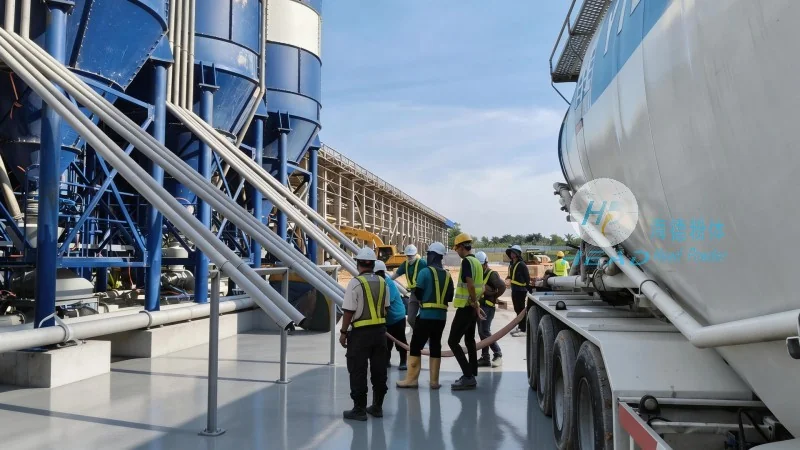
Aluminum nitride pneumatic conveying machines offer several technical advantages that make them ideal for handling this critical material. One primary benefit is the ability to maintain the material's purity throughout the transportation process. Since the powder is never in direct contact with metal surfaces or other contaminants, the risk of impurity introduction is significantly reduced. This is particularly crucial for AlN, which is used in applications where even trace contaminants can impact the performance of electronic devices. Another advantage is the system's efficiency in terms of space and energy usage. Compared to traditional belt or screw conveyors, pneumatic systems often occupy less floor space and use less power to achieve comparable or higher throughput. The adaptability of the system also enables integration with other manufacturing processes, such as mixing, drying, or packaging, creating a seamless production line. In practical applications, these machines are employed in the production of AlN-based substrates for LEDs, as well as in the manufacturing of high-power electronic components. They are also utilized in research and development facilities where small quantities of AlN are needed for experimental purposes. The consistent performance of the conveying system ensures that the material is delivered to the next stage of production with minimal variation, contributing to overall process reliability. Furthermore, the safety features of the equipment, such as pressure relief valves and emergency shut-off mechanisms, help mitigate risks associated with handling powders under pressure or vacuum conditions.
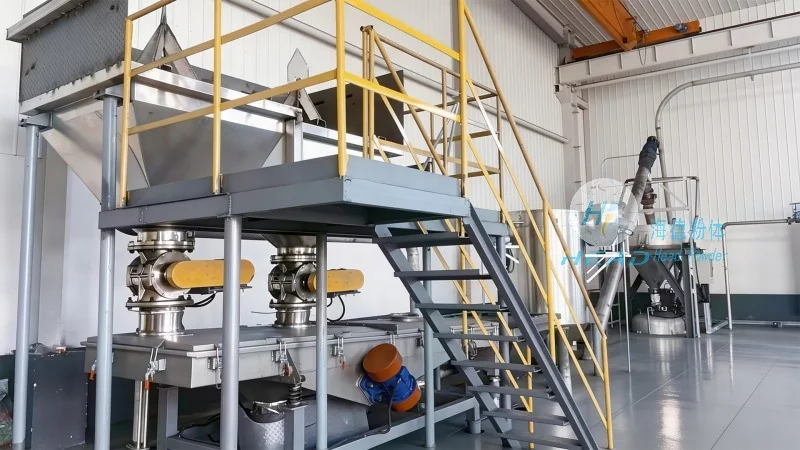
Shandong HeadPowder Engineering Co., Ltd., a leading manufacturer based in Shandong, China, specializes in the design and production of advanced pneumatic conveying systems for high-purity materials like aluminum nitride. The company's expertise in material handling technology ensures that their products meet the stringent requirements of modern manufacturing. With a focus on quality and innovation, HeadPowder provides customized solutions tailored to the specific needs of their clients, from small-scale research applications to large-scale industrial production. The company's commitment to maintaining high standards in product design and manufacturing has made it a trusted partner in the industry, helping to advance the use of aluminum nitride in various high-tech applications.

 Shandong Headpowder Engineering Co., Ltd.
 156-6277-7102(Manager Zhang)
  0531-83386006
  Zhangqiu District, Jinan City, Shandong Province, China
telephone
WeChatconsult
top