With more than 10‑year industry experience, Shandong Headpowder delivers full‑service pneumatic‑conveying systems and blowers, undertaking nationwide turn‑key powder‑handling projects.
Polycrystalline silicon, a critical material in the semiconductor industry, requires efficient and reliable transportation systems to ensure smooth production processes. The equipment designed for pneumatic conveying of polycrystalline silicon is engineered to handle the unique properties of this material, including its fine particle size and high purity requirements. As a leading provider in the field, Shandong HeadPowder Engineering Co., Ltd. specializes in developing advanced pneumatic conveying solutions tailored to the demands of polycrystalline silicon processing. This equipment not only enhances material handling efficiency but also maintains the integrity and purity of the silicon, which is essential for high-quality semiconductor manufacturing.
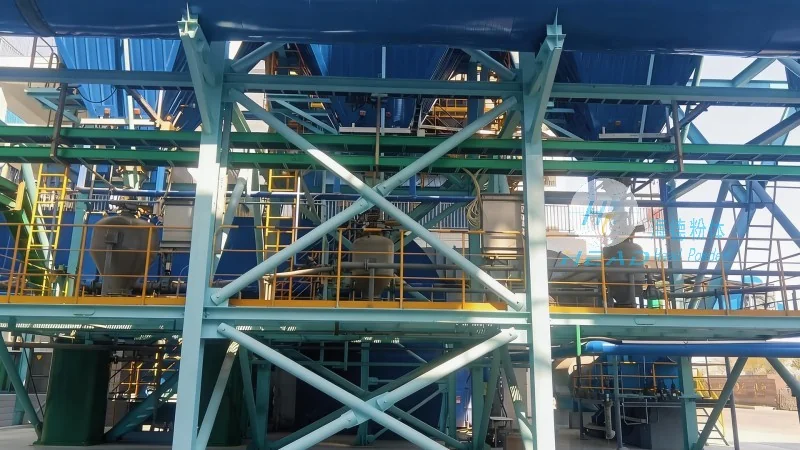
The core of the polycrystalline silicon pneumatic conveying system lies in its integrated structure, which combines several key components to achieve effective material transport. The system typically includes a material feeding unit, a conveying pipeline network, a pressure control system, and a dust collection and filtration unit. The feeding unit is designed to handle the fine polycrystalline silicon particles, ensuring consistent and controlled material input. The conveying pipeline, often made from corrosion-resistant materials such as stainless steel, is optimized to minimize particle degradation and maintain purity during transport. The pressure control system regulates the air flow and pressure within the pipeline, ensuring stable and efficient material movement. Additionally, the dust collection and filtration unit is crucial for maintaining environmental safety and compliance with industrial standards, capturing any fine particles that may be released during the conveying process.
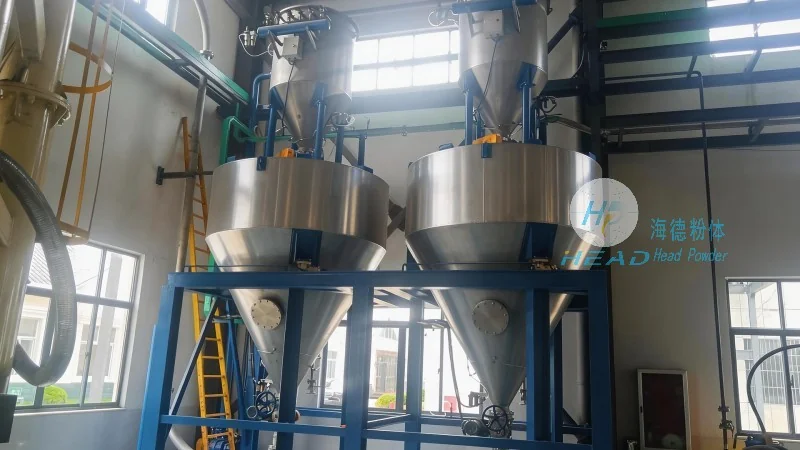
Each component of the polycrystalline silicon pneumatic conveying system plays a vital role in the overall operation. The material feeding unit, for instance, may incorporate a hopper with a vibrating or rotary feeder to ensure a continuous and uniform flow of silicon particles. This design prevents material bridging and ensures that the material is fed at a consistent rate, which is critical for maintaining system stability. The conveying pipeline network is designed with appropriate bends and elbows to minimize pressure losses and maintain the velocity of the air-silicon mixture. The use of high-quality, smooth-bore pipes reduces friction and prevents particle accumulation, which could otherwise lead to blockages or material degradation. The pressure control system utilizes sensors and control valves to adjust the air pressure and flow rate in real-time, adapting to changes in material feed rate or pipeline conditions. This dynamic control ensures that the system operates efficiently under varying load conditions. The dust collection and filtration unit, equipped with high-efficiency filters, captures fine silicon particles and other contaminants, preventing their release into the environment and maintaining the purity of the system.
Implementing a pneumatic conveying system for polycrystalline silicon offers several significant advantages over traditional material handling methods. One of the primary benefits is the ability to transport the material in a closed system, which minimizes exposure to contaminants and maintains the high purity of the silicon. This is particularly important in semiconductor manufacturing, where even trace impurities can affect the performance of electronic devices. Additionally, the system provides a dust-free and clean environment, reducing the risk of occupational health hazards and improving workplace safety. The closed system also helps in controlling the temperature and humidity of the material during transport, which is crucial for preserving the material's properties. Another advantage is the flexibility of the system, as it can be easily integrated with existing production lines and adapted to different processing requirements. The system's ability to handle fine particles without causing blockages or degradation makes it a reliable choice for polycrystalline silicon transportation. Furthermore, the energy efficiency of modern pneumatic conveying systems, combined with advanced control technologies, reduces operational costs while maintaining high performance standards.
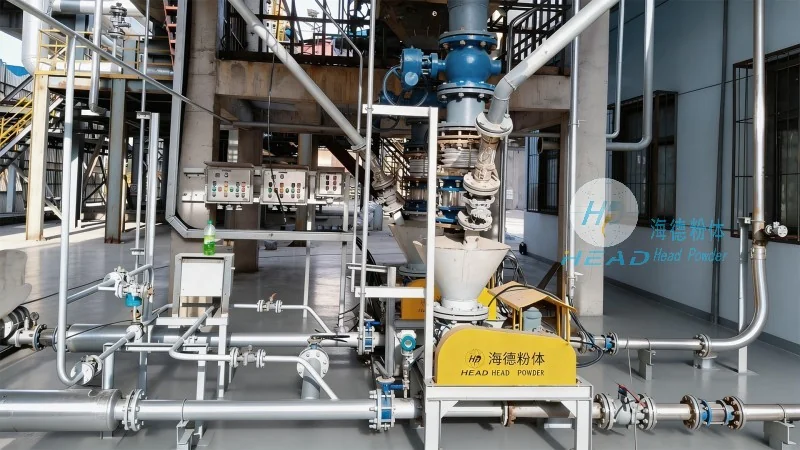
The polycrystalline silicon pneumatic conveying system is widely used in various stages of semiconductor production, including material storage, transfer between processing units, and final packaging. In material storage, the system can efficiently transfer silicon from storage silos to processing lines, ensuring a continuous supply of raw material. During the transfer between processing units, such as from a crushing and grinding stage to a purification stage, the system maintains the material's purity and prevents contamination. In the final packaging stage, the system can transport the processed silicon to packaging equipment, ensuring that the material is handled with care and minimal exposure to external factors. Operational considerations for the system include regular maintenance of components, such as cleaning filters and checking for pipeline blockages, to ensure consistent performance. The system's control system should be monitored regularly to detect any deviations in pressure or flow, which could indicate issues with the material feed or pipeline conditions. Additionally, the system should be designed to handle variations in material properties, such as changes in particle size or moisture content, to maintain optimal performance. Proper training of operators on the system's operation and maintenance is also essential to ensure safe and efficient operation.

 Shandong Headpowder Engineering Co., Ltd.
 156-6277-7102(Manager Zhang)
  0531-83386006
  Zhangqiu District, Jinan City, Shandong Province, China
telephone
WeChatconsult
top