With more than 10‑year industry experience, Shandong Headpowder delivers full‑service pneumatic‑conveying systems and blowers, undertaking nationwide turn‑key powder‑handling projects.
HeadPowder, a leading manufacturer based in Shandong, China, specializes in the design and production of advanced air-driven conveying equipment tailored for handling lithium-ion battery nanomaterials. This equipment is engineered to meet the stringent demands of the battery manufacturing industry, ensuring efficient, safe, and reliable material transport. The following overview provides insights into the equipment's structure and operational principles.
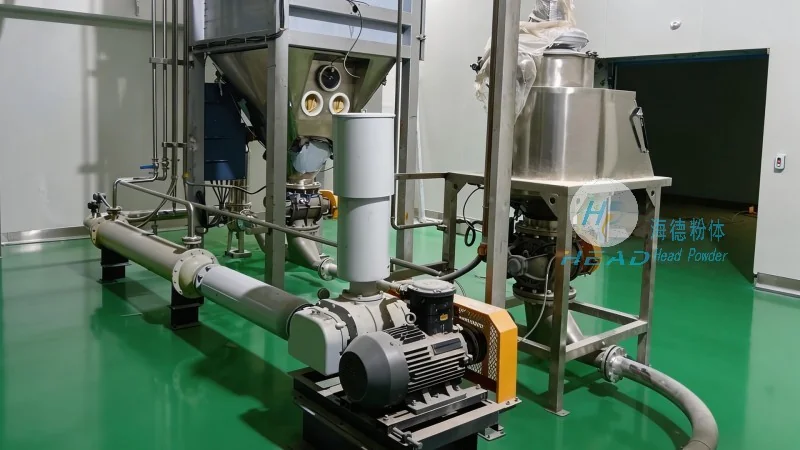
The air-driven conveying system is a critical component in the production line for lithium-ion batteries, responsible for transporting nanomaterial powders such as graphite, lithium carbonate, and other additives from storage to processing units. Unlike traditional mechanical conveyors, this system utilizes compressed air to move materials through a network of pipes, eliminating the need for mechanical parts that could cause contamination or wear. HeadPowder's equipment is specifically designed to handle the delicate nature of nanomaterials, preserving their particle size and quality throughout the conveying process.
The air-driven conveying equipment consists of several key components, each playing a vital role in the overall operation. The primary components include the material hopper, air compressor, conveying pipes, rotary valves, and dust collection system. The material hopper is where the nanomaterials are stored and fed into the system. It is equipped with a feeding mechanism that controls the flow rate of the material, preventing overloading and ensuring consistent feed. The air compressor generates the compressed air required to move the material through the pipes. The conveying pipes are typically made of stainless steel or other corrosion-resistant materials to handle the chemical properties of the nanomaterials. The rotary valves are used to control the flow of material at various points in the system, such as at the inlet and outlet of the conveying line. The dust collection system is integrated to capture any airborne particles, ensuring a clean and safe working environment.
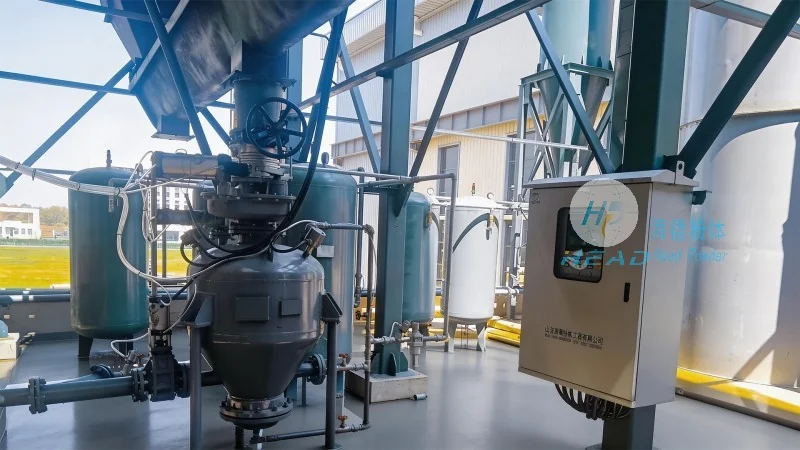
The operation of the air-driven conveying system is based on the principle of pneumatic transport. When the material is fed into the hopper, it falls into the conveying pipe under the influence of gravity. Simultaneously, compressed air is introduced into the pipe, creating a low-pressure zone that draws the material along with the air stream. The air and material mixture travels through the pipes to the destination point, where the rotary valve separates the material from the air. The material is then discharged into the processing unit, while the air is filtered and returned to the system or released to the atmosphere. This process is continuous and can handle high volumes of material with minimal maintenance.
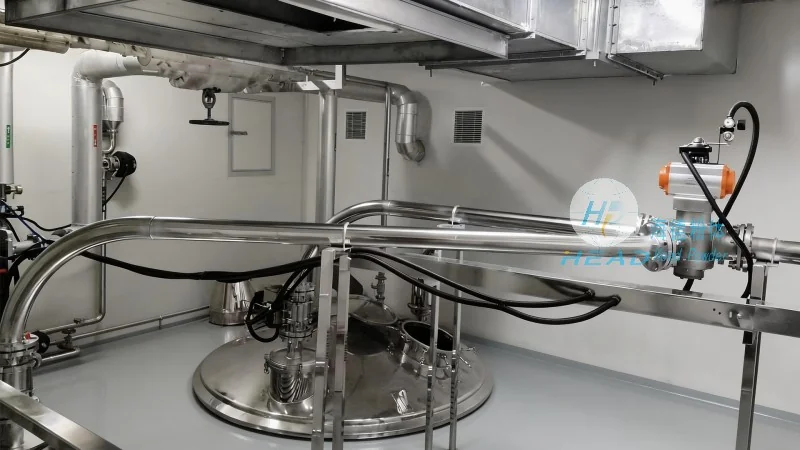
HeadPowder's air-driven conveying equipment offers several advantages over traditional mechanical conveyors. First, it eliminates the risk of mechanical contamination, which is crucial for nanomaterials used in battery production. Second, the system is highly flexible, allowing for changes in the conveying line layout without major modifications. Third, it is energy-efficient, as it uses compressed air rather than motors to move the material. Fourth, the equipment is easy to clean and maintain, reducing downtime and increasing productivity. Finally, the system is compact and can be integrated into existing production lines, making it a cost-effective solution for battery manufacturers.
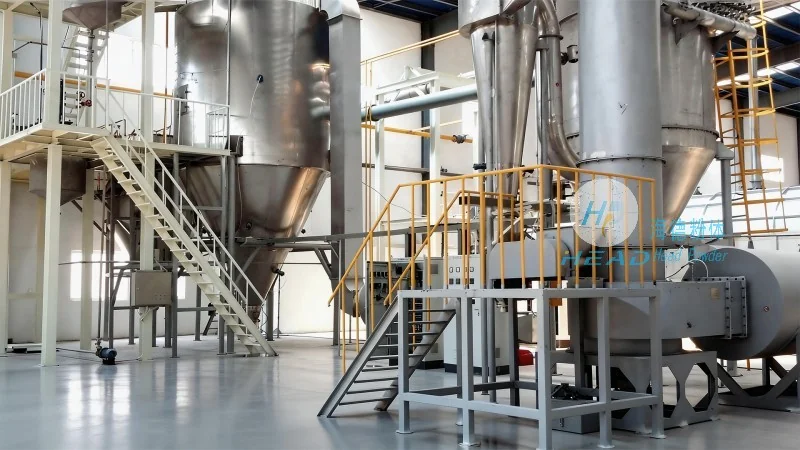
The air-driven conveying equipment from HeadPowder is widely used in the lithium-ion battery manufacturing process. It is particularly effective in handling nanomaterial powders that are sensitive to moisture and temperature. The equipment ensures that the materials are transported in a controlled environment, maintaining their quality and preventing degradation. This is essential for achieving high battery performance and longevity. The system is also suitable for handling other materials used in battery production, such as electrolytes and separators, further enhancing its versatility.
HeadPowder's air-driven conveying equipment for lithium-ion battery nanomaterials is a reliable and efficient solution for material transport in the battery manufacturing industry. The equipment's design and operational principles ensure that nanomaterials are handled with precision and care, meeting the industry's stringent quality standards. With its advanced features and robust construction, this equipment is a valuable asset for battery manufacturers seeking to improve their production processes and enhance product quality.

 Shandong Headpowder Engineering Co., Ltd.
 156-6277-7102(Manager Zhang)
  0531-83386006
  Zhangqiu District, Jinan City, Shandong Province, China
telephone
WeChatconsult
top