With more than 10‑year industry experience, Shandong Headpowder delivers full‑service pneumatic‑conveying systems and blowers, undertaking nationwide turn‑key powder‑handling projects.
For agricultural operations that require efficient and reliable transport of powdered potassium carbonate fertilizer, the pneumatic conveying system developed by Shandong HeadPowder Engineering Co., Ltd. offers a robust solution. This system is designed to handle the unique challenges of transporting fine, abrasive powders while ensuring minimal product degradation and maximum operational efficiency.
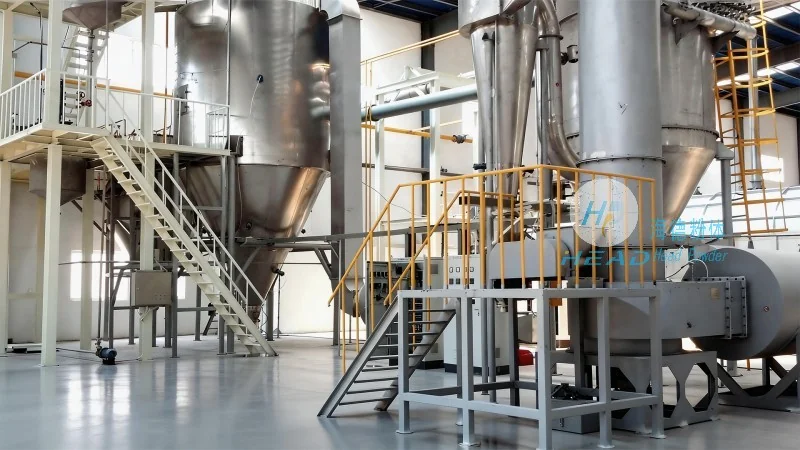
As a leading manufacturer in the field, HeadPowder specializes in engineering systems that meet the demanding requirements of modern fertilizer distribution. The company, headquartered in Shandong, China, combines advanced technology with practical application expertise to deliver systems that enhance productivity and reduce operational costs for agricultural businesses.
The operation of the powdered potassium carbonate fertilizer pneumatic conveying system involves several key steps that ensure smooth and continuous material transport. The process begins with the loading of the fertilizer into the hopper, where the material is stored before being fed into the conveying line. A rotary valve or feeder is used to control the flow rate of the powder, ensuring a consistent and controlled discharge into the pipeline.
Once the powder enters the pipeline, it is propelled by a high-pressure air stream generated by a blower or compressor. The air and powder mixture travels through the pipeline, with the velocity of the air being sufficient to keep the powder suspended and prevent settling. The system typically includes a series of bends, elbows, and straight sections, each designed to maintain the proper flow characteristics and minimize pressure drop.
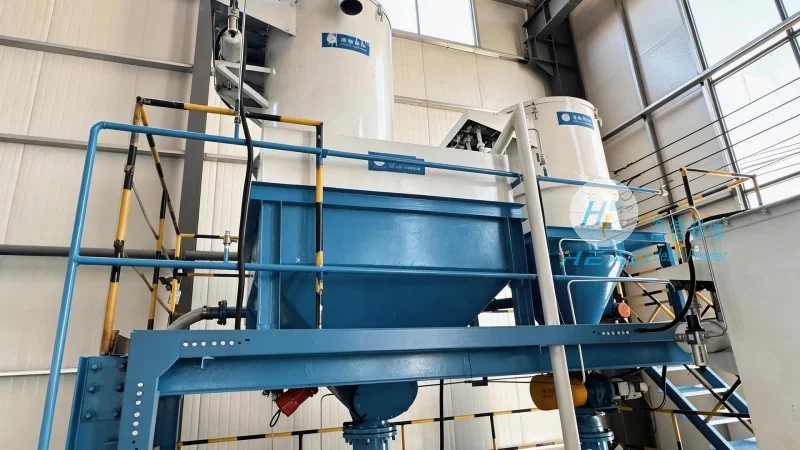
At the discharge end, the air and powder mixture is separated using a cyclone or filter system. The cyclone uses centrifugal force to separate the powder from the air, allowing the powder to be collected in a receiving hopper or storage bin. The air, now clean of powder particles, is then discharged to the atmosphere or recirculated back into the system, depending on the design and operational requirements.
Throughout the operation, the system is equipped with pressure sensors, flow meters, and control valves that monitor and regulate the air pressure and flow rate. This ensures that the system operates within optimal parameters, preventing overloading or underloading of the pipeline and maintaining consistent performance. The control system may also include alarms and safety features to alert operators of any issues, such as blockages or pressure spikes, allowing for quick intervention and minimizing downtime.
The working principle of the pneumatic conveying system for powdered potassium carbonate fertilizer is based on the fundamental concept of fluidization and suspension of the solid particles by a moving gas stream. The system utilizes a positive pressure or negative pressure (or a combination of both) to transport the material through the pipeline.
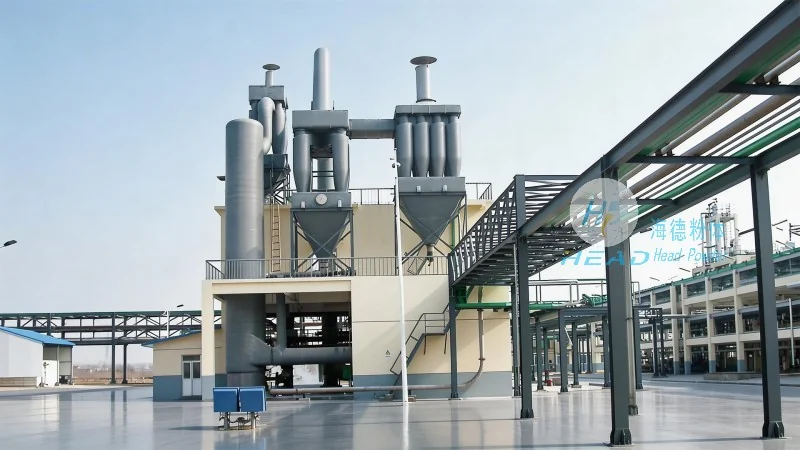
In the positive pressure system, a blower or compressor supplies compressed air to the pipeline, creating a pressure higher than the ambient air pressure. The air is introduced at the inlet of the pipeline, and as it flows through, it entrains the powder particles, forming a slurry-like mixture. The velocity of the air is critical; it must be high enough to keep the powder suspended but not so high as to cause excessive wear on the pipeline or equipment.
The negative pressure system, also known as a vacuum system, operates by creating a low-pressure zone at the inlet of the pipeline, drawing the powder and air mixture into the system. This method is often used for short-distance transport or when the material needs to be collected from a remote location. The air is then filtered and the powder is separated at the discharge end, similar to the positive pressure system.
The system's design takes into account the physical properties of the potassium carbonate fertilizer, such as its particle size, density, and moisture content. These factors influence the required air velocity, pressure, and pipeline diameter to ensure efficient transport. For example, finer particles may require higher air velocities to maintain suspension, while larger particles may need a larger pipeline diameter to prevent blockages.

 Shandong Headpowder Engineering Co., Ltd.
 156-6277-7102(Manager Zhang)
  0531-83386006
  Zhangqiu District, Jinan City, Shandong Province, China
telephone
WeChatconsult
top