With more than 10‑year industry experience, Shandong Headpowder delivers full‑service pneumatic‑conveying systems and blowers, undertaking nationwide turn‑key powder‑handling projects.
Shandong HeadPowder Engineering Co., Ltd., a leading enterprise based in Shandong, China, specializes in the research, development, and application of advanced powder handling technologies. With a focus on providing efficient and reliable solutions for industrial material transport, the company leverages its expertise in pneumatic conveying systems, particularly for zircon sand powder. This article explores the fundamental principles of zircon sand powder pneumatic conveying and highlights the key characteristics of its operational scenarios.
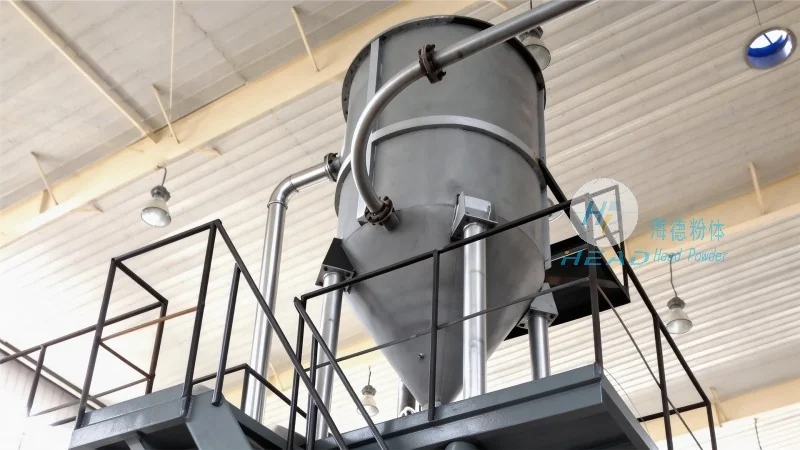
Zircon sand, a naturally occurring mineral composed primarily of zirconium silicate (ZrSiO₄), is widely used in various high-tech industries, including ceramics, glass manufacturing, and refractory production. Its unique chemical and physical properties, such as high refractoriness and resistance to chemical attack, make it an essential raw material for producing high-quality end products. However, the handling of zircon sand powder presents challenges due to its fine particle size and abrasive nature. Traditional bulk material transport methods, like belt conveyors or bucket elevators, often suffer from material degradation, blockages, and high maintenance costs. Pneumatic conveying offers a solution by utilizing air as the conveying medium, enabling the efficient and safe transport of zircon sand powder over long distances and through complex system configurations.
Pneumatic conveying systems operate on the principle of transporting particulate materials using a gas stream, typically air, to move the material through a pipeline. The process can be broadly categorized into two main types: air-swept (or suction) systems and pressure systems. Air-swept systems utilize a vacuum at the inlet to draw material from a hopper or storage silo into the conveying line, while pressure systems use compressed air to push material through the pipeline. For zircon sand powder, both system types are applicable, with the choice depending on factors like the distance to be covered, the required flow rate, and the presence of other materials in the system.
In an air-swept system, the conveying process begins when the vacuum pump creates a negative pressure at the inlet. This pressure differential draws zircon sand powder from the storage hopper into the conveying line, where it is mixed with the air stream. The mixture then travels through the pipeline to the discharge point, where a separator or cyclone separates the powder from the air, allowing the powder to be deposited in the target container. The air, now clean, is either filtered and recirculated or released to the atmosphere. Pressure systems, on the other hand, use a blower or compressor to generate positive pressure at the inlet, pushing the zircon sand powder through the pipeline. The material is then discharged at the end of the line, and the air is typically vented to the environment.
The effectiveness of zircon sand powder pneumatic conveying is influenced by several operational characteristics that define its performance in different industrial settings. These characteristics include: conveying capacity, which refers to the volume of material that can be transported per unit time; conveying distance, the maximum distance over which the material can be moved without significant pressure loss or degradation; particle size distribution, as the size and shape of zircon sand particles affect the air-particle interaction and system efficiency; and system pressure, which determines the energy required to move the material and the overall system design.

For zircon sand powder, the particle size is typically in the range of 0.1 to 1.0 millimeters, with a high proportion of fine particles. This fine particle size is crucial for the material's end-use applications but also presents challenges for pneumatic conveying, as finer particles tend to cause higher pressure drops and require more energy to transport. However, advanced pneumatic conveying systems, such as dense-phase or low-velocity systems, are designed to mitigate these issues by reducing the air velocity and increasing the particle concentration in the conveying stream. This approach minimizes particle degradation and ensures stable operation over long distances.
Zircon sand powder pneumatic conveying is widely employed in various industrial processes, each with distinct requirements and operational characteristics. Some of the most common application scenarios include: in-plant material transfer within manufacturing facilities, where zircon sand is moved from storage silos to production lines; cross-plant transport between different production sites or facilities, enabling the efficient supply of raw materials; and integration with downstream processes, such as mixing or blending, where the zircon sand is combined with other ingredients before further processing.
In the ceramics industry, for example, zircon sand is often used as a raw material for producing zirconia-based ceramics, which are used in high-performance applications like aerospace and medical devices. The pneumatic conveying system in this scenario must handle the fine zircon sand powder from storage silos to the mixing and extrusion lines, ensuring consistent material flow and minimal contamination. The system is typically designed as a low-velocity, dense-phase system to maintain the quality of the zircon sand particles and prevent degradation.
In the glass manufacturing industry, zircon sand is used as a refractory material to improve the thermal stability and chemical resistance of glass products. The pneumatic conveying system in this case may involve moving zircon sand from a storage area to the glass melting furnace, where it is added to the molten glass. The system must be capable of handling high temperatures and abrasive materials, with components like pipelines and valves designed to withstand the harsh conditions. The operational efficiency of the system is critical, as any downtime can lead to production delays and increased costs.
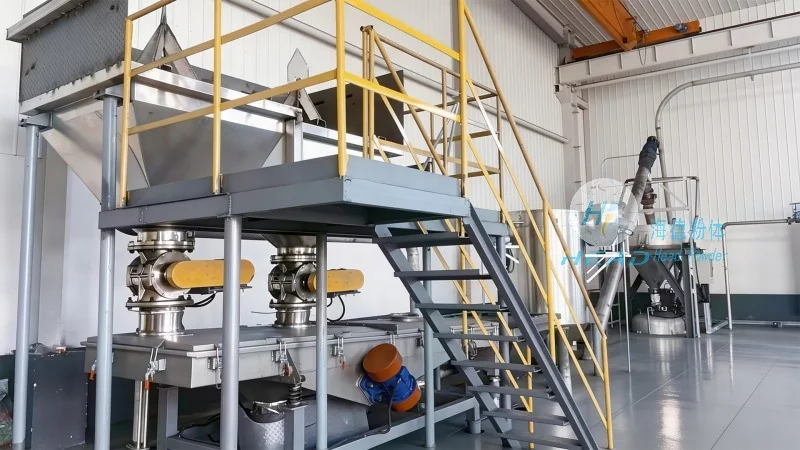
Another common application scenario is in the refractory production sector, where zircon sand is used as a raw material for making refractory bricks and other high-temperature components. The pneumatic conveying system in this industry must be robust and reliable, as the material is often handled in large quantities and over long distances. The system may include multiple conveying lines and storage silos to support continuous production, with features like automatic control and monitoring to ensure smooth operation.
Compared to traditional bulk material handling methods, zircon sand powder pneumatic conveying offers several advantages that make it the preferred choice for many industrial applications. These advantages include: high efficiency, as the system can transport large volumes of material over long distances with minimal labor; flexibility, as the conveying lines can be easily reconfigured or extended to accommodate changes in production requirements; and cleanliness, as the enclosed system prevents dust emissions and contamination of the material. Additionally, pneumatic conveying systems can be integrated with other process equipment, such as mixers or reactors, to create a seamless material handling workflow.
However, there are also considerations that must be taken into account when implementing zircon sand powder pneumatic conveying systems. These include: energy consumption, as pneumatic systems require significant power to operate, especially for long-distance or high-capacity applications; system maintenance, as components like pumps, filters, and pipelines need regular inspection and replacement to ensure reliable operation; and material compatibility, as the choice of conveying system and components must be suitable for the specific properties of zircon sand powder, such as its abrasive nature and fine particle size.
Shandong HeadPowder Engineering Co., Ltd. addresses these considerations by providing customized pneumatic conveying solutions tailored to the specific needs of each client. The company's expertise in system design, material handling, and process integration ensures that the zircon sand powder pneumatic conveying systems are optimized for efficiency, reliability, and cost-effectiveness. By leveraging advanced technology and a deep understanding of industrial processes, HeadPowder delivers solutions that enhance productivity and reduce operational costs for its clients in the zircon sand industry.

 Shandong Headpowder Engineering Co., Ltd.
 156-6277-7102(Manager Zhang)
  0531-83386006
  Zhangqiu District, Jinan City, Shandong Province, China
telephone
WeChatconsult
top