With more than 10‑year industry experience, Shandong Headpowder delivers full‑service pneumatic‑conveying systems and blowers, undertaking nationwide turn‑key powder‑handling projects.
Shandong HeadPowder Engineering Co., Ltd., a professional manufacturer in the field of powder handling and conveying systems, specializes in providing high-quality solutions for industrial material transport. The company, commonly known as HeadPowder, is headquartered in Shandong, China, and has built a strong reputation for its advanced technology and reliable products in the powder processing industry.
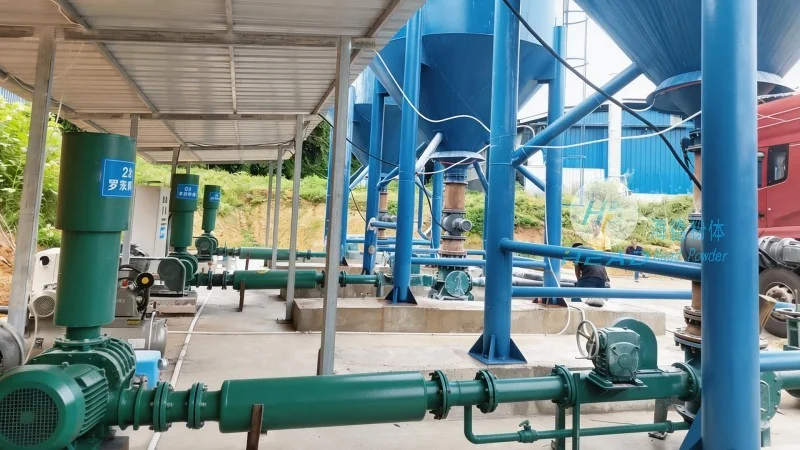
The copper mine sand powder pneumatic conveying line is a critical system designed to transport copper mine sand powder efficiently and safely. This system is widely used in the mining and mineral processing industries to move bulk materials from one location to another without the need for mechanical components like belts or buckets. The technology leverages the principles of pneumatic conveying, where materials are transported through a pipeline using air pressure or vacuum.
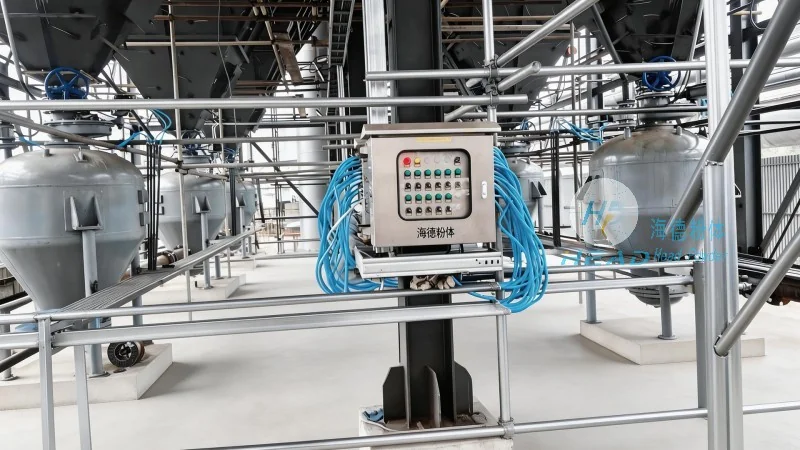
The operation of the copper mine sand powder pneumatic conveying line is based on the fundamental principle of fluidization and suspension of the powder particles in a carrier gas. The system typically consists of a material hopper, a feeder, a conveying pipeline, a receiver, and a control system. The process begins when the copper mine sand powder is fed into the hopper. The feeder then regulates the flow rate of the material into the pipeline. As the material enters the pipeline, it is mixed with the carrier air, which is generated by a blower or a vacuum pump. The air flow creates a low-pressure or high-pressure environment, depending on the system design, to move the powder particles through the pipeline. The conveying velocity is carefully controlled to ensure that the powder remains suspended in the air stream, preventing blockages and ensuring smooth transport. The receiver at the end of the pipeline collects the transported powder, and the system is equipped with filters and dust collectors to manage any airborne particles and maintain environmental compliance.
The operation process of the copper mine sand powder pneumatic conveying line involves several key steps that ensure efficient and reliable material transport. First, the system is prepared for operation, which includes checking the air pressure, verifying the integrity of the pipeline, and ensuring that all components are properly lubricated and functional. Next, the material is loaded into the hopper, and the feeder is activated to start the material flow. The blower or vacuum pump is then started, generating the necessary air flow to initiate the conveying process. As the material is fed into the pipeline, it is carried by the air stream, moving towards the receiver. The control system monitors the pressure and flow rates in real-time, adjusting the air supply as needed to maintain optimal conveying conditions. During operation, the system continuously collects data on material flow rates, air pressure, and temperature to ensure that the process is running within the designed parameters. Any deviations are detected and corrected by the control system to prevent system failures or material blockages. Finally, when the material transport is complete, the system is shut down in an orderly manner, with the air flow reduced and the material flow stopped to prevent any residual material from being left in the pipeline. The receiver is then emptied, and the system is prepared for the next batch of material transport.

The copper mine sand powder pneumatic conveying line comprises several key components, each playing a crucial role in the overall operation. The material hopper is the storage container for the copper mine sand powder, providing a consistent supply of material to the feeder. The hopper is typically designed with a sloped bottom to facilitate the flow of material into the feeder. The feeder, often a rotary valve or a screw feeder, regulates the flow rate of the material into the pipeline, ensuring a steady and controlled feed. The conveying pipeline is made of durable materials, such as stainless steel or plastic, to withstand the abrasive nature of the copper mine sand and prevent corrosion. The pipeline is equipped with bends and elbows to direct the material flow, and the diameter of the pipeline is selected based on the material flow rate and conveying distance. The receiver is the terminal component of the system, where the transported powder is collected. It is designed with a hopper and a discharge valve to allow for easy collection and storage of the material. The control system includes sensors, a control panel, and a blower or vacuum pump, which monitor and regulate the system's operation. The sensors measure parameters such as pressure, flow rate, and temperature, providing real-time data to the control panel. The control panel allows operators to adjust the system settings, such as air pressure and material flow rate, to optimize performance. The blower or vacuum pump generates the carrier air, which is essential for moving the powder particles through the pipeline.

 Shandong Headpowder Engineering Co., Ltd.
 156-6277-7102(Manager Zhang)
  0531-83386006
  Zhangqiu District, Jinan City, Shandong Province, China
telephone
WeChatconsult
top