With more than 10‑year industry experience, Shandong Headpowder delivers full‑service pneumatic‑conveying systems and blowers, undertaking nationwide turn‑key powder‑handling projects.
HeadPowder, a leading provider in the field of powder handling technology, specializes in the efficient and reliable transportation of barium sulfate (BaSO4) powders through pneumatic conveying systems. This article delves into the fundamental principles behind this process and highlights the key characteristics of working scenarios where such systems are employed, providing a comprehensive overview for industry professionals seeking to optimize their material handling operations.
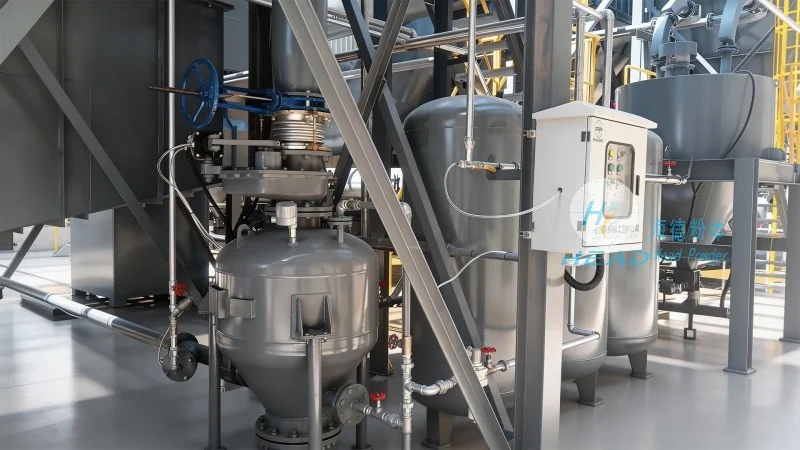
HeadPowder, operating from Shandong, China, is dedicated to advancing powder processing solutions. With a focus on innovation and precision, the company develops and implements advanced pneumatic conveying technologies tailored to the unique demands of various industrial applications. The expertise of HeadPowder lies in ensuring the safe, efficient, and cost-effective movement of fine powders like barium sulfate, which are critical in sectors such as coatings, paper manufacturing, and pharmaceuticals.
Pneumatic conveying, also known as pneumatic transport, is a method of transporting bulk materials through a pipeline using a gas stream, typically air or other gases. In the case of barium sulfate powders, this process involves creating a flow of air within a sealed system that draws the powder particles into the pipeline. The fundamental principle revolves around the balance between the velocity of the gas and the particle size, density, and flow properties of the powder. For BaSO4, which is a fine, non-combustible powder with a relatively high density, the system must be designed to maintain sufficient air velocity to overcome the gravitational forces acting on the particles, ensuring they remain suspended and transported smoothly.
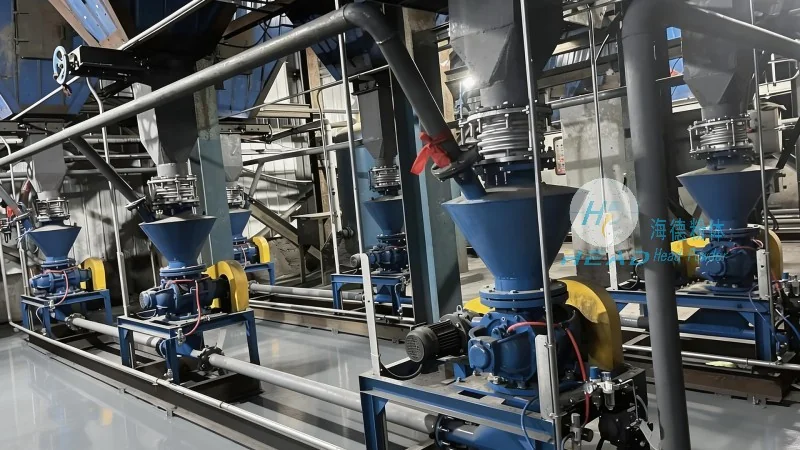
Key components of a pneumatic conveying system for BaSO4 powders include the feed hopper, which holds the powder and regulates its discharge; the air compressor or blower, which generates the necessary airflow; the conveying line, which transports the powder; and the discharge hopper or receiver, where the material is collected. The system may also incorporate additional features such as filters to prevent dust accumulation and pressure relief valves to maintain system safety. The design of the system is critical, as it must account for the specific properties of BaSO4, including its particle size distribution, moisture content, and potential for agglomeration, to ensure optimal performance and minimal operational issues.
The working scenarios for BaSO4 powder pneumatic conveying vary based on the industrial application and the scale of operation. In large-scale manufacturing facilities, such as those producing high-quality coatings or specialty papers, the system is often designed for continuous operation, handling high volumes of powder with minimal downtime. These scenarios typically involve long-distance conveying, where the powder is transported from a storage silo to a processing plant or from one production line to another. The efficiency of the system in these cases is measured by factors like throughput, energy consumption, and the ability to maintain consistent particle size and quality.
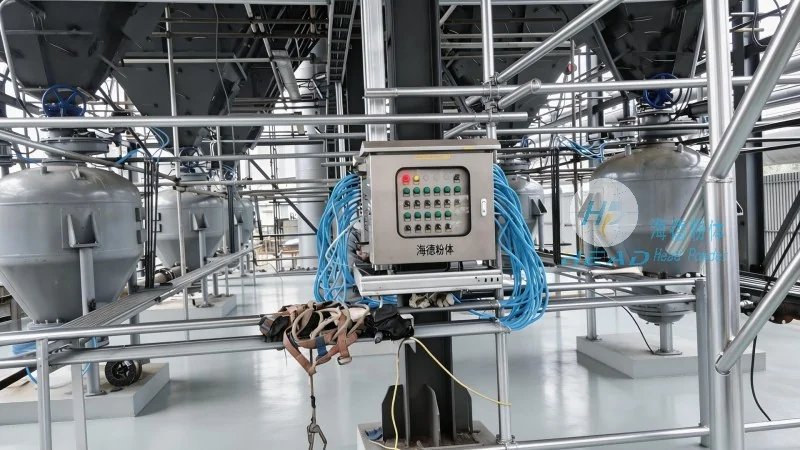
In smaller-scale or laboratory settings, the pneumatic conveying system may be more compact and designed for intermittent use. These scenarios are common in research and development environments where precise control over the powder flow is required. The working characteristics in such settings include lower air velocities, shorter conveying distances, and a focus on maintaining the integrity of the powder, as any degradation could affect the final product quality. Additionally, the system may incorporate features like vacuum or pressure modes to accommodate different operational needs, ensuring flexibility in handling BaSO4 powders under various conditions.
Another important aspect of working scene characteristics is the environmental and safety considerations. BaSO4 is a non-toxic, inert powder, but the pneumatic conveying system must still adhere to safety standards to prevent dust explosions or inhalation risks. This includes the use of explosion-proof components, proper ventilation systems, and regular maintenance to ensure the system operates within safe parameters. The working environment, whether in an indoor industrial facility or an outdoor storage area, also influences the design of the conveying system, with considerations for weather resistance, corrosion resistance, and space constraints.

 Shandong Headpowder Engineering Co., Ltd.
 156-6277-7102(Manager Zhang)
  0531-83386006
  Zhangqiu District, Jinan City, Shandong Province, China
telephone
WeChatconsult
top