With more than 10‑year industry experience, Shandong Headpowder delivers full‑service pneumatic‑conveying systems and blowers, undertaking nationwide turn‑key powder‑handling projects.
For industries dealing with mineral sand and other fine powder materials, efficient material handling is crucial. The pneumatic conveying machine, specifically designed for such applications, offers a reliable solution that combines advanced engineering with practical functionality. This article explores the operation process and working principle of the mineral sand powder pneumatic conveying machine, highlighting its key components, operational mechanisms, and the benefits it provides to industrial processes.
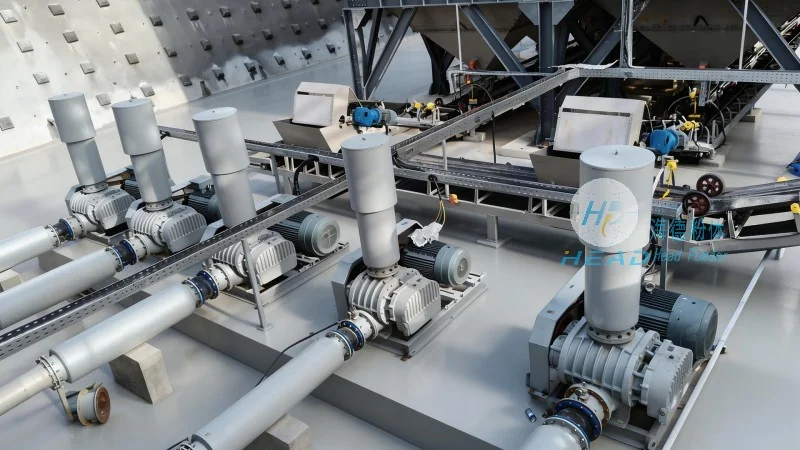
The mineral sand powder pneumatic conveying machine consists of several critical components that work in tandem to ensure smooth material transport. These include the hopper, which serves as the material storage and feeding unit; the air compressor or blower, responsible for generating the necessary air pressure; the pipeline system, which forms the pathway for both material and air; and the control system, which regulates the flow and pressure to maintain optimal performance. Each component is engineered to withstand the abrasive nature of mineral sand and powder, ensuring long-term durability and minimal maintenance.
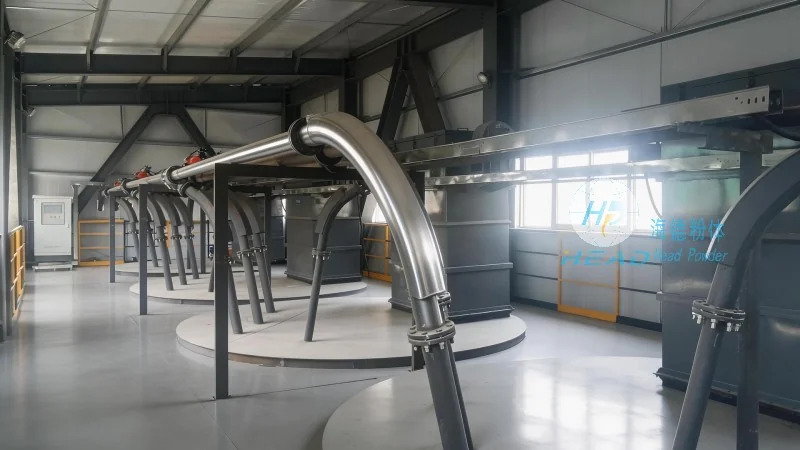
The operation of the mineral sand powder pneumatic conveying machine is based on the principle of pneumatic transport, where material is moved through a pipeline using compressed air. The process begins with the material being fed from the hopper into the pipeline. Simultaneously, the air compressor generates high-pressure air that is introduced into the pipeline. As the air flows through the system, it creates a low-pressure zone that draws the material particles into the air stream. The mixture of air and material then travels through the pipeline to the discharge point, where the material is separated from the air and collected in the receiving hopper. This continuous cycle allows for efficient and unobstructed transport of mineral sand and other fine powders, minimizing downtime and maximizing productivity.
The operation process of the mineral sand powder pneumatic conveying machine involves several sequential steps that ensure consistent and reliable material handling. First, the hopper is filled with the mineral sand or powder material. The control system then activates the air compressor, which starts generating the required air pressure. Next, the material is released from the hopper into the pipeline, where it is entrained by the high-pressure air. The mixture travels through the pipeline to the discharge point, where the material is deposited. The air, now free of material particles, is either vented to the atmosphere or recirculated back to the system, depending on the design. This cycle repeats continuously, maintaining a steady flow of material from the source to the destination. The control system continuously monitors parameters such as pressure, flow rate, and material level, adjusting the operation as needed to prevent blockages or inefficiencies.
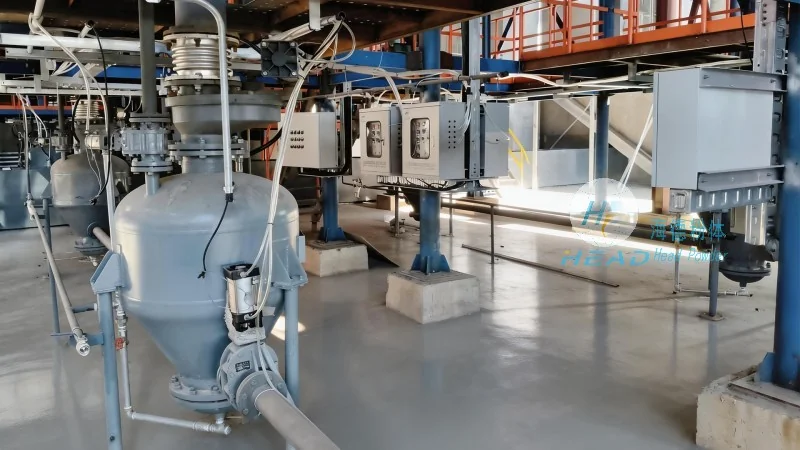
The mineral sand powder pneumatic conveying machine offers numerous advantages for industries that handle mineral sand and fine powders. Its ability to transport materials without the need for mechanical parts reduces the risk of material contamination and wear, making it suitable for applications where product purity is critical. Additionally, the system is compact and can be integrated into existing industrial setups, saving space and reducing installation costs. The machine is widely used in mining, construction, and chemical industries, where it efficiently handles materials like sand, cement, and other powders. Its flexibility in handling different particle sizes and moisture content makes it a versatile solution for various industrial needs.

 Shandong Headpowder Engineering Co., Ltd.
 156-6277-7102(Manager Zhang)
  0531-83386006
  Zhangqiu District, Jinan City, Shandong Province, China
telephone
WeChatconsult
top