With more than 10‑year industry experience, Shandong Headpowder delivers full‑service pneumatic‑conveying systems and blowers, undertaking nationwide turn‑key powder‑handling projects.
Aluminum nitride (AlN) is a wide-bandgap semiconductor material widely used in high-temperature, high-frequency, and high-power electronic applications. As the demand for AlN-based components grows, the need for efficient and reliable material handling equipment becomes increasingly critical. This article explores the concept of aluminum nitride material handling equipment and delves into the fundamental design principles that underpin their functionality.

Shandong HeadPowder Engineering Co., Ltd., a leading manufacturer in the field, specializes in the development and production of advanced material handling solutions tailored for the handling of AlN powders and related materials. With a strong focus on precision, durability, and safety, the company’s equipment is designed to meet the stringent requirements of modern manufacturing processes.
Aluminum nitride material handling equipment encompasses a range of devices, including conveyors, feeders, and handling systems, all engineered to transport AlN powders and pellets with minimal contamination and loss. The primary challenge in handling AlN is its high reactivity and sensitivity to moisture, which necessitates specialized equipment that maintains a dry, inert environment throughout the material flow.
The design of aluminum nitride material handling equipment is guided by several key principles aimed at ensuring optimal performance and material integrity. First, the equipment must be constructed from materials that are chemically inert to AlN and resistant to corrosion. Common materials include stainless steel, titanium, and specialized alloys that do not react with the material being handled.
Second, the design emphasizes the use of sealed and enclosed systems to prevent exposure to air and moisture. This is crucial because AlN is hygroscopic and can absorb moisture from the atmosphere, leading to degradation of its properties. The equipment typically features airtight seals, vacuum or inert gas (such as nitrogen) purging systems, and moisture-resistant components to maintain a dry environment.
Third, the equipment is designed for low friction and minimal particle generation. AlN particles are often fine and can cause abrasive wear on conventional equipment. Therefore, components such as conveyor belts, rollers, and chutes are made from materials with low surface energy, and the design incorporates smooth surfaces and rounded edges to reduce particle breakage and contamination.
Several critical components are integral to the operation of aluminum nitride material handling equipment. The feeding mechanism, often a screw feeder or vibratory feeder, ensures a controlled and consistent flow of AlN material. These components are designed to handle the specific bulk density and flow characteristics of AlN powders, preventing clogging and ensuring smooth material transfer.
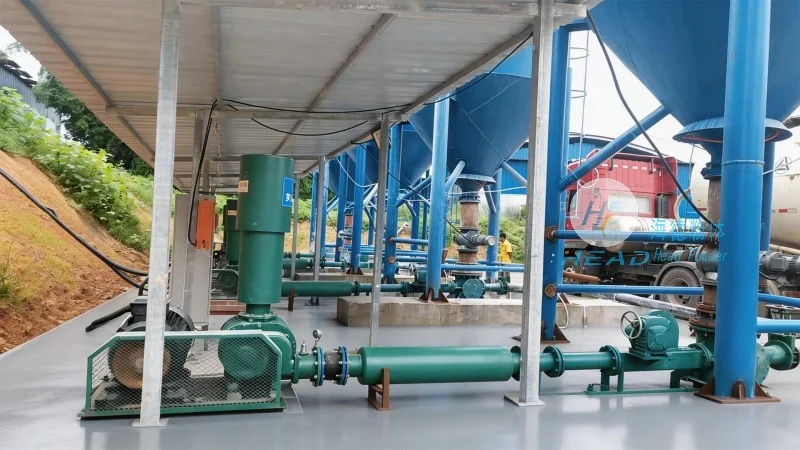
The conveying system, which may include belt conveyors, pneumatic conveyors, or bucket elevators, transports the AlN material from one processing stage to another. The choice of conveying method depends on factors such as the material's particle size, moisture content, and the required distance and speed of transport. For example, pneumatic conveyors are effective for fine AlN powders, as they can transport materials over longer distances without the need for mechanical contact.
The control system plays a vital role in regulating the operation of the equipment. It monitors parameters such as material flow rate, pressure, and temperature, and adjusts the equipment's performance as needed to maintain optimal conditions. The control system may include sensors for moisture detection, particle size analysis, and environmental monitoring, ensuring that the material remains in a stable state throughout the handling process.
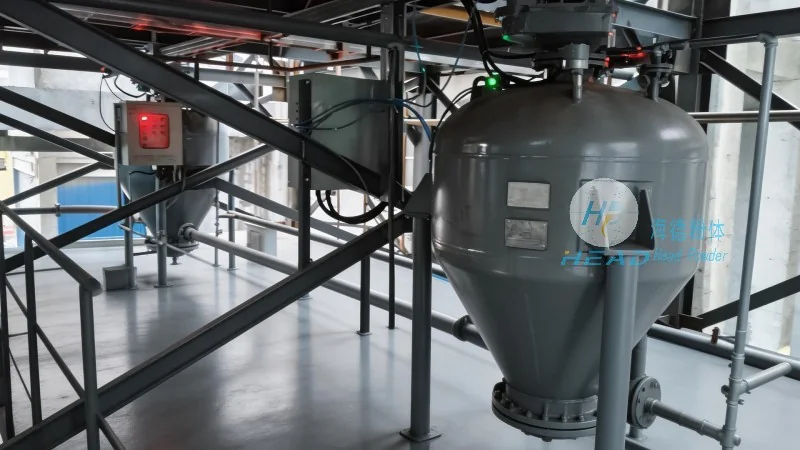
Aluminum nitride material handling equipment is widely used in various industries, including semiconductor manufacturing, aerospace, and advanced ceramics. In semiconductor fabrication, the equipment is essential for transporting AlN powders used in the production of high-performance electronic components, such as power devices and RF (radio frequency) circuits.
In the aerospace industry, AlN is used in thermal management systems due to its excellent thermal conductivity. The material handling equipment ensures that AlN powders are delivered to the manufacturing line in a controlled manner, enabling the production of lightweight and efficient thermal management solutions.
The benefits of using specialized aluminum nitride material handling equipment include improved material quality, reduced contamination, and enhanced process efficiency. By maintaining a dry and inert environment, the equipment prevents the degradation of AlN properties, leading to higher purity and better performance of the final products. Additionally, the controlled flow of material reduces waste and minimizes the risk of accidents, contributing to a safer and more sustainable manufacturing process.
Aluminum nitride material handling equipment is a critical component in the manufacturing processes of AlN-based components. The design principles, including the use of inert materials, sealed systems, and low-friction components, ensure that the material is handled with precision and care. Shandong HeadPowder Engineering Co., Ltd. continues to innovate in this field, providing advanced solutions that meet the evolving needs of the industry. As the demand for high-performance AlN materials grows, the importance of reliable material handling equipment will only increase, making it a key factor in the success of modern manufacturing.

 Shandong Headpowder Engineering Co., Ltd.
 156-6277-7102(Manager Zhang)
  0531-83386006
  Zhangqiu District, Jinan City, Shandong Province, China
telephone
WeChatconsult
top