With more than 10‑year industry experience, Shandong Headpowder delivers full‑service pneumatic‑conveying systems and blowers, undertaking nationwide turn‑key powder‑handling projects.
Algae powder, a valuable resource in modern industrial applications, often requires efficient and reliable transport methods to ensure optimal processing and utilization. Pneumatic conveying systems have emerged as a preferred solution for handling such powders, offering advantages in terms of hygiene, speed, and minimal product contamination. This article provides an overview of the pneumatic conveying process for algae powder, detailing the working principles and the role of specialized equipment in facilitating this operation.
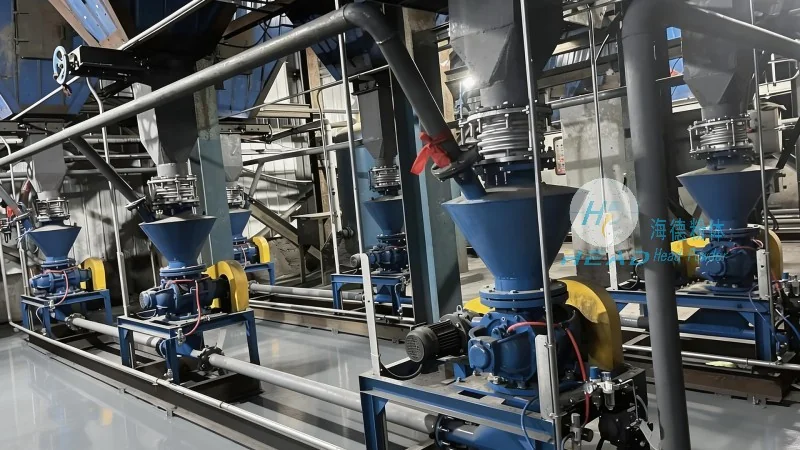
HeadPowder, a leading provider in the field, specializes in the design, manufacturing, and implementation of pneumatic conveying systems tailored to the unique characteristics of algae powder. With a focus on precision and durability, their systems are engineered to meet the demands of various industrial sectors, including food processing, biotechnology, and renewable energy production. The company’s expertise lies in understanding the specific challenges associated with handling fine, moisture-sensitive powders like algae, and developing solutions that address these challenges effectively.
Located in Shandong, China, Shandong HeadPowder Engineering Co., Ltd. leverages advanced technology and years of industry experience to deliver high-performance pneumatic conveying solutions. The company’s facilities are equipped with state-of-the-art testing and simulation equipment, enabling them to optimize system designs for maximum efficiency and reliability. By collaborating closely with clients, HeadPowder ensures that each pneumatic conveying system is customized to meet specific operational requirements, whether it involves short-distance or long-distance transport of algae powder.
Pneumatic conveying systems operate by using compressed air or gas to transport solid materials, such as algae powder, through a pipeline network. The fundamental principle involves creating a pressure differential between the inlet and outlet of the system, which propels the powder particles forward. There are two primary types of pneumatic conveying systems: pressure and vacuum systems, each with distinct applications and operational characteristics.
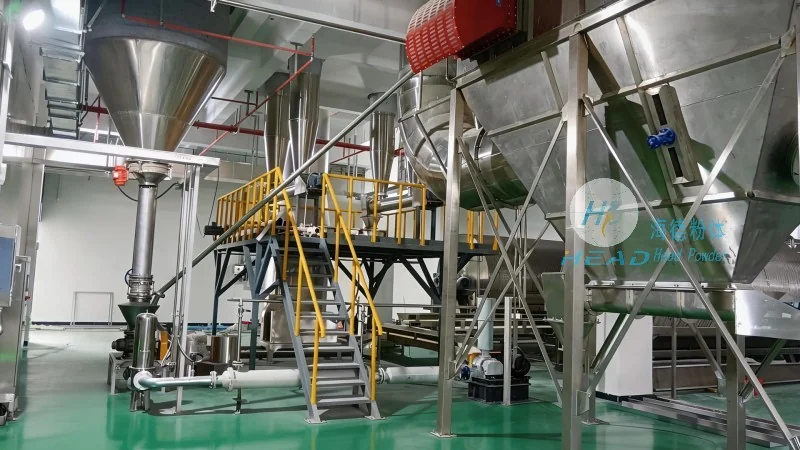
In pressure systems, compressed air is introduced at the conveying point, pushing the powder through the pipeline. This method is ideal for short to medium-distance transport and is commonly used in applications where the powder needs to be conveyed from a silo or storage bin to a processing unit. The pressure system ensures a continuous flow of material, minimizing the risk of clogging and maintaining consistent conveying rates.
Vacuum systems, on the other hand, use a vacuum pump to create a negative pressure at the receiving end, drawing the powder into the pipeline. This approach is suitable for longer distances and for handling materials that are sensitive to pressure changes or for applications where the powder needs to be collected from multiple sources. The vacuum system allows for more flexible and versatile conveying, as it can accommodate varying material loads and distances.
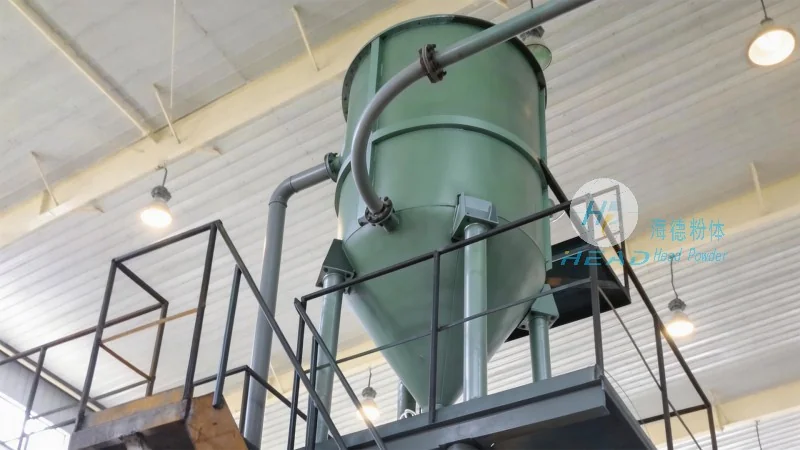
An effective pneumatic conveying system for algae powder consists of several critical components, each playing a vital role in the overall operation. These components include the material feed system, the conveying line, the air supply unit, and the control system. The material feed system is responsible for introducing the algae powder into the pipeline, ensuring a consistent and controlled flow. This may involve hoppers, feeders, or rotary valves, depending on the system design and the characteristics of the powder.
The conveying line, typically made of stainless steel or other corrosion-resistant materials, is designed to withstand the abrasive nature of algae powder and the effects of compressed air. The choice of material for the pipeline is crucial to prevent degradation and maintain the integrity of the system over time. The air supply unit, which may include compressors, filters, and regulators, provides the necessary pressure and air quality to ensure efficient conveying. Proper filtration is essential to remove contaminants from the air, as these can affect the quality of the algae powder and the performance of the system.
The control system, often integrated with sensors and automation technology, monitors and regulates the operation of the pneumatic conveying system. This includes controlling the air pressure, flow rate, and material feed rate, ensuring that the system operates within optimal parameters. The control system also provides real-time feedback on the system’s performance, allowing for quick adjustments and troubleshooting in case of any issues.

 Shandong Headpowder Engineering Co., Ltd.
 156-6277-7102(Manager Zhang)
  0531-83386006
  Zhangqiu District, Jinan City, Shandong Province, China
telephone
WeChatconsult
top