With more than 10‑year industry experience, Shandong Headpowder delivers full‑service pneumatic‑conveying systems and blowers, undertaking nationwide turn‑key powder‑handling projects.
HeadPowder, a leading engineering company based in Shandong, China, specializes in the design and implementation of advanced material handling solutions, including pneumatic conveying systems tailored for the lithium-ion battery industry. The company's expertise lies in addressing the unique challenges associated with transporting lithium-ion batteries efficiently and safely, ensuring minimal product damage and optimal operational performance. This article explores the various types of pneumatic conveying systems used in lithium-ion battery handling and their practical applications in industrial settings.
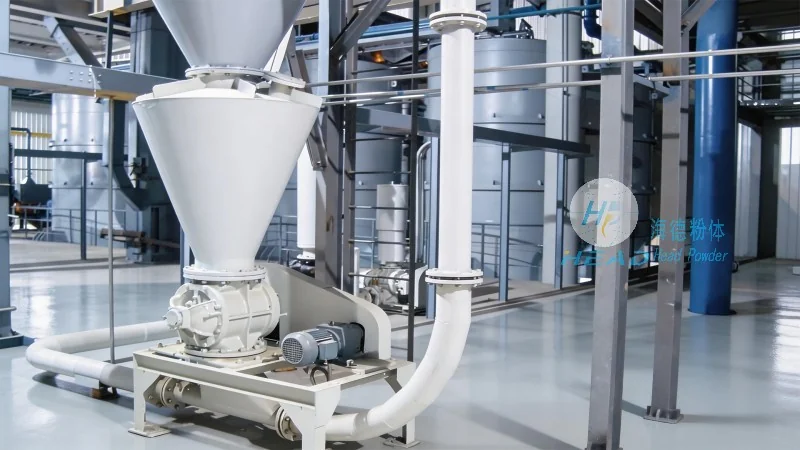
Pneumatic conveying systems are a critical component in the battery manufacturing and processing chain, offering a flexible and efficient method for moving materials like battery cells, modules, and components. These systems utilize compressed air to transport materials through a network of pipes, eliminating the need for mechanical components that can cause wear and tear or contamination. For lithium-ion batteries, which are sensitive to physical shock, vibration, and environmental factors, the choice of pneumatic conveying system is paramount to maintaining product integrity and extending shelf life.
There are primarily two main categories of pneumatic conveying systems: positive pressure (or pressure) systems and negative pressure (or vacuum) systems. Positive pressure systems operate by blowing air into the conveying line, pushing the material forward. This method is generally more suitable for longer distances and higher material loads, as it can handle larger particles and maintain consistent flow rates. Negative pressure systems, on the other hand, use suction to draw material into the system, making them ideal for applications requiring gentle handling, such as transporting delicate battery cells or components that are prone to static discharge. Both systems have their advantages and are selected based on the specific requirements of the battery handling process, including material characteristics, distance, and operational environment.
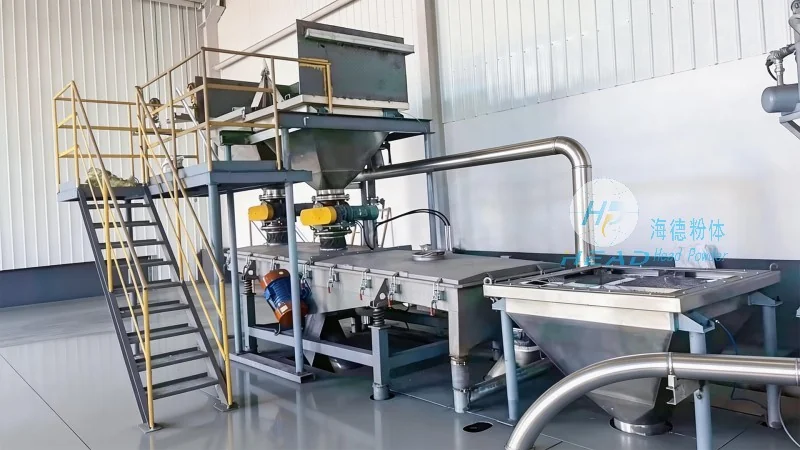
Within these main categories, several sub-types of pneumatic conveying systems are commonly employed in lithium-ion battery processing. One such system is the dense-phase conveying system, which operates at low air velocity and high material concentration. This method minimizes particle impact and reduces the risk of product degradation, making it particularly suitable for transporting sensitive battery cells. Dense-phase conveying ensures that the material is transported in a "plug flow" manner, where each particle is supported by the surrounding material, preventing individual particles from coming into direct contact with the pipe walls. This gentle handling is crucial for maintaining the structural integrity of lithium-ion batteries, which can be easily damaged by mechanical stress.
Another important sub-type is the dilute-phase conveying system, which operates at higher air velocities and lower material concentrations. This system is typically used for shorter distances and lighter loads, such as transporting raw materials or small components to the battery assembly line. Dilute-phase systems are more cost-effective and can handle a wider range of materials, but they may not be suitable for delicate battery cells due to the higher risk of particle impact and vibration. The choice between dense-phase and dilute-phase systems depends on the specific handling requirements, with dense-phase systems preferred for high-value or sensitive products like lithium-ion batteries.

HeadPowder's engineers have extensive experience in designing customized pneumatic conveying solutions for lithium-ion battery manufacturers. By integrating advanced control systems and monitoring technologies, the company ensures that the conveying process is optimized for efficiency and product safety. For example, in a battery cell production line, a combination of positive and negative pressure systems may be used to transport cells from the coating and drying stages to the assembly area. The positive pressure system can handle the initial transport of wet or sticky materials, while the negative pressure system is used for the final, gentle handling of the finished cells to prevent any damage during transfer.
The practical applications of pneumatic conveying systems in lithium-ion battery handling are diverse and critical to the overall manufacturing process. One key application is the transport of battery cells from the electrode coating and drying equipment to the cell formation and assembly stations. This step requires a system that can handle high volumes of cells while minimizing the risk of physical damage. HeadPowder's dense-phase positive pressure systems are often used for this purpose, as they can transport large quantities of cells over longer distances without compromising their quality. Another application is the handling of battery modules, which are assembled from multiple cells and require careful transport to the packaging and testing stages. Here, a negative pressure dilute-phase system may be employed to move the modules gently and efficiently, ensuring that the connections between cells remain intact.
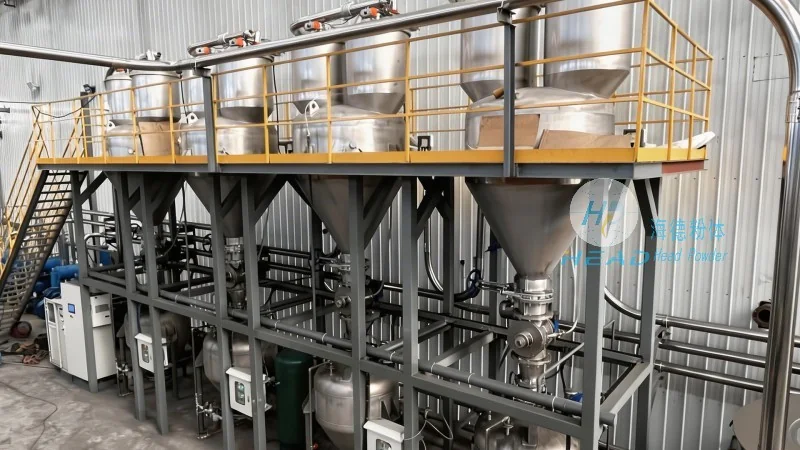
Additionally, pneumatic conveying systems are used in the recycling and reprocessing of lithium-ion batteries. As the battery industry grows, the need for efficient recycling processes increases, and pneumatic conveying plays a vital role in transporting used batteries from collection points to recycling facilities. The systems must be designed to handle a wide range of battery types and conditions, including those with residual charge or contaminants. HeadPowder's expertise in material handling allows them to design systems that can safely and effectively process these materials, adhering to environmental and safety regulations. The use of pneumatic conveying in recycling not only improves operational efficiency but also reduces the environmental impact of battery disposal by facilitating the recovery of valuable materials like lithium, cobalt, and nickel.
In conclusion, pneumatic conveying systems are indispensable in the lithium-ion battery industry, offering a reliable and efficient method for handling sensitive materials. The choice of system type—whether positive or negative pressure, dense-phase or dilute-phase—depends on the specific requirements of the battery handling process, including material characteristics, distance, and operational constraints. HeadPowder, with its strong engineering background and practical experience, provides tailored solutions that meet the unique needs of lithium-ion battery manufacturers, ensuring optimal performance, product safety, and operational efficiency. By leveraging advanced technology and customized design, the company continues to support the growth and sustainability of the battery industry through effective material handling solutions.

 Shandong Headpowder Engineering Co., Ltd.
 156-6277-7102(Manager Zhang)
  0531-83386006
  Zhangqiu District, Jinan City, Shandong Province, China
telephone
WeChatconsult
top