With more than 10‑year industry experience, Shandong Headpowder delivers full‑service pneumatic‑conveying systems and blowers, undertaking nationwide turn‑key powder‑handling projects.
HeadPowder, a leading engineering company based in Shandong, China, specializes in the design, manufacturing, and installation of advanced pneumatic conveying systems tailored for handling borax granular materials. This article provides a detailed overview of the operational process and working principles of such systems, highlighting the efficiency and reliability they offer in industrial applications.
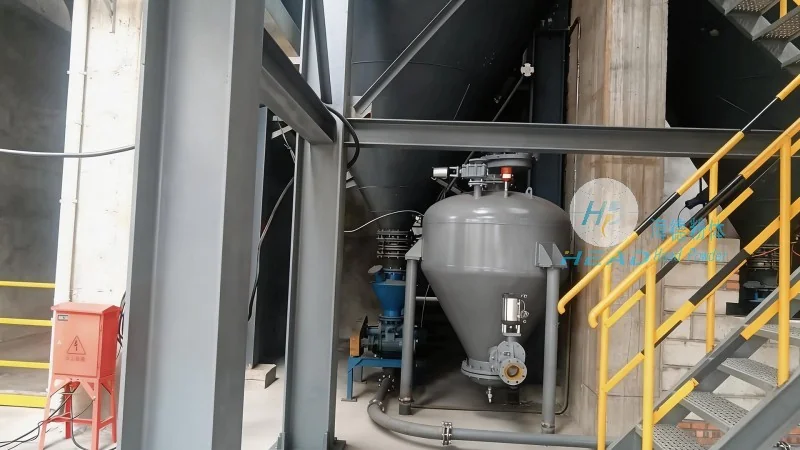
The pneumatic conveying system for borax granular materials typically consists of several critical components that work in tandem to ensure smooth material transport. These include the hopper, which serves as the storage and feeding unit; the conveyor line, which may be of the dilute-phase or dense-phase type depending on the application requirements; the air compressor or blower, responsible for generating the necessary airflow; and the control system, which monitors and regulates the entire process. Each component plays a vital role in maintaining the system's performance and safety.
The operation process of the borax granular material pneumatic conveying system begins with the material being fed from the hopper into the conveyor line. The air compressor then generates a high-pressure airflow that draws the borax granules into the system. As the material travels through the pipeline, it is carried by the air stream, ensuring efficient transport to the destination point, such as a storage silo or processing unit. The system's control panel continuously monitors parameters like pressure, flow rate, and material level, allowing for real-time adjustments to maintain optimal performance. This automated process minimizes human intervention and reduces the risk of material spillage or blockages.
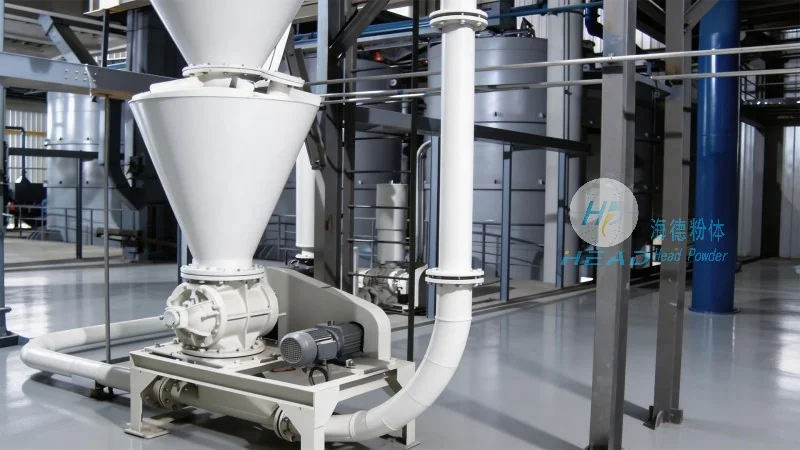
The working principle of the pneumatic conveying system for borax granular materials is based on the fundamental concept of transporting solid particles using an air stream. In dilute-phase systems, the material is suspended in the air and transported at relatively high velocities, typically ranging from 20 to 30 meters per second. This method is suitable for short to medium distances and low to medium material loads. In contrast, dense-phase systems operate at lower velocities, with the material forming a slurry-like mixture with the air, which is ideal for longer distances and higher material volumes. The system's design, including the type of air compressor and pipeline configuration, is tailored to the specific characteristics of borax granules, such as their size, density, and moisture content, to ensure efficient and reliable transport.
Implementing a pneumatic conveying system for borax granular materials offers numerous advantages over traditional methods like bucket elevators or belt conveyors. Firstly, it eliminates the need for mechanical contact with the material, reducing the risk of contamination and wear on equipment. Secondly, the system provides a closed-loop operation, minimizing dust emissions and improving workplace safety. Thirdly, it allows for precise control over material flow rates and pressure, ensuring consistent delivery to downstream processes. Additionally, the system's compact design and flexibility make it suitable for various industrial settings, from small-scale operations to large-scale production facilities. These benefits contribute to increased operational efficiency, reduced maintenance costs, and enhanced product quality.
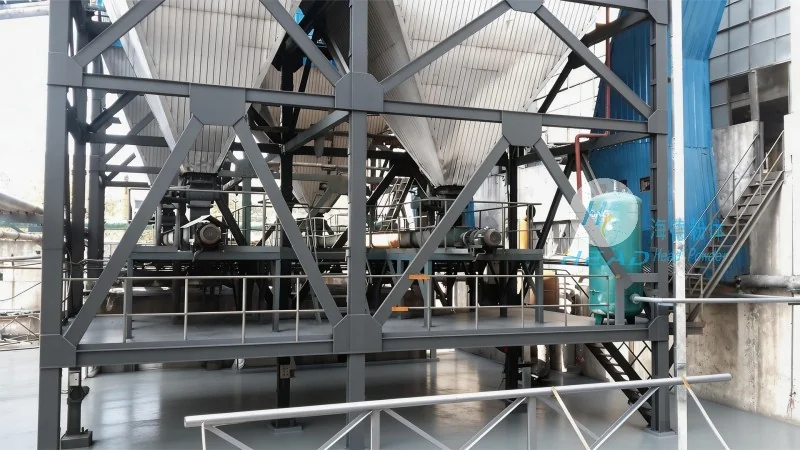
The pneumatic conveying system for borax granular materials is widely used in various industries, including chemical manufacturing, food processing, and pharmaceutical production. For instance, in a chemical plant, the system efficiently transports borax from storage silos to reaction vessels, ensuring a steady supply of raw material. In a food processing facility, the system safely handles borax granules during the production of borax-based products, maintaining hygiene standards. The system's reliability and adaptability make it a preferred choice for industries that require consistent and safe material handling. By optimizing the transport process, the system helps companies improve their overall productivity and meet stringent quality standards.
HeadPowder's pneumatic conveying systems for borax granular materials represent a cutting-edge solution for efficient and reliable material handling. By understanding the operation process and working principles of these systems, industries can make informed decisions about implementing such technology to enhance their operations. As technology advances, the pneumatic conveying systems are likely to become even more sophisticated, incorporating smart sensors and automation to further improve performance and reduce operational costs. With its proven track record and commitment to quality, HeadPowder continues to be a trusted partner in providing tailored solutions for borax material handling needs.

 Shandong Headpowder Engineering Co., Ltd.
 156-6277-7102(Manager Zhang)
  0531-83386006
  Zhangqiu District, Jinan City, Shandong Province, China
telephone
WeChatconsult
top