With more than 10‑year industry experience, Shandong Headpowder delivers full‑service pneumatic‑conveying systems and blowers, undertaking nationwide turn‑key powder‑handling projects.
HeadPowder, a leading engineering company based in Shandong, China, specializes in the design, installation, and maintenance of advanced pneumatic conveying systems for various industrial applications. This article provides a detailed overview of the operation process and working principle of pneumatic conveying systems specifically tailored for the transportation of potassium carbonate material. The system efficiently handles bulk material transport, ensuring high reliability and minimal operational downtime.
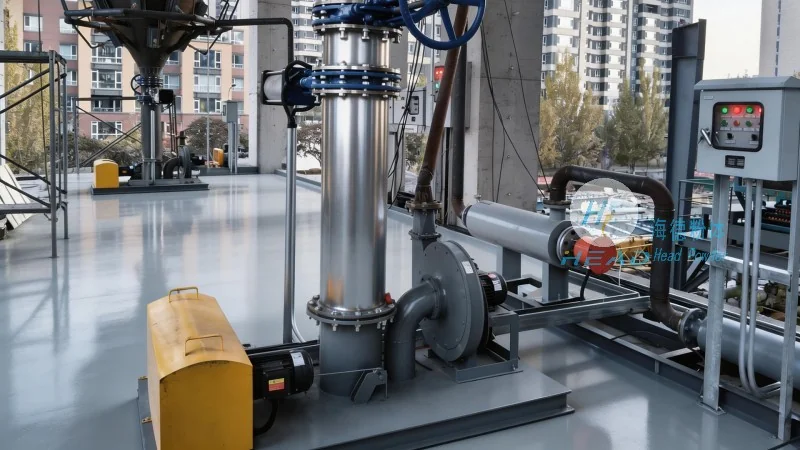
Potassium carbonate, commonly used in chemical industries, pharmaceuticals, and food processing, requires efficient and safe material handling solutions. Pneumatic conveying systems offer a non-contact, dust-free method to transport potassium carbonate, which is crucial for maintaining product quality and operational safety. These systems utilize air or gas as the conveying medium, enabling the movement of bulk solids through pipelines without the need for mechanical components like belts or buckets.
The pneumatic conveying system for potassium carbonate typically consists of several critical components that work in tandem to ensure smooth material transport. These include the material hopper, which stores the potassium carbonate and feeds it into the system; the air compressor or blower, which generates the necessary air pressure to move the material; the conveying pipeline, which transports the material from the hopper to the discharge point; and the dust collector or filter, which removes any airborne particles to maintain air quality and prevent contamination.
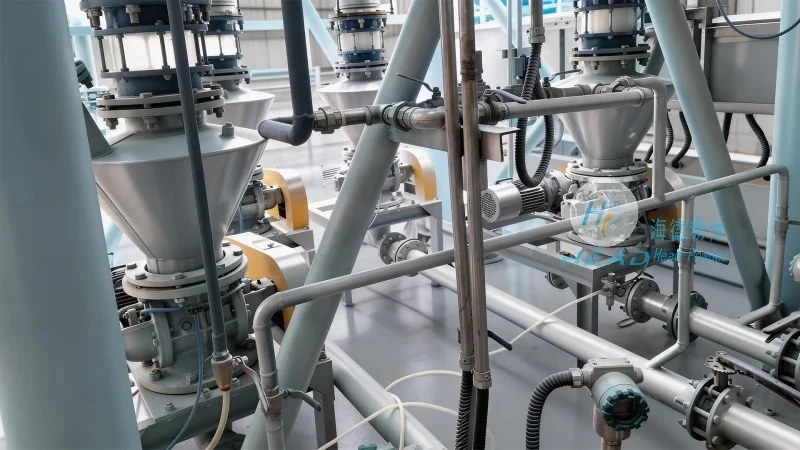
The operation of the potassium carbonate pneumatic conveying system begins with the material being fed from the hopper into the conveying pipeline. The air compressor then generates a high-pressure air stream that is introduced into the pipeline. As the air flows through the pipeline, it entrains the potassium carbonate particles, creating a slurry-like mixture known as a "pneumatic stream." This stream travels through the pipeline to the discharge point, where the air and material are separated. The air is then filtered and recirculated, while the potassium carbonate is collected in the receiving container.
The operation process of the pneumatic conveying system for potassium carbonate involves several sequential steps to ensure efficient material transport. First, the material is loaded into the hopper, and the system is activated by starting the air compressor. The hopper's feeder then releases the potassium carbonate into the conveying pipeline as the air stream moves through. The material is carried along the pipeline by the air flow, maintaining a consistent flow rate. At the discharge end, the material is deposited into the receiving vessel, and the air is filtered and returned to the system. This cycle repeats continuously, allowing for uninterrupted material transport.
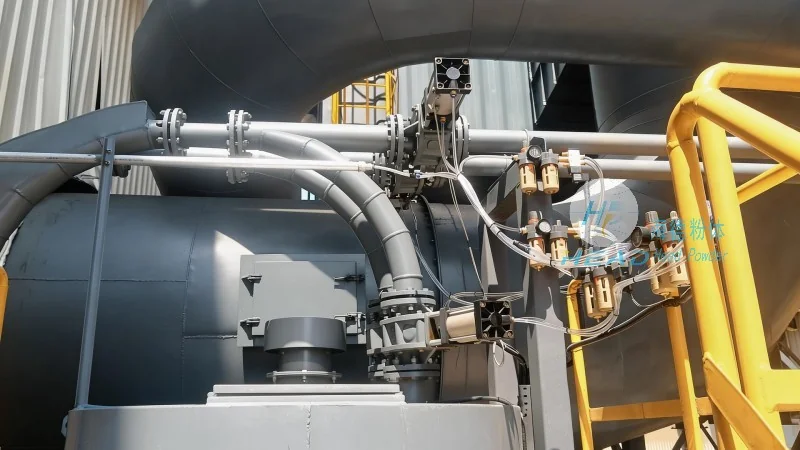
Pneumatic conveying systems offer several advantages when handling potassium carbonate material. These include the ability to transport material over long distances without the need for intermediate transfer points, reduced product contamination due to the non-contact method, and improved safety by eliminating the risk of mechanical failure or material spillage. Additionally, the system can be easily integrated with other industrial processes, providing flexibility in material handling operations.
To ensure the reliable operation of the pneumatic conveying system for potassium carbonate, regular maintenance is essential. This includes checking the air compressor for proper pressure and flow rates, inspecting the conveying pipeline for blockages or wear, and cleaning the dust collector to maintain air quality. Proper maintenance helps to minimize downtime and extend the lifespan of the system components. Additionally, monitoring the material flow rate and air pressure during operation allows for adjustments to optimize the conveying efficiency and prevent system overload.

 Shandong Headpowder Engineering Co., Ltd.
 156-6277-7102(Manager Zhang)
  0531-83386006
  Zhangqiu District, Jinan City, Shandong Province, China
telephone
WeChatconsult
top