With more than 10‑year industry experience, Shandong Headpowder delivers full‑service pneumatic‑conveying systems and blowers, undertaking nationwide turn‑key powder‑handling projects.
For manufacturers in the lithium-ion battery industry, efficient and reliable material handling is crucial to ensure production stability and product quality. Powder pneumatic conveying equipment has become an essential component in the processing of lithium battery materials, such as cathode active materials, anode materials, and electrolyte additives. This equipment not only improves production efficiency but also ensures the purity and consistency of the materials, which are critical for the performance of lithium-ion batteries. In this article, we will explore the operation process and working principle of powder pneumatic conveying equipment used in lithium battery material processing, focusing on the key components, operational steps, and technical advantages of this technology.
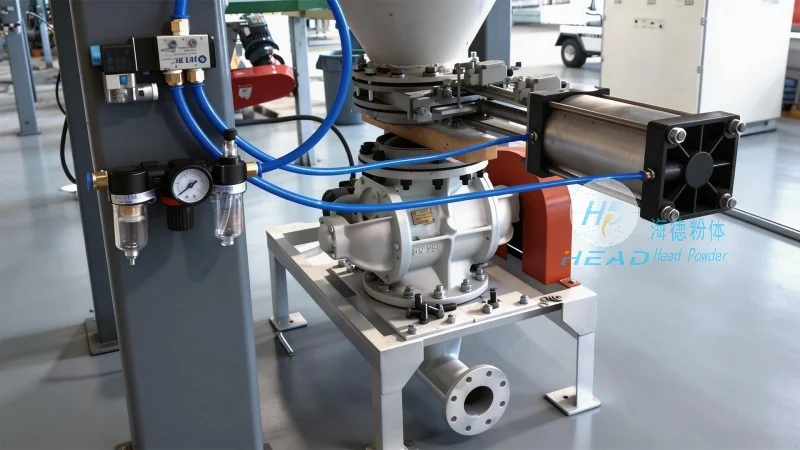
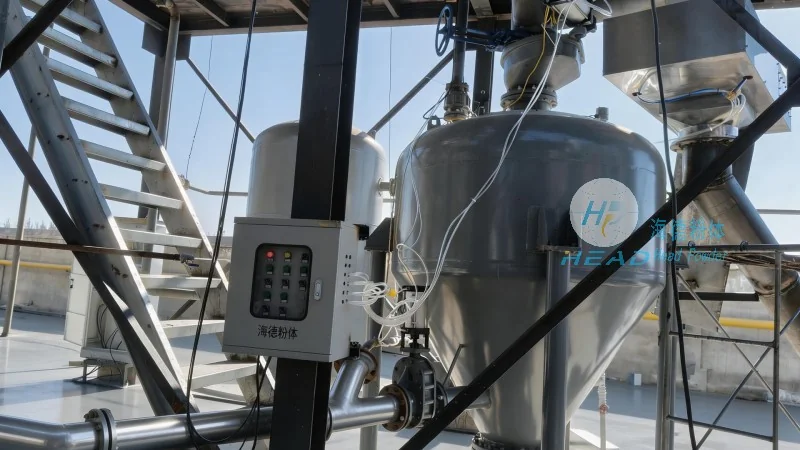
The powder pneumatic conveying system for lithium battery materials typically consists of several core components, each playing a vital role in the overall operation. The main components include a material hopper, a rotary valve (or feeder), a pneumatic conveying pipeline, a dust filter, and a pressure vessel. The material hopper is used to store the bulk powder materials, such as lithium cobalt oxide (LiCoO₂) or lithium iron phosphate (LiFePO₄) for cathodes, or graphite or silicon carbide for anodes. The rotary valve, often a star valve or a rotary airlock, controls the flow of material from the hopper into the conveying pipeline, ensuring a controlled and consistent feed rate. The pneumatic conveying pipeline is the main channel for transporting the powder, which can be either positive pressure or negative pressure systems, depending on the specific application. The dust filter is essential for capturing fine particles and preventing dust from being released into the environment, maintaining air quality and compliance with environmental regulations. Finally, the pressure vessel, if used in a positive pressure system, helps to maintain the pressure within the conveying line and prevent air leakage.
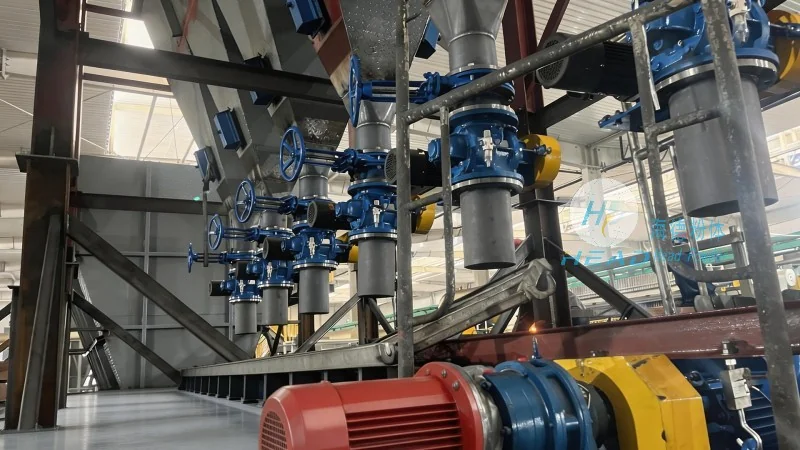
The operation process of the powder pneumatic conveying equipment for lithium battery materials involves several sequential steps. First, the bulk powder materials are loaded into the material hopper. The rotary valve then opens to allow the material to flow into the conveying pipeline at a controlled rate. Simultaneously, the air compressor or blower generates the necessary airflow, which is introduced into the pipeline. In a positive pressure system, the air is pressurized and pushed through the pipeline, carrying the powder particles forward. The powder is then transported to the destination, such as a mixing tank or a storage silo. At the receiving end, a rotary valve or a filter may be used to separate the powder from the air. The air is then filtered and discharged, while the powder is collected and stored. The entire process is automated, with sensors and control systems monitoring the flow rate, pressure, and temperature to ensure stable operation. This automated operation minimizes human intervention, reduces the risk of material contamination, and enhances overall production efficiency.
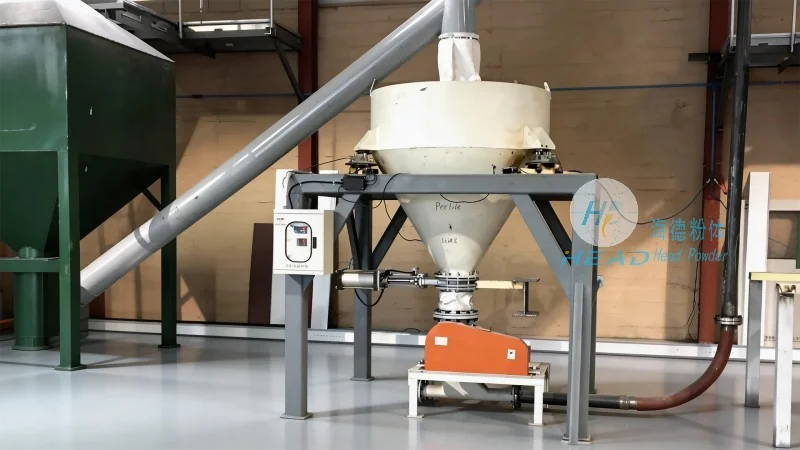
The working principle of the powder pneumatic conveying equipment is based on the movement of powder particles within a gas stream. In a positive pressure system, the air compressor increases the pressure of the air, which then flows through the pipeline, creating a high-velocity airflow. As the powder is introduced into the pipeline, it is entrained by the air and carried along the pipeline. The air velocity is maintained above the critical velocity, which is the minimum velocity required to keep the powder particles suspended and prevent them from settling. The conveying distance and the size of the particles affect the required air velocity and pressure. In a negative pressure system, the blower creates a vacuum in the pipeline, drawing the powder and air mixture from the source and transporting it to the destination. The dust filter at the receiving end captures the powder particles, allowing the air to be released back into the environment after filtration. The working principle ensures that the powder is transported efficiently and without segregation, maintaining the uniformity of the material properties. This is particularly important for lithium battery materials, where the purity and particle size distribution directly impact the battery performance.
There are several key advantages of employing powder pneumatic conveying equipment in the lithium-ion battery material processing industry. First, it offers a high degree of automation, reducing labor costs and minimizing the risk of human error. The automated control systems ensure consistent material flow and prevent overloading or underloading of the equipment. Second, the equipment provides a closed system, which is essential for maintaining the purity of the materials and preventing contamination from external sources. This is critical for lithium battery materials, as even trace impurities can affect the battery's performance and lifespan. Third, the system is flexible and can handle a wide range of powder materials, including fine powders and cohesive powders, which are common in lithium battery production. The ability to transport materials over long distances without the need for intermediate storage or handling reduces the risk of material degradation and improves overall production efficiency. Finally, the equipment is energy-efficient compared to traditional methods like belt conveyors or bucket elevators, as it uses compressed air, which can be optimized for energy consumption. These advantages make powder pneumatic conveying equipment a preferred choice for modern lithium battery manufacturing facilities.
Shandong HeadPowder Engineering Co., Ltd., also known as HeadPowder, is a leading manufacturer and supplier of powder handling equipment for the lithium-ion battery industry. With a focus on innovation and quality, HeadPowder has developed advanced powder pneumatic conveying systems tailored to the specific needs of lithium battery material processing. The company's products are designed to meet the stringent requirements of the battery industry, including high purity, low contamination, and efficient operation. HeadPowder's engineering team has extensive experience in the design and manufacturing of powder handling equipment, ensuring that each system is customized to the customer's production requirements. The company's facilities are equipped with state-of-the-art technology and quality control measures, ensuring that every product meets the highest standards. HeadPowder is committed to providing reliable and efficient solutions for the material handling challenges faced by lithium battery manufacturers, helping them to improve production efficiency and product quality. With its headquarters in Shandong, China, HeadPowder serves clients worldwide, delivering high-quality powder handling equipment that meets the evolving needs of the battery industry.

 Shandong Headpowder Engineering Co., Ltd.
 156-6277-7102(Manager Zhang)
  0531-83386006
  Zhangqiu District, Jinan City, Shandong Province, China
telephone
WeChatconsult
top