With more than 10‑year industry experience, Shandong Headpowder delivers full‑service pneumatic‑conveying systems and blowers, undertaking nationwide turn‑key powder‑handling projects.
For industrial applications involving the transport of glass fiber cellulose powders, efficient and reliable pneumatic conveying systems are essential. These systems utilize air or gas to move powders through pipelines, offering advantages such as reduced contamination, improved safety, and the ability to handle materials in a closed environment. This article explores the operation process and working principles of a typical glass fiber cellulose powder pneumatic conveying machine, highlighting key components and the step-by-step functionality.
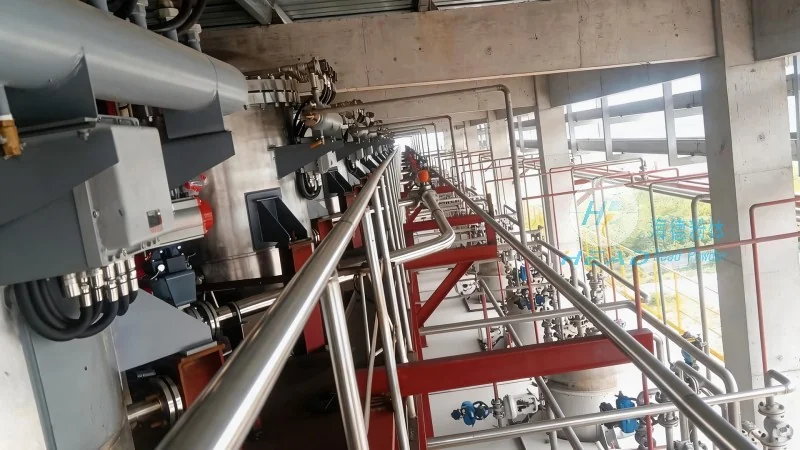
HeadPowder, a leading manufacturer in the field of powder handling equipment, specializes in designing and producing advanced pneumatic conveying solutions. With a focus on innovation and customer-centric engineering, the company has established itself as a trusted partner for industries requiring precise and efficient powder transport. HeadPowder Engineering Co., Ltd. is headquartered in Shandong, China, where its state-of-the-art facilities ensure the production of high-quality equipment tailored to meet diverse industrial needs.
The glass fiber cellulose powder pneumatic conveying machine consists of several critical components that work in tandem to achieve effective material transport. These include a hopper for material storage, a feeder to control the flow rate, a compressor or blower to generate the necessary air pressure, a pipeline system for conveying the powder-air mixture, and a receiver or discharge unit to collect the material at the destination. Each component plays a vital role in maintaining the system's efficiency and ensuring smooth operation.
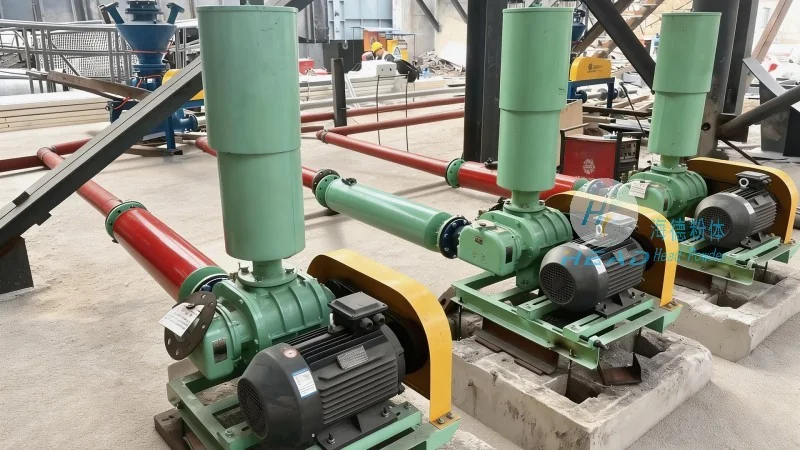
The operation of the glass fiber cellulose powder pneumatic conveying machine typically follows a systematic sequence. Initially, the glass fiber cellulose powder is fed into the hopper from a storage silo or bulk container. The feeder then regulates the material flow, ensuring a consistent and controlled rate of powder discharge. Simultaneously, the compressor or blower generates high-pressure air, which is introduced into the pipeline system. The air and powder mixture is then propelled through the pipeline, moving the material from the source to the destination. At the receiving end, the air is separated from the powder, often using a cyclone separator or filter, and the purified air is discharged, while the glass fiber cellulose powder is collected in the receiver. This process allows for continuous and automated transport of the powder, minimizing downtime and enhancing operational efficiency.
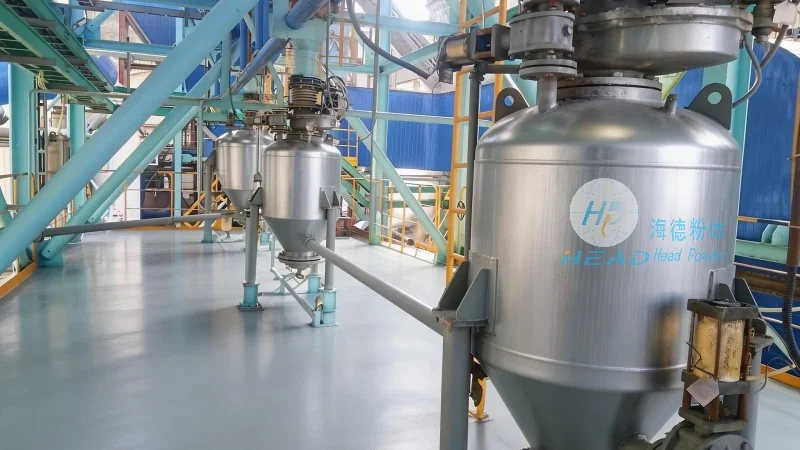
The working principle of the glass fiber cellulose powder pneumatic conveying machine is based on the principles of fluid dynamics and particle transport. The system operates by creating a pressure differential between the source and destination points. The compressor or blower supplies compressed air, which creates a high-pressure zone at the inlet and a low-pressure zone at the outlet. As the air flows through the pipeline, it entrains the glass fiber cellulose powder particles, forming a suspension that is carried along by the air stream. The velocity of the air and the size of the powder particles determine the conveying velocity and the required air flow rate. The design of the pipeline, including bends and fittings, is optimized to minimize pressure losses and maintain the stability of the powder-air mixture. The separation process at the receiver is crucial, as it ensures that the powder is effectively collected while the air is cleaned and discharged, preventing contamination and maintaining system performance.
Utilizing a pneumatic conveying system for glass fiber cellulose powders offers several advantages over traditional methods such as bucket elevators or belt conveyors. Firstly, the closed system prevents dust contamination, which is critical for maintaining product quality and ensuring workplace safety. Secondly, the system is compact and can be integrated into existing production lines, reducing space requirements and installation costs. Additionally, the continuous operation of the machine enhances productivity and reduces labor costs associated with manual handling. The flexibility of pneumatic conveying also allows for easy adjustment of the flow rate and direction, making it suitable for various industrial applications.

 Shandong Headpowder Engineering Co., Ltd.
 156-6277-7102(Manager Zhang)
  0531-83386006
  Zhangqiu District, Jinan City, Shandong Province, China
telephone
WeChatconsult
top