With more than 10‑year industry experience, Shandong Headpowder delivers full‑service pneumatic‑conveying systems and blowers, undertaking nationwide turn‑key powder‑handling projects.
When it comes to the efficient transportation of cement and aggregate materials in construction projects, selecting the right conveying method is crucial for ensuring smooth operations and maintaining product quality. Shandong HeadPowder Engineering Co., Ltd., a leading provider in the industry, offers a range of effective solutions tailored to meet diverse project requirements. This article explores the common methods used for cement aggregate conveying, highlighting their applications and benefits.
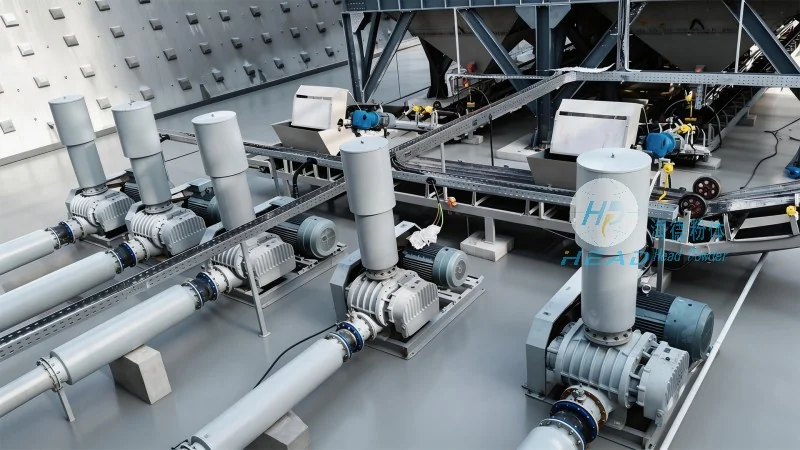
Cement and aggregate are fundamental components in construction, and their efficient movement from storage to processing or mixing sites is essential for project timelines and cost-effectiveness. The choice of conveying method depends on factors such as material type, distance, volume, and operational environment. Below are some of the most widely used methods in the industry:
Belt conveyors are among the most common and versatile equipment for transporting bulk materials like cement and aggregate. These systems consist of a continuous loop of material (usually rubber or synthetic) that moves over rollers or pulleys. The belt is driven by a motor, and the material is loaded at one end and discharged at the other. Belt conveyors are ideal for long-distance and high-volume transport, making them suitable for large-scale construction sites. They are also relatively low-maintenance and can handle various material sizes and shapes. Shandong HeadPowder Engineering Co., Ltd. specializes in designing and manufacturing high-quality belt conveyor systems that ensure reliable performance and durability in demanding environments.
For vertical or inclined material transport, bucket elevators are an excellent choice. These systems use a series of buckets attached to a belt or chain that moves vertically between two pulleys. The buckets are filled with material at the bottom and emptied at the top, allowing for efficient vertical movement. Bucket elevators are particularly useful when space is limited or when materials need to be elevated to a higher level for processing. They are capable of handling a wide range of materials, including powders and granules, with minimal product degradation. Shandong HeadPowder Engineering Co., Ltd. offers robust bucket elevator solutions that ensure consistent and safe vertical transport of cement and aggregate.

Screw conveyors, also known as auger conveyors, are used for horizontal or slightly inclined transport of bulk materials. They consist of a rotating screw (auger) inside a trough that moves material along the length of the conveyor. Screw conveyors are compact and can be easily integrated into existing systems. They are suitable for transporting materials that are free-flowing and non-abrasive, such as certain types of aggregate or fine powders. However, they may not be ideal for very abrasive materials as the screw and trough can wear over time. Shandong HeadPowder Engineering Co., Ltd. provides durable screw conveyor systems designed to handle various material characteristics and ensure efficient horizontal transport.
Pneumatic conveying systems use air pressure to transport materials through a pipeline. These systems are particularly effective for handling fine powders and granular materials, as they can transport materials over long distances without the need for multiple transfer points. There are two main types of pneumatic conveyors: positive pressure and negative pressure. Positive pressure systems blow air into the pipeline, pushing the material forward, while negative pressure systems create a vacuum to draw material into the pipeline. Pneumatic conveying is often used in applications where dust control and hygiene are critical, such as in food processing or pharmaceutical industries. Shandong HeadPowder Engineering Co., Ltd. offers advanced pneumatic conveying solutions that ensure efficient and clean transport of cement and aggregate.
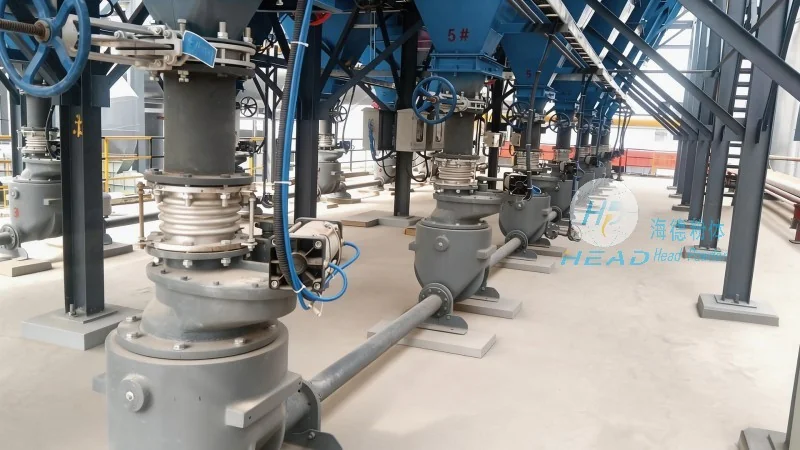
Wheel conveyors, or roller conveyors, are commonly used for transporting packaged materials or items with flat surfaces. These systems consist of a series of rollers that rotate to move items along the conveyor path. They are ideal for applications where materials need to be moved at a controlled speed or where accumulation is required. Wheel conveyors are often used in conjunction with other equipment, such as sorting or packaging systems. While primarily used for packaged goods, they can also be adapted for bulk materials by using larger rollers or specialized configurations. Shandong HeadPowder Engineering Co., Ltd. provides flexible wheel conveyor solutions that enhance material handling efficiency in various industrial settings.
When selecting a conveying method for cement and aggregate, several factors must be considered to ensure optimal performance and cost-effectiveness. The distance between the material source and the processing point is a key factor, as different systems are better suited for short or long distances. The volume of material to be transported also plays a role, as high-volume applications may require larger or more powerful systems. The nature of the material, including its size, shape, and abrasiveness, will influence the choice of equipment. For example, abrasive materials may require more durable components in belt or screw conveyors. Additionally, the available space and operational environment, such as indoor or outdoor use, should be taken into account. Shandong HeadPowder Engineering Co., Ltd. offers expert consultation to help clients evaluate their specific needs and select the most appropriate conveying method for their cement and aggregate transport requirements.
In conclusion, the efficient conveyance of cement and aggregate is vital for the success of construction projects. Various methods, including belt conveyors, bucket elevators, screw conveyors, pneumatic systems, and wheel conveyors, each offer unique advantages and are suitable for different applications. Shandong HeadPowder Engineering Co., Ltd. is committed to providing high-quality conveying solutions that meet the diverse needs of the construction industry. By understanding the specific requirements of each project and selecting the appropriate equipment, construction companies can enhance operational efficiency, reduce costs, and ensure the quality of their materials. Whether for long-distance horizontal transport or vertical movement, the right conveying method can significantly impact project outcomes. Shandong HeadPowder Engineering Co., Ltd. remains a trusted partner in delivering reliable and effective cement aggregate conveying solutions.

 Shandong Headpowder Engineering Co., Ltd.
 156-6277-7102(Manager Zhang)
  0531-83386006
  Zhangqiu District, Jinan City, Shandong Province, China
telephone
WeChatconsult
top