With more than 10‑year industry experience, Shandong Headpowder delivers full‑service pneumatic‑conveying systems and blowers, undertaking nationwide turn‑key powder‑handling projects.
Calcined sand, a crucial material in various industrial applications, requires efficient and reliable conveying systems to ensure smooth production processes. For industries such as glass manufacturing, refractory production, and construction materials, the proper handling of calcined sand is essential to maintain quality and productivity. This article explores the common methods used for calcined sand conveying, highlighting the key considerations and technologies employed in modern material handling solutions.
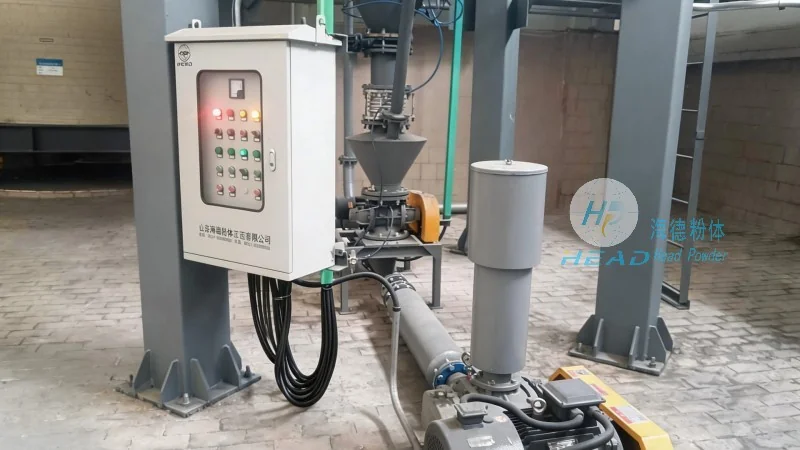
Belt conveyors are one of the most widely used methods for calcined sand conveying due to their versatility and ability to handle large volumes of material over long distances. These systems typically consist of a continuous loop of conveyor belt supported by rollers, with the sand loaded at one end and discharged at the other. The design of belt conveyors for calcined sand often includes features such as heavy-duty belts to withstand abrasive materials, adjustable speed controls for precise material flow, and robust frame structures to ensure stability. For example, Shandong HeadPowder Engineering Co., Ltd. specializes in customizing belt conveyor solutions tailored to the specific characteristics of calcined sand, ensuring optimal performance and minimal downtime.
Pneumatic conveying, or air-driven transport, is another common method for calcined sand handling, particularly in applications where dust control and enclosed material transport are critical. This technology uses compressed air to move calcined sand through a pipeline system, eliminating the need for open chutes and reducing the risk of material spillage or contamination. Pneumatic conveyors can be categorized into two main types: dilute-phase and dense-phase systems. Dilute-phase systems are suitable for low to medium material loads, while dense-phase systems are ideal for high-volume, low-velocity transport, which minimizes material degradation and wear on equipment. Shandong HeadPowder Engineering Co., Ltd. offers advanced pneumatic conveying solutions that incorporate high-efficiency air compressors and specialized pipeline designs to ensure reliable and efficient calcined sand transport.
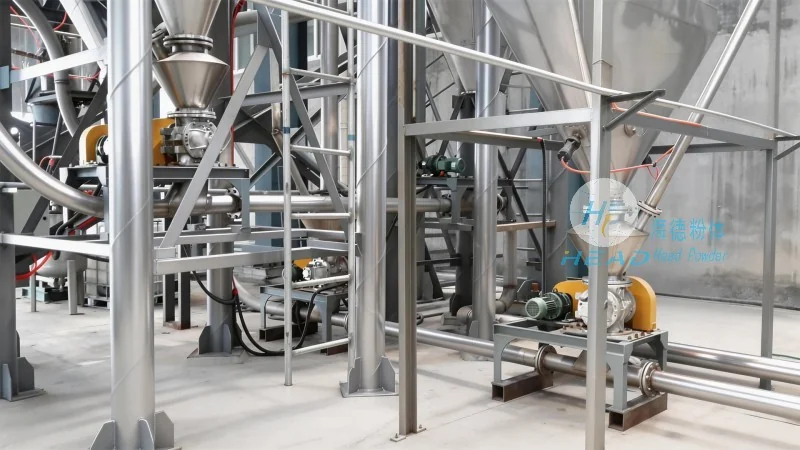
Screw conveyors, also known as auger conveyors, are a popular choice for calcined sand conveying in applications where enclosed transport and low-speed material movement are required. These systems consist of a rotating screw (auger) inside a trough or tube, which pushes the material forward as it rotates. Screw conveyors are particularly effective for handling fine or abrasive materials like calcined sand, as they minimize material degradation and prevent dust generation. The design of screw conveyors for calcined sand often includes heavy-duty screws and troughs to withstand the abrasive nature of the material, and variable speed drives to control the flow rate. Shandong HeadPowder Engineering Co., Ltd. provides customized screw conveyor solutions that are engineered to handle the specific challenges of calcined sand, ensuring consistent and reliable material transport.
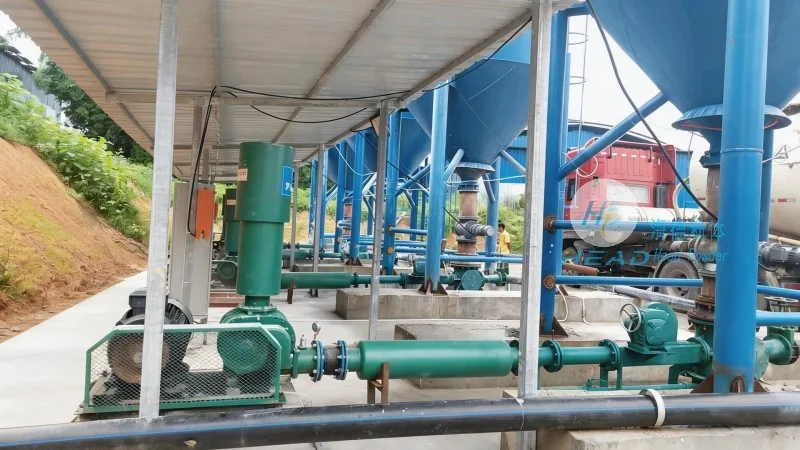
For applications requiring vertical transport of calcined sand, bucket elevators are a common and efficient solution. These systems consist of a continuous chain or belt with buckets attached, which lifts the material vertically and then discharges it at the top. Bucket elevators are ideal for moving calcined sand from lower to higher levels in industrial facilities, such as from storage silos to processing equipment. The design of bucket elevators for calcined sand includes features such as heavy-duty buckets to prevent material spillage, adjustable speed controls for precise material flow, and robust frame structures to ensure stability. Shandong HeadPowder Engineering Co., Ltd. specializes in designing and manufacturing bucket elevators tailored to the specific needs of calcined sand, ensuring safe and efficient vertical transport.
In many industrial settings, a single conveying method may not be sufficient to meet the complex requirements of calcined sand handling. Therefore, combination systems that integrate multiple conveying technologies are often used. For example, a system might start with a belt conveyor to transport calcined sand from a storage area to a processing plant, followed by a pneumatic conveyor to move the material to a specific processing unit. Combination systems allow for greater flexibility and efficiency in material handling, as they can adapt to varying production demands and material characteristics. Shandong HeadPowder Engineering Co., Ltd. offers comprehensive combination system solutions that integrate belt conveyors, pneumatic conveyors, and other technologies to provide customized calcined sand conveying solutions for diverse industrial applications.

 Shandong Headpowder Engineering Co., Ltd.
 156-6277-7102(Manager Zhang)
  0531-83386006
  Zhangqiu District, Jinan City, Shandong Province, China
telephone
WeChatconsult
top