With more than 10‑year industry experience, Shandong Headpowder delivers full‑service pneumatic‑conveying systems and blowers, undertaking nationwide turn‑key powder‑handling projects.
Hydroxide aluminum powder, a critical raw material in various industrial applications, requires efficient and reliable handling solutions to ensure process continuity and product quality. Pneumatic conveying technology has emerged as a leading method for transporting such powders, offering advantages like reduced contamination, enhanced safety, and improved process control. This article explores the application and optimization of pneumatic conveying systems specifically tailored for hydroxide aluminum powder, highlighting the expertise of Shandong HeadPowder Engineering Co., Ltd., a prominent player in the field.
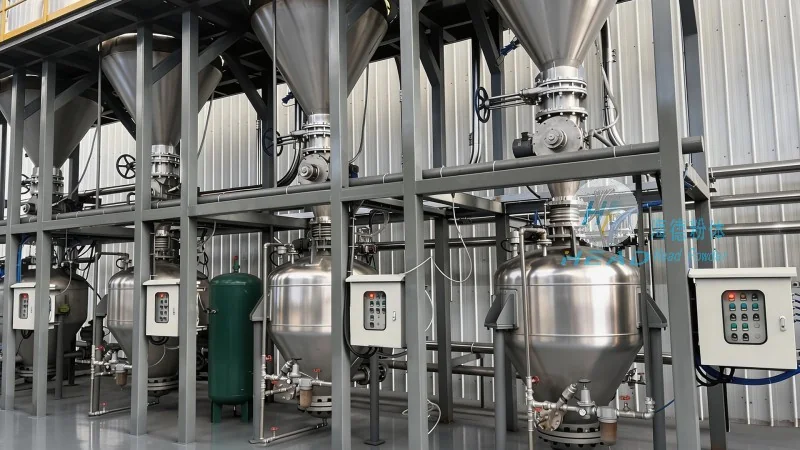
Handling hydroxide aluminum powder presents unique challenges due to its fine particle size, hygroscopic nature, and potential for dust generation. Traditional methods like belt conveyors or bucket elevators may lead to material degradation, increased maintenance costs, and safety hazards. Pneumatic conveying systems address these challenges by utilizing air to transport the powder in a sealed environment, minimizing exposure to external contaminants and controlling dust emissions effectively.
The fundamental principle of pneumatic conveying involves the use of air to move powder through a pipeline. Two primary types are commonly employed: dilute-phase and dense-phase systems. Dilute-phase systems use high-velocity air to transport particles in a dispersed state, suitable for long-distance and high-capacity applications. Dense-phase systems, on the other hand, use lower air velocities and higher powder concentrations, providing gentle handling and reduced product degradation. For hydroxide aluminum powder, a combination of these approaches may be optimized to balance efficiency and product integrity.
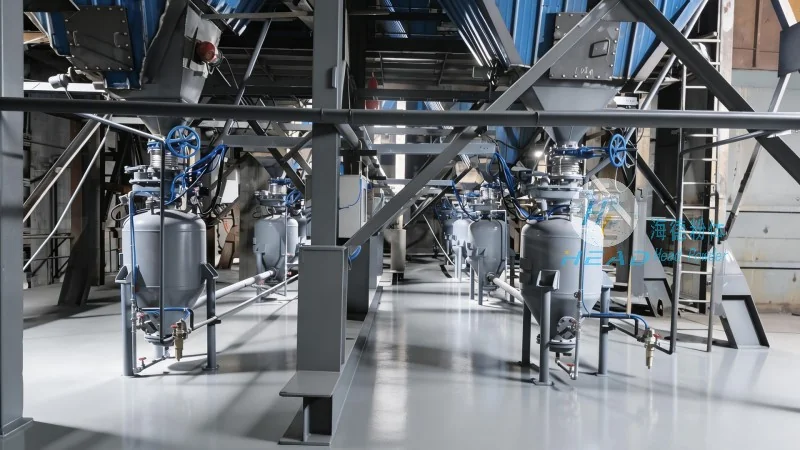
Shandong HeadPowder Engineering Co., Ltd. specializes in designing and implementing customized pneumatic conveying solutions for hydroxide aluminum powder processing. The company leverages advanced engineering techniques to ensure that the systems meet the specific requirements of each client, whether it involves material transfer from storage silos to processing units, or between different stages of production. Key applications include:
Optimizing pneumatic conveying systems for hydroxide aluminum powder involves several key strategies. First, the selection of appropriate air velocities and pipeline diameters is critical to prevent particle segregation and ensure uniform flow. HeadPowder engineers employ computational fluid dynamics (CFD) simulations to model flow patterns and identify potential bottlenecks, allowing for precise system design. Second, the use of specialized equipment such as rotary valves and airlocks ensures smooth material discharge and prevents air leakage, maintaining system efficiency. Third, regular maintenance and monitoring of system parameters, including pressure and flow rates, help in early detection of issues and prolong equipment lifespan.
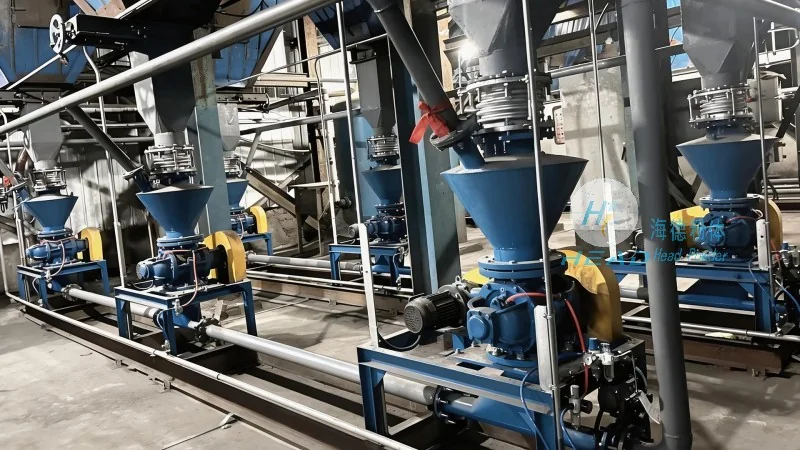
A recent project undertaken by Shandong HeadPowder Engineering Co., Ltd. involved optimizing the pneumatic conveying system for a hydroxide aluminum plant in China. The existing system suffered from low transfer efficiency and frequent blockages due to the hygroscopic nature of the powder. Through a comprehensive analysis, the company recommended upgrading to a dense-phase conveying system with enhanced filtration and moisture control measures. The implementation resulted in a 30% increase in transfer efficiency, reduced downtime by 25%, and improved product quality by minimizing particle agglomeration. This case study exemplifies the effectiveness of tailored optimization strategies in addressing real-world challenges.
Pneumatic conveying technology continues to play a vital role in the efficient handling of hydroxide aluminum powder. By leveraging advanced engineering, customized system design, and continuous optimization, companies like Shandong HeadPowder Engineering Co., Ltd. are enabling clients to achieve higher productivity, lower operational costs, and improved product quality. As the demand for hydroxide aluminum powder grows, the importance of reliable and efficient handling solutions will only increase, making pneumatic conveying an indispensable part of modern industrial operations.

 Shandong Headpowder Engineering Co., Ltd.
 156-6277-7102(Manager Zhang)
  0531-83386006
  Zhangqiu District, Jinan City, Shandong Province, China
telephone
WeChatconsult
top