With more than 10‑year industry experience, Shandong Headpowder delivers full‑service pneumatic‑conveying systems and blowers, undertaking nationwide turn‑key powder‑handling projects.
Calcium oxide, commonly known as quicklime, is a versatile industrial material widely used in various applications such as steelmaking, water treatment, and chemical manufacturing. The efficient and reliable transportation of calcium oxide dry powder is crucial for industrial operations, and pneumatic conveying systems offer an effective solution. This article provides an in-depth look at the operation process and working principle of calcium oxide dry powder pneumatic conveying, highlighting key components, operational steps, and the technical aspects that ensure smooth and efficient material handling.
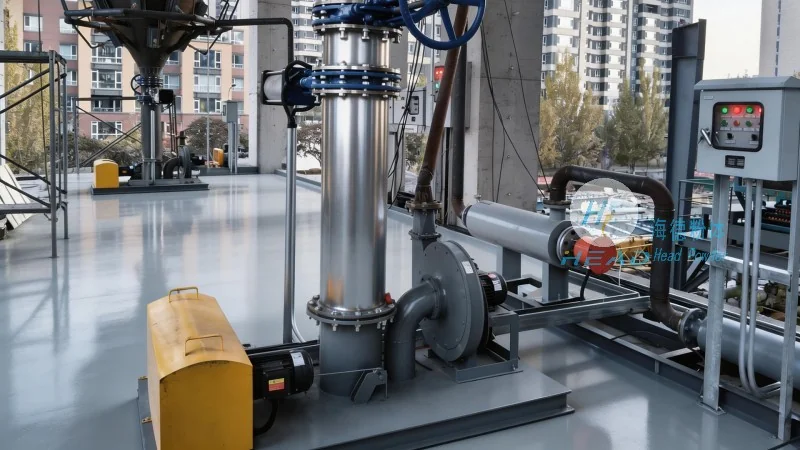
The pneumatic conveying system for calcium oxide dry powder typically consists of several essential components that work in harmony to transport the material. These components include a dust collector, a conveyor line, a material hopper, a rotary valve, and a blower or compressor. Each component plays a critical role in the overall system performance. The dust collector is responsible for capturing any airborne particles, ensuring a clean and safe working environment. The conveyor line, often made of flexible or rigid tubing, transports the calcium oxide powder from the source to the destination. The material hopper stores the bulk calcium oxide, providing a consistent feed to the system. The rotary valve controls the flow of material from the hopper into the conveyor line, while the blower or compressor generates the necessary air pressure to move the powder through the system.
The operation process of calcium oxide dry powder pneumatic conveying involves several sequential steps that ensure the material is transported efficiently and safely. The process begins with the loading of calcium oxide into the material hopper. The rotary valve then opens to allow the powder to flow into the conveyor line. Simultaneously, the blower or compressor starts, generating a high-pressure air stream that propels the calcium oxide particles through the system. As the powder travels through the conveyor line, it is mixed with the air, forming a slurry-like mixture. The mixture then reaches the destination point, where it is discharged into a storage tank or processing equipment. The dust collector continuously operates to capture any particles that may escape during the conveying process, maintaining air quality and preventing dust accumulation.
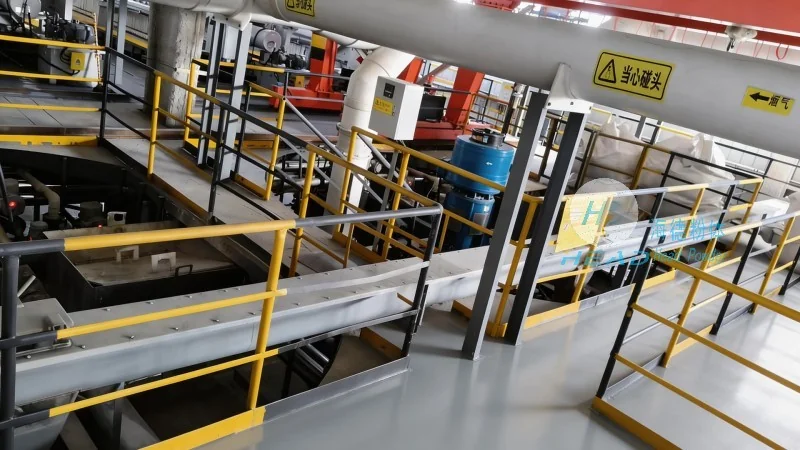
The working principle of the calcium oxide dry powder pneumatic conveying system is based on the principles of fluid dynamics and particle movement. The system relies on the force generated by the blower or compressor to create a pressure differential that moves the powder. When the air is forced through the conveyor line, it creates a low-pressure zone at the inlet and a high-pressure zone at the outlet. The calcium oxide particles, being lightweight and dry, are entrained by the air stream and carried along the line. The velocity of the air is crucial; it must be sufficient to overcome the gravitational force acting on the particles and any friction within the system. The system's design, including the size and length of the conveyor line, the air flow rate, and the particle size distribution of the calcium oxide, all contribute to the overall efficiency and effectiveness of the conveying process.
Compared to traditional bulk material handling methods such as belt conveyors or bucket elevators, pneumatic conveying offers several advantages for calcium oxide dry powder. One of the primary benefits is the ability to transport the material over long distances without the need for multiple transfer points. This reduces the risk of material spillage and contamination. Additionally, pneumatic conveying systems are more compact and can be installed in confined spaces, making them suitable for industrial facilities with limited floor space. The system also provides better control over the material flow, allowing for precise dosing and feeding into processing equipment. Furthermore, the enclosed nature of the system minimizes dust exposure, enhancing workplace safety and compliance with environmental regulations.
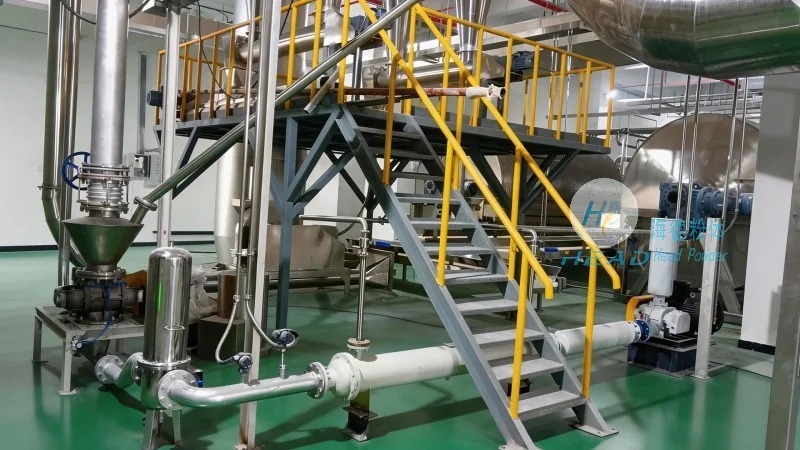
The versatility of calcium oxide dry powder makes it essential in various industries, and the pneumatic conveying system is widely adopted to handle it efficiently. In the steel industry, calcium oxide is used as a flux in the steelmaking process, and pneumatic conveying ensures a consistent supply of the material to the furnaces. In water treatment, calcium oxide is used to adjust pH levels and remove impurities, and the conveying system delivers it to treatment plants. The chemical manufacturing industry also relies on calcium oxide for the production of various chemicals, and pneumatic conveying facilitates the transport of the material between production stages. Other applications include construction, where calcium oxide is used in cement production, and environmental remediation, where it is used to neutralize acidic waste.
Shandong HeadPowder Engineering Co., Ltd., commonly known as headpowder, is a leading manufacturer and supplier of pneumatic conveying systems and related industrial equipment. With a strong focus on innovation and quality, the company has established itself as a trusted partner for industries requiring efficient and reliable material handling solutions. Headpowder specializes in designing and manufacturing customized pneumatic conveying systems tailored to the specific needs of clients, ensuring optimal performance and durability. The company's commitment to customer satisfaction and technical excellence has earned it a reputation for delivering high-quality products and services in the industry. Headpowder's facilities are located in Shandong, China, where the company conducts research, development, and production activities to meet the evolving demands of the market.

 Shandong Headpowder Engineering Co., Ltd.
 156-6277-7102(Manager Zhang)
  0531-83386006
  Zhangqiu District, Jinan City, Shandong Province, China
telephone
WeChatconsult
top