With more than 10‑year industry experience, Shandong Headpowder delivers full‑service pneumatic‑conveying systems and blowers, undertaking nationwide turn‑key powder‑handling projects.
HeadPowder, a leading engineering firm based in Shandong, China, specializes in the design and implementation of advanced powder handling systems. Among their portfolio is the denitrification agent powder pneumatic conveying line, a critical component in modern flue gas treatment facilities. This article delves into the fundamental principles of this technology and explores the unique characteristics of its operational scenarios.
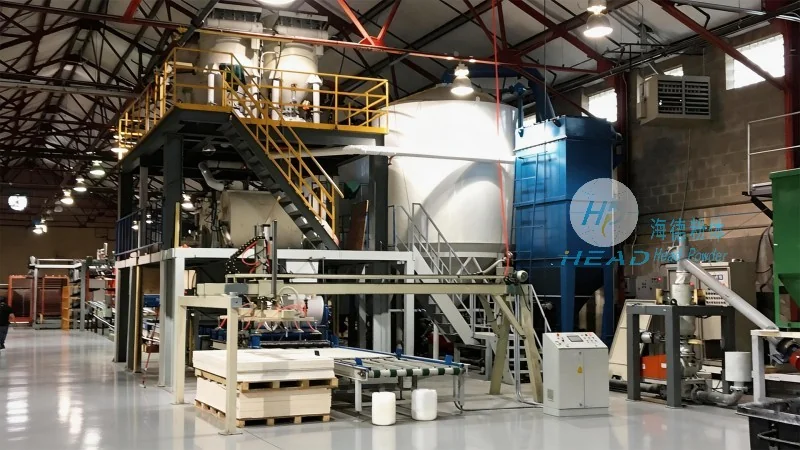
The denitrification agent powder pneumatic conveying line operates on the principle of transporting dry powder materials through a closed pipeline system using compressed air or suction. The process can be categorized into two main types: positive pressure and negative pressure systems. In positive pressure systems, compressed air is introduced at the material inlet, creating a pressure higher than the ambient air, which propels the powder forward. Conversely, negative pressure systems utilize suction at the discharge end, drawing the material through the pipeline. The choice between these systems depends on factors such as the material's properties, required conveying distance, and environmental considerations.
Within the pipeline, the powder particles are suspended and transported by the air stream. The flow regime—whether dense phase or dilute phase—determines the efficiency and stability of the conveying process. Dense phase conveying involves a higher proportion of solid particles, resulting in a more stable flow with lower pressure drops and reduced particle degradation. Dilute phase conveying, on the other hand, uses a higher air-to-solid ratio, suitable for longer distances but with higher energy consumption. For denitrification agents, which often have fine particle sizes and are sensitive to attrition, dense phase conveying is frequently preferred to minimize material degradation and ensure consistent performance.

The operational characteristics of the denitrification agent powder pneumatic conveying line are tailored to the specific demands of flue gas treatment plants. One of the primary scenarios is the continuous supply of urea or other ammonia-based reagents to selective catalytic reduction (SCR) systems. These plants typically require reliable, low-downtime material transport to maintain optimal NOx reduction efficiency. The conveying line must handle varying flow rates, from steady-state operation to emergency spikes, without compromising the quality of the reagent.
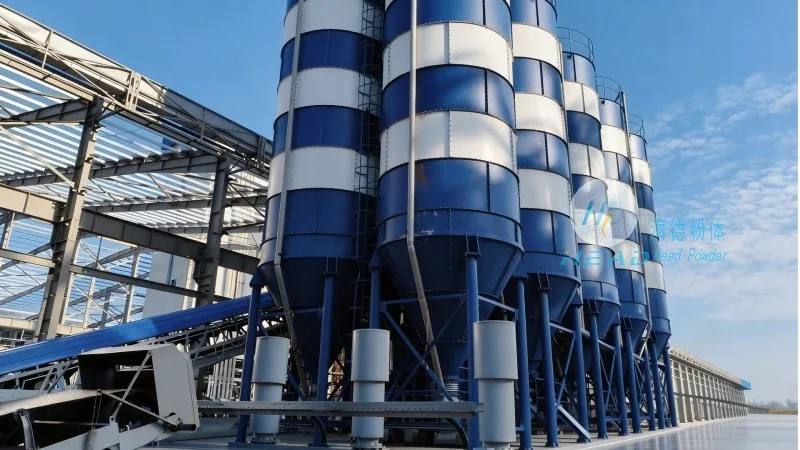
Another critical scenario involves the handling of bulk quantities of denitrification agents in industrial settings. The system is designed to integrate seamlessly with storage silos, feeders, and reaction units, ensuring a smooth material flow from storage to the point of use. This integration is essential for maintaining the plant's operational efficiency and reducing labor costs associated with manual handling. The line's ability to handle different particle sizes and moisture contents makes it versatile for various denitrification agent formulations, such as aqueous solutions or dry powders.
Environmental and safety considerations also play a significant role in the working scenarios. The pneumatic conveying system is enclosed, preventing dust emissions and ensuring compliance with air quality regulations. This is particularly important in regions with strict environmental standards. Additionally, the system is equipped with safety features like pressure relief valves and particle filters to prevent system failures and protect personnel. The low maintenance requirements of the system further enhance its suitability for continuous operation in industrial environments.

 Shandong Headpowder Engineering Co., Ltd.
 156-6277-7102(Manager Zhang)
  0531-83386006
  Zhangqiu District, Jinan City, Shandong Province, China
telephone
WeChatconsult
top