

Working Principle and Features of the Sulfuric Nickel Crystallization Pneumatic Conveying System
For industrial applications involving the handling of sulfuric nickel crystallization products, the pneumatic conveying system is a critical equipment solution. This system is designed to efficiently transport crystalline materials like sulfuric nickel from one processing stage to another, ensuring a smooth and controlled material flow. Such systems are often provided by specialized engineering companies, such as Shandong HeadPowder Engineering Co., Ltd., which focuses on developing tailored solutions for material handling in various industrial sectors.
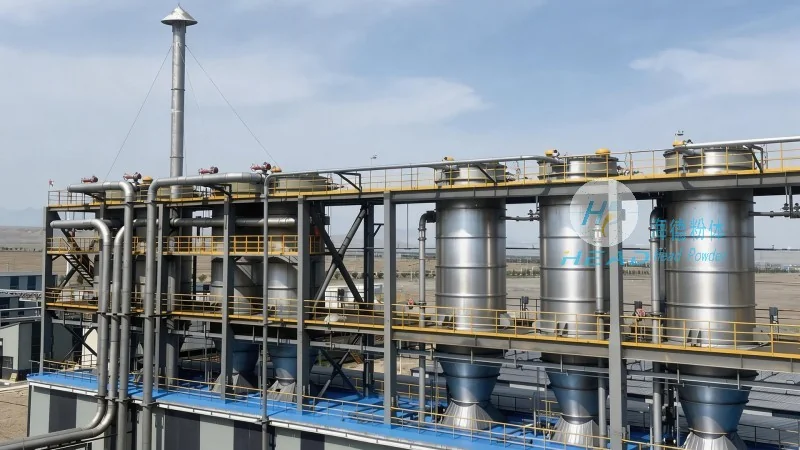
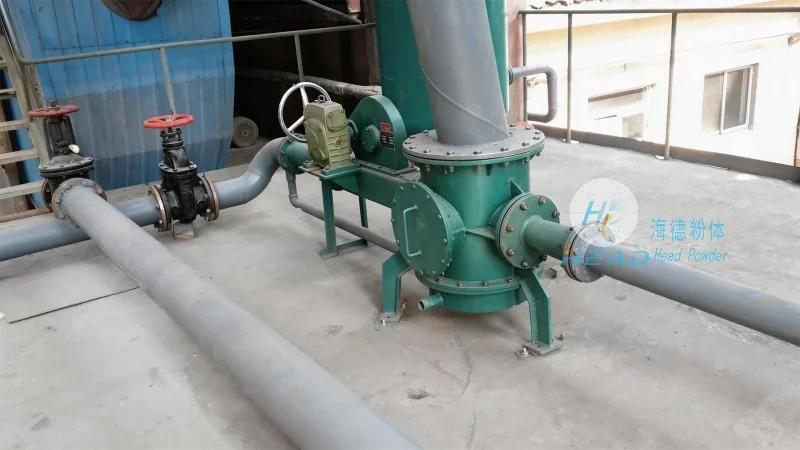
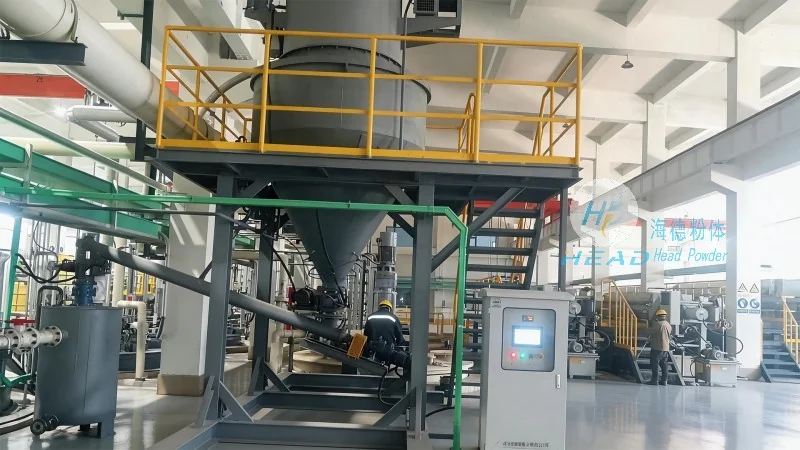
Working Principle of the Sulfuric Nickel Crystallization Pneumatic Conveying System
The core of the pneumatic conveying system for sulfuric nickel crystallization lies in its ability to use air as the conveying medium. The system typically consists of a hopper, a rotary valve, a conveying pipeline, and a receiver. The process begins with the crystalline sulfuric nickel being fed into the hopper. A rotary valve then controls the discharge of the material into the conveying pipeline. Compressed air is introduced into the pipeline, creating a flow that lifts and transports the crystalline particles. The air velocity is carefully controlled to ensure that the particles are carried without excessive abrasion or degradation. The conveying pipeline may include bends and changes in direction, and the system is designed to handle these with minimal pressure loss. Finally, the material is deposited into the receiver at the destination point. This entire process is automated, allowing for consistent and reliable material transfer without the need for manual handling.
Key Features of the Sulfuric Nickel Crystallization Pneumatic Conveying System
Several distinctive features make the pneumatic conveying system suitable for sulfuric nickel crystallization applications. Firstly, the system offers a dust-free operation, which is essential for maintaining a clean and safe working environment, especially when handling crystalline materials that can generate fine particles. Secondly, it provides a continuous and uniform material flow, which helps in maintaining stable production rates and reducing process variability. The system is also highly flexible, as it can be easily integrated with existing processing lines and can be adjusted to handle different particle sizes and flow rates. Additionally, the system is designed for low maintenance, with components that are resistant to corrosion and wear, which is crucial when dealing with corrosive materials like sulfuric nickel. The use of compressed air as the conveying medium also allows for the system to be operated in a closed loop, minimizing the risk of material contamination and environmental pollution. Finally, the system is energy-efficient, as it uses air pressure to move the material, reducing the need for mechanical conveyors that may require more power and maintenance.