With more than 10‑year industry experience, Shandong Headpowder delivers full‑service pneumatic‑conveying systems and blowers, undertaking nationwide turn‑key powder‑handling projects.
Anhydrous aluminum chloride is a critical chemical compound widely used in various industrial applications, including chemical synthesis, petroleum refining, and as a catalyst in organic reactions. The efficient and safe transportation of this material is essential for maintaining production efficiency and ensuring operational safety. One of the most effective methods for handling such powders is through air-solid pneumatic conveyors. This article explores the concept of an air-solid pneumatic conveyor specifically designed for anhydrous aluminum chloride, detailing its design principles and operational benefits.
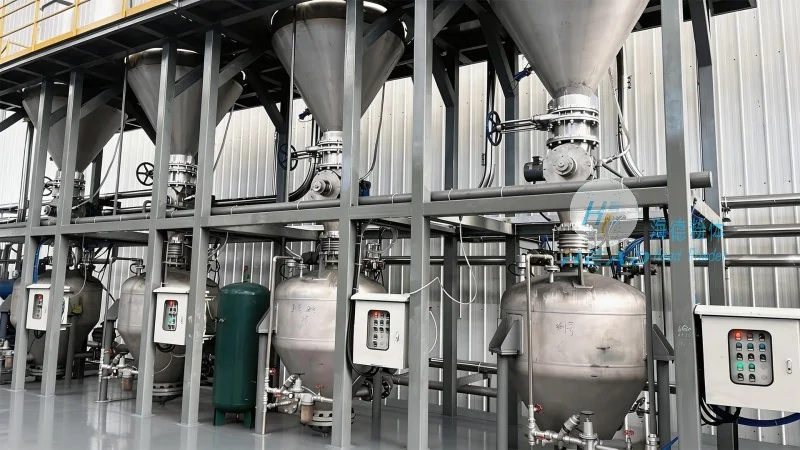
An air-solid pneumatic conveyor is a system that uses compressed air to transport solid materials, such as powders or granules, through a pipeline. In the case of anhydrous aluminum chloride, the system must be engineered to handle the unique properties of this chemical, including its reactivity with moisture and its tendency to form clumps or agglomerates. The conveyor system typically consists of several key components: a hopper for material storage, a rotary airlock or feeder to control the flow of material, a pipeline network, and a receiver or discharge unit. The compressed air is introduced into the pipeline, creating a flow that propels the material forward. The design of the conveyor must ensure that the air velocity is sufficient to keep the material in suspension without causing excessive wear on the system components.
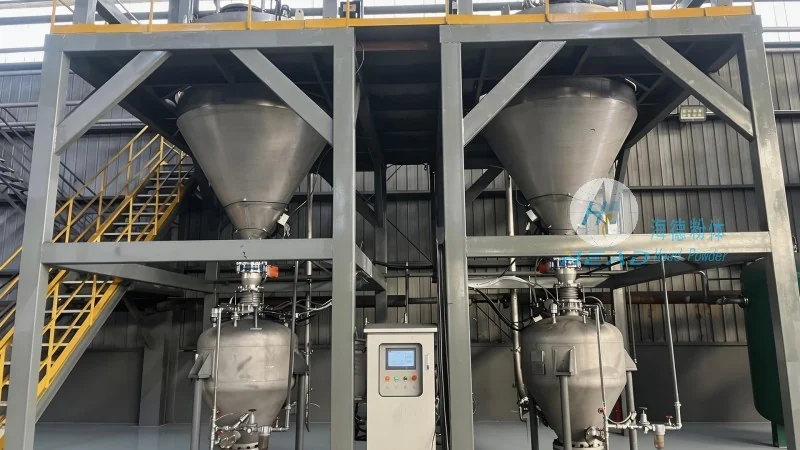
The design of a pneumatic conveyor for anhydrous aluminum chloride involves several critical principles to ensure optimal performance and safety. First, the system must be constructed from materials that are resistant to corrosion and chemical attack, as aluminum chloride is highly reactive with moisture and can cause corrosion in metal components. Common materials used include stainless steel, polyethylene, or specialized alloys that can withstand the chemical environment. Second, the conveyor must be designed to minimize the risk of dust explosion, as aluminum chloride dust can be a fire hazard under certain conditions. This is achieved through proper ventilation, explosion-proof components, and the use of inert gases if necessary. Third, the system must be engineered to handle the flow characteristics of the material, including its density, particle size distribution, and flowability. The air velocity and pipeline diameter are carefully calculated to ensure that the material is transported efficiently without causing blockages or excessive pressure drops. Additionally, the conveyor should include features such as pressure relief valves and check valves to prevent backflow and protect the system from overpressure.
The use of an air-solid pneumatic conveyor for anhydrous aluminum chloride offers several advantages over traditional methods like bucket elevators or belt conveyors. These include higher material throughput, reduced labor costs, and improved safety due to enclosed systems that minimize dust exposure. The system is also more flexible, as it can be easily reconfigured to transport materials to different locations within a facility. In industrial settings, this flexibility is crucial for adapting to changing production needs or expanding operations. The conveyor can be integrated with other processing equipment, such as reactors or storage tanks, to create a seamless material handling process. Furthermore, the enclosed design of the pneumatic conveyor helps to maintain the purity of the anhydrous aluminum chloride, preventing contamination from external sources and ensuring consistent product quality.

Shandong HeadPowder Engineering Co., Ltd., commonly known as HeadPowder, is a leading manufacturer and supplier of industrial material handling equipment. With a focus on innovation and quality, HeadPowder specializes in designing and manufacturing pneumatic conveyors, dust collectors, and other processing equipment for various industries. The company is committed to providing reliable and efficient solutions for material handling challenges, including those associated with handling hazardous or reactive materials like anhydrous aluminum chloride. HeadPowder's team of engineers and technicians work closely with clients to understand their specific needs and develop customized solutions that meet their operational requirements. The company's products are manufactured in accordance with international standards and are backed by a comprehensive warranty and after-sales support service. HeadPowder's headquarters is located in Shandong, China, where the company operates a state-of-the-art manufacturing facility and a research and development center.

 Shandong Headpowder Engineering Co., Ltd.
 156-6277-7102(Manager Zhang)
  0531-83386006
  Zhangqiu District, Jinan City, Shandong Province, China
telephone
WeChatconsult
top