With more than 10‑year industry experience, Shandong Headpowder delivers full‑service pneumatic‑conveying systems and blowers, undertaking nationwide turn‑key powder‑handling projects.
Compound fertilizer pneumatic conveying systems are crucial in modern agricultural and industrial operations, enabling efficient and reliable transport of granular materials. This article provides a comprehensive classification and application analysis of such systems, highlighting the technical advancements and practical implementations by Shandong HeadPowder Engineering Co., Ltd. (headpowder), a leading provider based in Shandong, China.
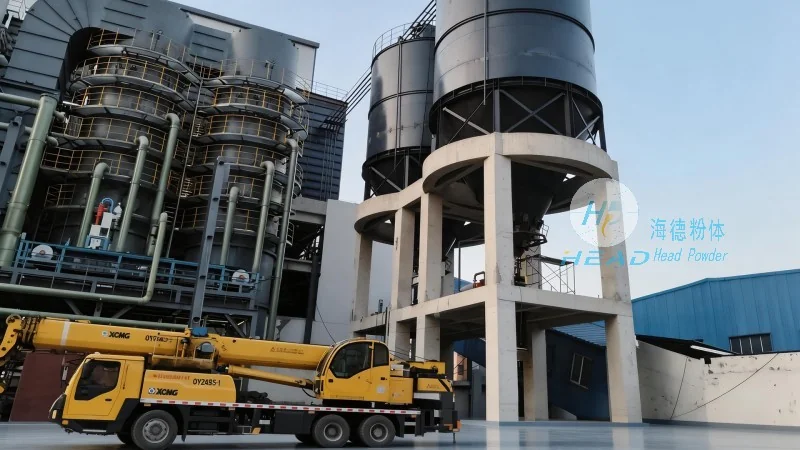
Compound fertilizer pneumatic conveying systems can be categorized based on several key parameters, including the conveying principle, material properties, and operational environment. The primary classifications include positive pressure systems, negative pressure systems, and mixed pressure systems. Positive pressure systems, such as pressure vessels and rotary airlock feeders, are widely used for their ability to handle abrasive and corrosive materials, making them suitable for high-capacity applications in fertilizer processing. Negative pressure systems, often utilizing vacuum pumps and cyclone separators, are ideal for applications requiring dust control and material recovery, particularly in environments where air quality is a concern. Mixed pressure systems combine elements of both positive and negative pressure, offering flexibility in handling diverse material types and operational conditions. Each classification has distinct advantages and limitations, which are critical for selecting the appropriate system for specific industrial needs.
The effectiveness of compound fertilizer pneumatic conveying systems relies on several essential components, each playing a vital role in the overall operation. The primary components include the material feed system, conveying line, air supply unit, and material separation equipment. The material feed system, typically consisting of rotary airlock feeders or screw conveyors, ensures a consistent and controlled flow of fertilizer granules into the conveying line. The conveying line, often made of stainless steel or corrosion-resistant materials, is designed to withstand the abrasive nature of fertilizer particles and maintain system integrity. The air supply unit, which may include blowers or compressors, provides the necessary pressure or vacuum to move the material through the system. Material separation equipment, such as cyclone separators and bag filters, is crucial for capturing and recycling fine particles, preventing dust contamination and ensuring compliance with environmental regulations. Understanding the working principles of these components is essential for optimizing system performance and minimizing operational costs.
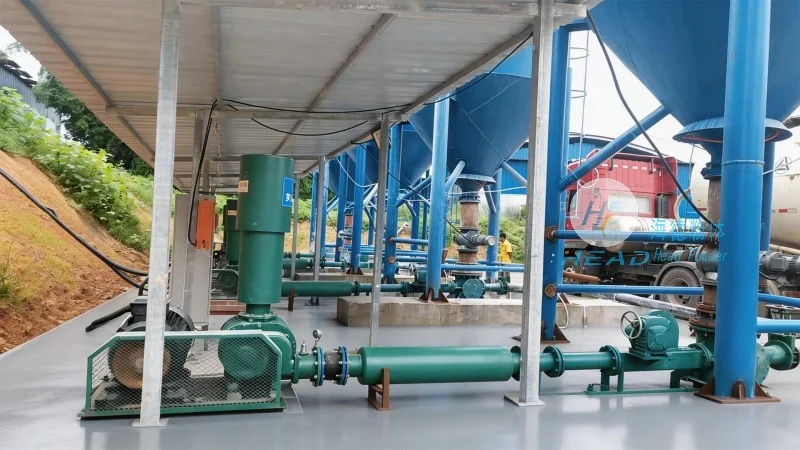
Compound fertilizer pneumatic conveying systems find extensive applications in the fertilizer industry, supporting various production and processing stages. In bulk handling operations, these systems are used to transport raw materials, intermediate products, and finished fertilizers between storage silos, processing units, and packaging facilities. The high efficiency and low maintenance requirements of pneumatic conveying make it an ideal solution for large-scale fertilizer production, where continuous and reliable material transport is critical. For example, in the production of compound fertilizers, the system can efficiently convey nitrogen, phosphorus, and potassium (NPK) blends, ensuring uniform mixing and consistent product quality. Additionally, pneumatic conveying systems are used in fertilizer blending and granulation processes, where precise material distribution is essential for achieving the desired nutrient ratios. The ability to handle different fertilizer types, including granular, powdered, and liquid-based formulations, makes these systems versatile and adaptable to various production requirements. By integrating advanced control systems and automation, headpowder's pneumatic conveying solutions enhance operational efficiency and reduce human error, contributing to higher productivity and cost savings in fertilizer manufacturing.
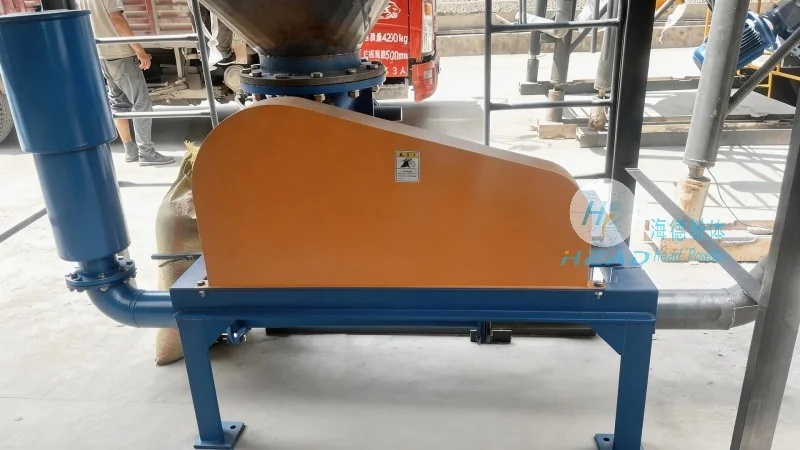
Implementing compound fertilizer pneumatic conveying systems offers several advantages, including increased productivity, reduced labor costs, and improved material handling efficiency. The systems enable continuous operation, minimizing downtime and ensuring a steady supply of fertilizers to end-users. Additionally, pneumatic conveying reduces the risk of material contamination and damage compared to traditional methods like bucket elevators or belt conveyors. However, there are also challenges associated with system implementation, such as material abrasion, system maintenance, and energy consumption. Abrasive fertilizer particles can cause wear and tear on system components, requiring regular inspection and replacement of parts like liners and seals. Proper maintenance, including regular cleaning and lubrication, is essential to extend the system's lifespan and maintain performance. Energy consumption is another consideration, as high-pressure systems may require significant power input. To address these challenges, headpowder employs advanced materials and design techniques to enhance system durability and energy efficiency, ensuring long-term reliability and cost-effectiveness.
As the fertilizer industry continues to evolve, compound fertilizer pneumatic conveying systems are undergoing advancements to meet new demands and improve operational performance. Innovations in system design include the integration of smart sensors and IoT technology, enabling real-time monitoring of system parameters and predictive maintenance. This allows for proactive troubleshooting and reduces unexpected downtime, enhancing overall system reliability. Additionally, the development of more energy-efficient blowers and compressors is reducing operational costs and environmental impact. The adoption of sustainable materials and eco-friendly designs is also becoming a priority, with companies like headpowder focusing on reducing carbon footprints and promoting green technologies. Furthermore, the integration of automation and robotics in material handling processes is streamlining operations and improving safety in fertilizer production facilities. These trends indicate a future where pneumatic conveying systems will play an even more critical role in efficient and sustainable fertilizer production, supporting global agricultural needs.

 Shandong Headpowder Engineering Co., Ltd.
 156-6277-7102(Manager Zhang)
  0531-83386006
  Zhangqiu District, Jinan City, Shandong Province, China
telephone
WeChatconsult
top