With more than 10‑year industry experience, Shandong Headpowder delivers full‑service pneumatic‑conveying systems and blowers, undertaking nationwide turn‑key powder‑handling projects.
Micro-powder pneumatic conveying is a critical technology in material handling, particularly for handling fine powders like micronized powders. This method involves transporting dry powder materials through a pipeline using compressed air or other gas streams. The efficiency and effectiveness of this process are heavily influenced by the type of pneumatic conveying system employed. Understanding the different types, key characteristics, and application ranges of micronized powder pneumatic conveying is essential for industries that rely on precise and reliable material transport.
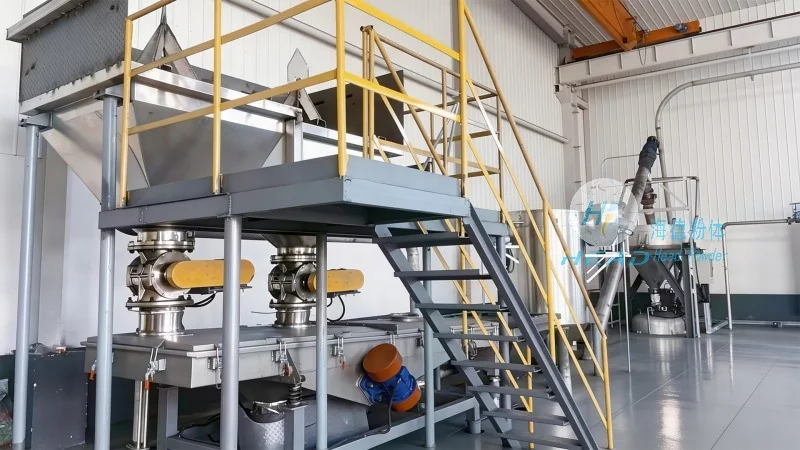
There are primarily two main categories of pneumatic conveying systems used for micronized powders: dilute-phase and dense-phase systems. Each type has distinct operational principles and is suited to different material properties and application requirements.
1. Dilute-Phase Pneumatic Conveying: This system operates by transporting the powder in a dispersed state within the conveying air. The powder particles are suspended in the air stream, and the air velocity is typically high enough to keep the particles airborne. Dilute-phase systems are often used for short to medium-distance transport and for materials that are non-abrasive or have low bulk density. The key characteristic is the high air-to-powder ratio, which minimizes pressure drop and energy consumption over short distances. However, they may not be suitable for long-distance or high-density powder transport due to the risk of particle degradation or system inefficiencies.
2. Dense-Phase Pneumatic Conveying: In contrast, dense-phase systems transport the powder in a more concentrated state, where the powder particles are less suspended and more densely packed within the pipeline. This is achieved by using lower air velocities and often incorporating pressure pulses or positive displacement pumps to maintain the powder in a semi-solid state. Dense-phase systems are ideal for long-distance transport, high-density materials, and materials that are sensitive to air exposure or particle attrition. They offer better control over material flow, reduced risk of clogging, and improved product quality, making them suitable for applications where precision and reliability are paramount.
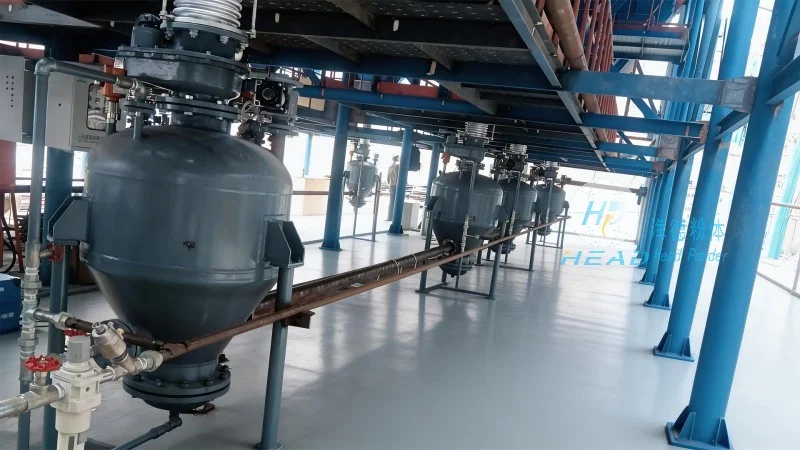
Several key characteristics define the performance and suitability of micronized powder pneumatic conveying systems. These include the system's ability to handle fine particles, maintain material integrity, control pressure and flow rates, and ensure efficient energy use. The choice of system type directly impacts these characteristics.
Firstly, particle size and density are critical factors. Micronized powders often have particle sizes ranging from 1 to 100 microns, and their density can vary significantly. The system must be designed to handle these fine particles without causing excessive wear or blockages. For example, dilute-phase systems may struggle with very fine particles that tend to settle quickly, while dense-phase systems can better manage such particles by maintaining a higher solids concentration.
Secondly, material flow control is essential. Pneumatic conveying systems need to maintain consistent flow rates to prevent overloading or underloading, which can lead to system inefficiencies or material degradation. Advanced control systems, such as pressure sensors and flow meters, are often integrated to monitor and adjust the conveying process in real-time. This ensures that the powder is transported smoothly and without interruptions.
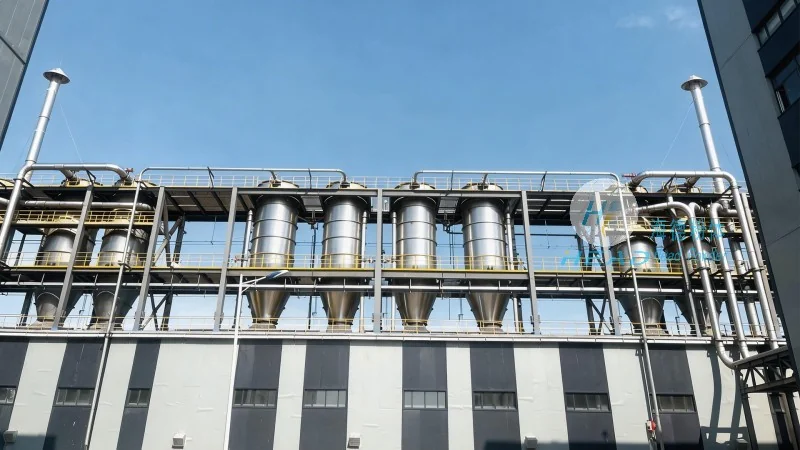
Thirdly, energy efficiency is a significant consideration. The air velocity and pressure required for conveying directly affect the energy consumption of the system. Dense-phase systems, while more energy-intensive due to the need for higher pressure, often achieve better overall efficiency over long distances by reducing the number of transfer points and minimizing material loss. Dilute-phase systems, on the other hand, are more energy-efficient for short distances but may require more frequent maintenance due to higher air flow rates.
The application ranges of micronized powder pneumatic conveying are broad and span various industries. The suitability of a system depends on the specific requirements of the material being transported and the operational conditions of the facility.
1. Pharmaceutical and Food Industries: In these industries, the transport of micronized powders must adhere to stringent quality and hygiene standards. Pneumatic conveying systems are preferred because they minimize product contamination and exposure to air, which can affect the quality and stability of the powder. For example, in pharmaceutical manufacturing, systems are often designed to be fully enclosed and sterilizable, ensuring that the micronized powders are handled under controlled conditions. The dense-phase systems are particularly useful here as they reduce the risk of particle attrition and maintain product integrity.
2. Chemical and Industrial Manufacturing: Many chemical processes involve the handling of fine powders, such as pigments, catalysts, and additives. Pneumatic conveying is used to transport these materials from storage silos to processing equipment, such as mixers, reactors, and extruders. The ability to handle abrasive and high-density materials makes dense-phase systems advantageous in these applications. Additionally, the systems can be integrated with dust collection and filtration systems to ensure environmental compliance and product purity.
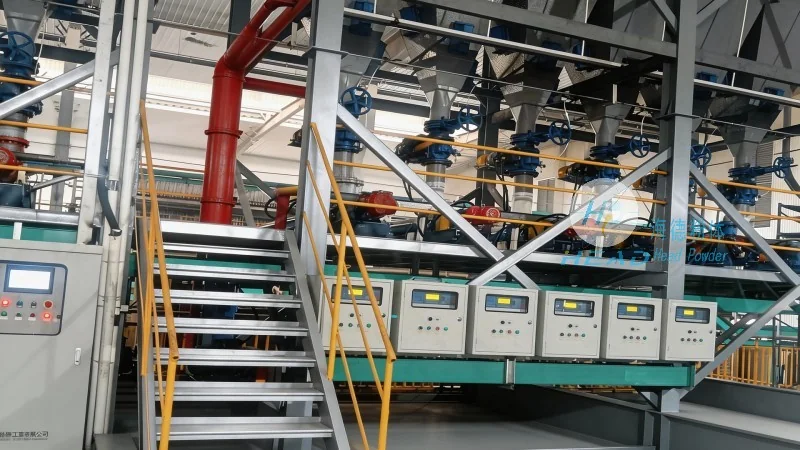
3. Mineral Processing and Mining: In the mining industry, micronized powders, such as ore concentrates and fine minerals, are transported from processing plants to storage or further treatment facilities. The long-distance and high-volume nature of these applications often require dense-phase pneumatic conveying systems. These systems can handle large quantities of material over significant distances while maintaining the quality of the mineral products. The robust design of these systems also allows them to withstand the harsh operating conditions commonly found in mining environments.
4. Construction and Building Materials: Micronized powders, such as cement, lime, and other construction materials, are often transported using pneumatic conveying systems. The systems are used to move these materials from storage silos to batching plants or directly to construction sites. The ability to handle high-volume, low-density materials makes dilute-phase systems suitable for short to medium-distance transport in construction applications. However, for longer distances or when transporting more abrasive materials, dense-phase systems may be preferred to ensure consistent flow and prevent system wear.
Micro-powder pneumatic conveying is a versatile and efficient method for transporting fine powders, with applications spanning multiple industries. The choice between dilute-phase and dense-phase systems depends on factors such as material properties, transport distance, and operational requirements. Understanding the types, characteristics, and application ranges of these systems is crucial for optimizing material handling processes and ensuring product quality. Companies like Shandong HeadPowder Engineering Co., Ltd., based in China, specialize in providing tailored pneumatic conveying solutions that meet the specific needs of their clients, leveraging advanced technology and expertise to deliver reliable and efficient material transport solutions.

 Shandong Headpowder Engineering Co., Ltd.
 156-6277-7102(Manager Zhang)
  0531-83386006
  Zhangqiu District, Jinan City, Shandong Province, China
telephone
WeChatconsult
top