With more than 10‑year industry experience, Shandong Headpowder delivers full‑service pneumatic‑conveying systems and blowers, undertaking nationwide turn‑key powder‑handling projects.
When designing a pneumatic conveying system for pearl salt powder, several critical factors must be considered to ensure efficient operation, reliability, and cost-effectiveness. The system's performance is directly influenced by the characteristics of the material being conveyed, the system's configuration, and the operational environment. This article outlines key design considerations that are essential for the successful implementation of a pneumatic conveying system specifically tailored for pearl salt powder.
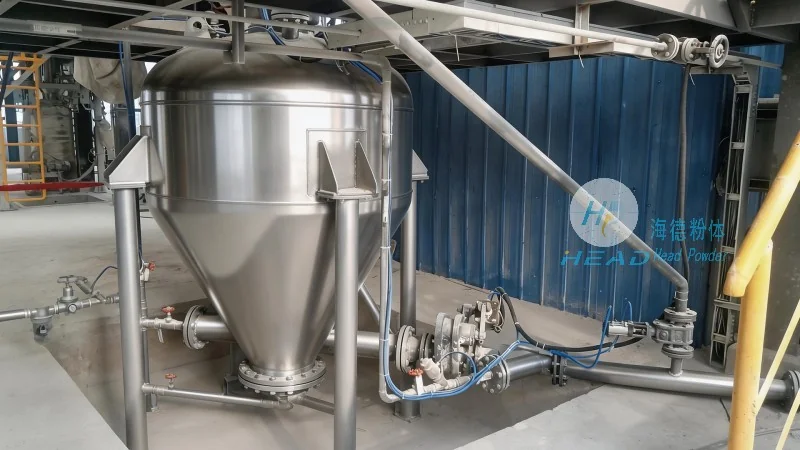
The first step in designing a pneumatic conveying system for pearl salt powder is to thoroughly analyze the material's physical and chemical properties. Pearl salt powder typically has a fine particle size, which can range from 100 microns to several millimeters depending on the production process. The particle size distribution, bulk density, and flowability are crucial parameters that affect the system's design. For instance, finer particles may require higher air velocities to prevent clogging, while coarser particles might need larger duct diameters to maintain adequate flow rates. Understanding the material's hygroscopic nature is also important, as moisture absorption can alter the powder's density and flow characteristics over time. These factors directly impact the selection of air compressor type, duct sizing, and the choice of components such as filters and cyclones.
The configuration of the pneumatic conveying system, including the type of conveying (e.g., dilute phase or dense phase), plays a pivotal role in the system's efficiency. Dilute phase systems use higher air velocities to suspend the powder in the air stream, which is suitable for short to medium distances and lower material loads. Dense phase systems, on the other hand, operate at lower air velocities, using a higher proportion of material to air, which is ideal for longer distances and more sensitive materials. For pearl salt powder, a dilute phase system is often preferred due to its ability to handle fine particles and maintain consistent flow rates. The system's layout, including the placement of the hopper, feeder, and conveying ducts, must be optimized to minimize pressure drops and ensure uniform material distribution. Proper airflow management is achieved through the use of well-designed ducts with smooth transitions, avoiding sharp bends or obstructions that could cause turbulence or particle accumulation. The selection of the air compressor is another critical aspect, as it must provide sufficient pressure and flow rate to maintain the desired conveying velocity while being energy-efficient.
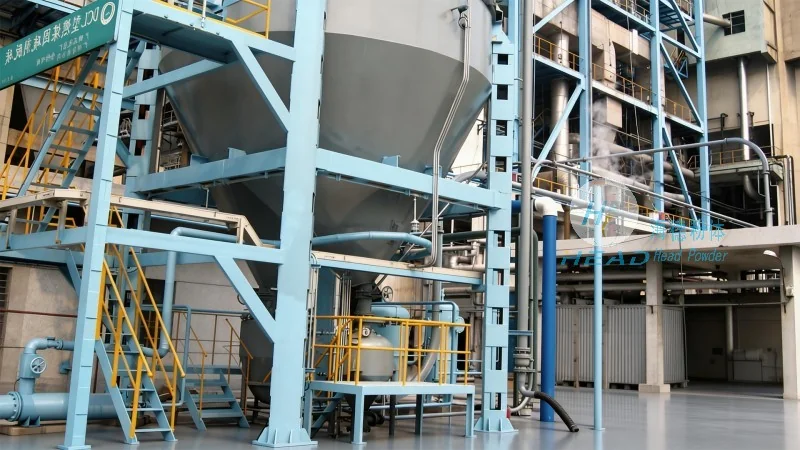
The choice of components in the pneumatic conveying system is directly linked to the material's properties and the system's operational requirements. For pearl salt powder, components such as rotary valves, feeders, and filters must be selected to handle fine, potentially abrasive particles. Rotary valves are commonly used as feeders due to their ability to provide a controlled and consistent flow rate, preventing material bridging or clogging. The selection of a rotary valve with appropriate blade design and speed is essential to avoid particle degradation or excessive wear. Filters are critical to maintain air quality and protect downstream equipment from dust accumulation. High-efficiency particulate air (HEPA) filters are often used to ensure that the air discharged from the system meets environmental and safety standards. Cyclones or baghouse filters are typically employed as the primary filtration method, depending on the required air cleanliness level. Additionally, the system may include a silencer to reduce noise levels, which is important for industrial environments where the system is located near workspaces. The integration of these components must be seamless to ensure smooth material transfer and minimize downtime.
Pressure drop is a key factor in the design of pneumatic conveying systems, as it directly affects the energy consumption and operational costs. The pressure drop in the system is influenced by the duct diameter, length, material roughness, and the number of bends or fittings. For pearl salt powder, minimizing pressure drop is essential to reduce the load on the air compressor and lower energy costs. This can be achieved by using larger duct diameters where feasible, reducing the number of bends, and selecting smooth, low-friction duct materials. The air compressor's efficiency is also a critical consideration, as it must be able to deliver the required pressure and flow rate while operating at optimal efficiency. Variable frequency drives (VFDs) can be used to adjust the compressor speed based on the system's demand, further improving energy efficiency. Regular maintenance of the system, including cleaning of filters and checking for leaks, is essential to maintain optimal pressure drop and energy performance.
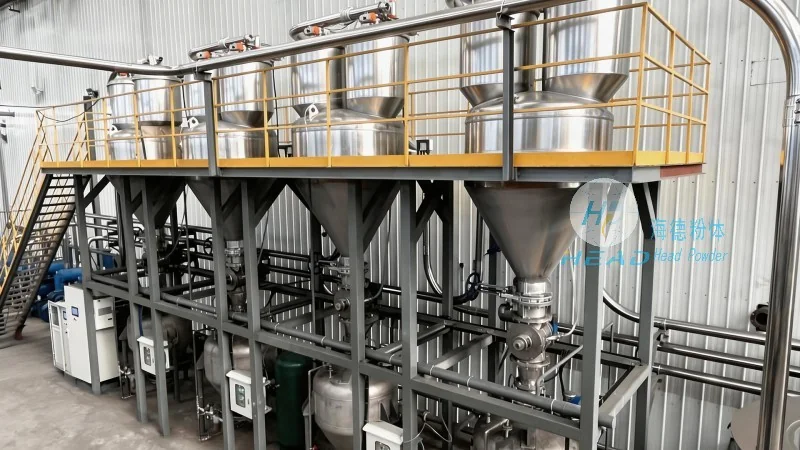
Safety is a paramount concern when designing any industrial system, especially for materials like pearl salt powder that may pose health risks if inhaled. The system must be designed to prevent dust explosions, which can occur due to the fine particle size and combustible nature of some salt powders. This involves implementing explosion-proof components, such as air compressors and filters, and ensuring proper ventilation to remove any accumulated dust. The system should also include safety interlocks to prevent operation if a component fails or if the pressure exceeds safe limits. Environmental compliance is another important aspect, as the system must meet local regulations regarding air emissions and waste disposal. Proper filtration and dust collection systems are essential to minimize the release of fine particles into the environment. The use of closed system designs, where possible, can further reduce the environmental impact by containing the material throughout the conveying process.
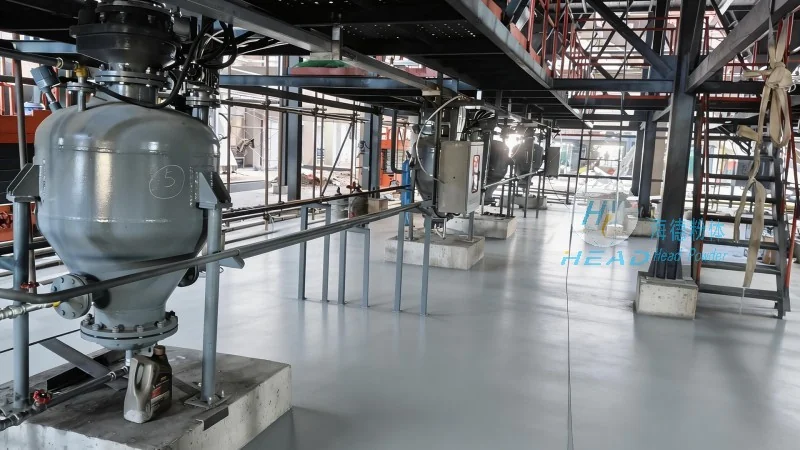
Proper installation and regular maintenance are crucial for the long-term performance and reliability of the pneumatic conveying system. The system should be installed by experienced technicians who are familiar with the material's properties and the system's design. During installation, it is important to ensure that all connections are secure and that there are no leaks in the ductwork or components. The system should be commissioned with a test run to verify that it operates as designed and that all components are functioning correctly. Regular maintenance is essential to keep the system in optimal condition. This includes cleaning or replacing filters, checking for wear on components such as rotary valves and ducts, and inspecting for any signs of clogging or blockage. A maintenance schedule should be established based on the system's usage and the material's characteristics, ensuring that routine checks are performed to prevent major issues from developing. Proper training of operators on the system's operation and maintenance is also important to ensure that the system is used correctly and that any issues are identified and addressed promptly.
Shandong HeadPowder Engineering Co., Ltd., a leading provider of pneumatic conveying solutions, has successfully implemented a pearl salt powder pneumatic conveying system for a client in China. The system was designed to handle 10 tons of pearl salt powder per hour over a distance of 50 meters. The design incorporated several of the considerations discussed above, including the selection of a dilute phase system with a rotary valve feeder and a HEPA filter. The system was installed and commissioned by the company's technical team, who ensured that all components were properly integrated and that the system operated efficiently. The client reported that the system has significantly improved their production efficiency and reduced their operational costs compared to traditional conveying methods. The system has also been operating reliably for over two years, with minimal maintenance required. This case study demonstrates the effectiveness of a well-designed pneumatic conveying system for pearl salt powder and highlights the importance of considering all design factors to achieve optimal performance.

 Shandong Headpowder Engineering Co., Ltd.
 156-6277-7102(Manager Zhang)
  0531-83386006
  Zhangqiu District, Jinan City, Shandong Province, China
telephone
WeChatconsult
top