With more than 10‑year industry experience, Shandong Headpowder delivers full‑service pneumatic‑conveying systems and blowers, undertaking nationwide turn‑key powder‑handling projects.
Monosodium glutamate (MSG) pneumatic conveying systems are specialized industrial equipment designed to transport MSG powder efficiently and safely. These systems are widely used in the food processing industry, particularly in the production and handling of monosodium glutamate, a common flavor enhancer. The primary goal of such systems is to ensure the reliable and hygienic movement of MSG from storage silos or production areas to processing units or packaging stations.
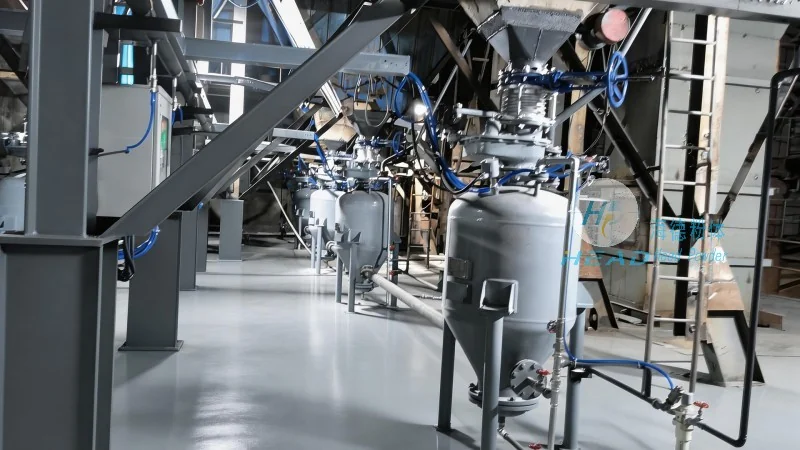
HeadPowder, a leading manufacturer in this field, specializes in the design, fabrication, and installation of high-quality pneumatic conveying systems tailored for MSG applications. With a focus on precision engineering and adherence to industry standards, HeadPowder's systems are engineered to meet the specific demands of MSG handling, ensuring minimal product degradation and maximum operational efficiency.
Located in Shandong, China, HeadPowder Engineering Co., Ltd. leverages its extensive experience and advanced manufacturing capabilities to deliver robust and reliable pneumatic conveying solutions. The company's commitment to quality and customer satisfaction is reflected in the durability and performance of its equipment, which is built to withstand the unique challenges of MSG transportation, such as maintaining product purity and preventing contamination.
The core structure of a typical MSG pneumatic conveying system consists of several key components that work in concert to facilitate the material transport. These components include a hopper or storage silo, a feeder mechanism, a conveying line (often equipped with air ducts or pipes), and a receiver or discharge unit. The system operates by creating a pressure differential or using positive pressure to move the MSG particles through the conveying line.
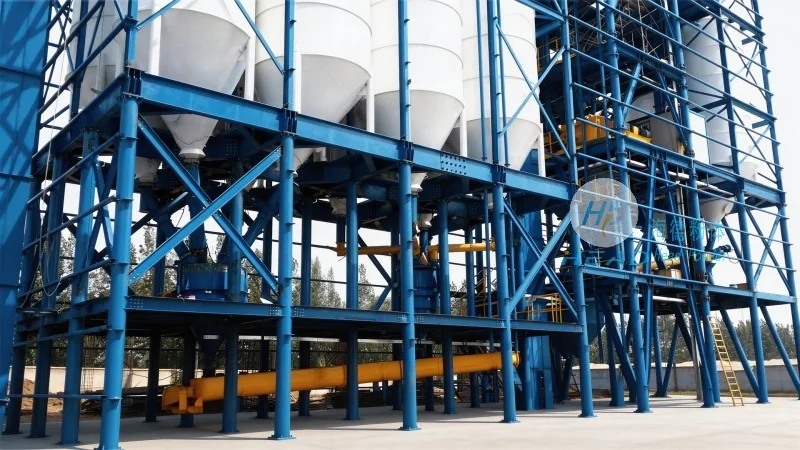
One of the most critical components is the feeder, which is responsible for controlling the flow rate of MSG from the storage hopper. For MSG, which is a fine powder, a rotary valve or a screw feeder is commonly used to ensure a consistent and controlled discharge. This prevents overloading the conveying line and maintains the efficiency of the system. The feeder is typically designed to handle the specific particle size and flow characteristics of MSG, minimizing the risk of blockages or uneven flow.
The conveying line itself is a crucial part of the system, often made from materials that are resistant to corrosion and compatible with food-grade applications. Stainless steel is a common choice due to its durability and ease of cleaning. The line may include bends, elbows, or other fittings that are designed to minimize pressure loss and ensure smooth material movement. In some systems, additional components like filters or cyclones are incorporated to separate any entrained air or fine particles, ensuring the purity of the conveyed MSG.
The receiver or discharge unit is where the MSG is deposited after being transported through the line. This unit is typically equipped with a hopper or a storage container that can be integrated with downstream processing equipment. The design of the receiver is critical to prevent product spillage and to maintain a clean and hygienic environment, which is essential in food processing applications.
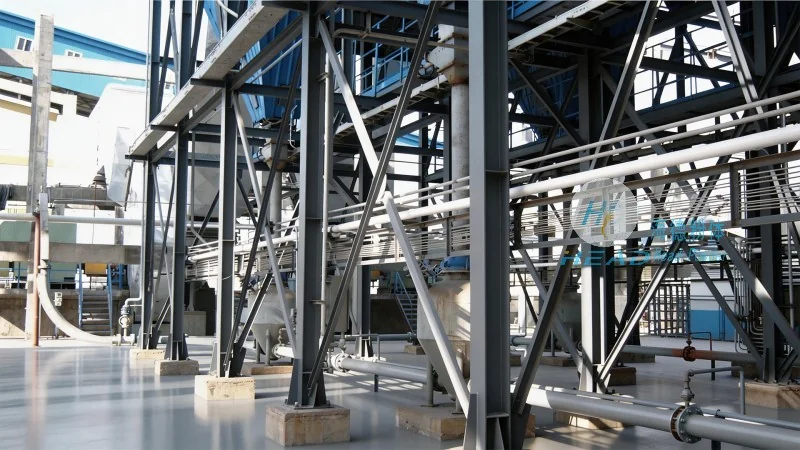
Operating principles of MSG pneumatic conveying systems involve the use of either positive pressure or negative pressure to move the material. Positive pressure systems use a blower or a fan to generate air pressure that pushes the MSG particles through the conveying line. This method is often preferred for long-distance or high-capacity transport, as it can handle larger volumes of material with less pressure loss. Negative pressure systems, on the other hand, use a vacuum to draw the MSG particles from the source and into the conveying line. This approach is suitable for shorter distances or when the system needs to operate in a closed environment.
In both positive and negative pressure systems, the air used for conveying is filtered to remove any dust or particles that could contaminate the MSG. This is achieved through air filtration systems that are integrated into the conveying line. The filtered air is then mixed with the MSG particles to form a slurry or a stream that is propelled through the line. The air is typically recycled in some systems to improve energy efficiency and reduce operational costs.
HeadPowder's pneumatic conveying systems for MSG are designed with these operational principles in mind. The company's engineers carefully select the appropriate components and materials to ensure that the system operates efficiently and safely. For example, the use of stainless steel in the construction of the conveying line not only provides durability but also facilitates easy cleaning and maintenance, which is crucial in food processing environments. The company also incorporates advanced control systems that allow for real-time monitoring of the conveying process, enabling operators to adjust parameters such as flow rate or pressure as needed to optimize performance.
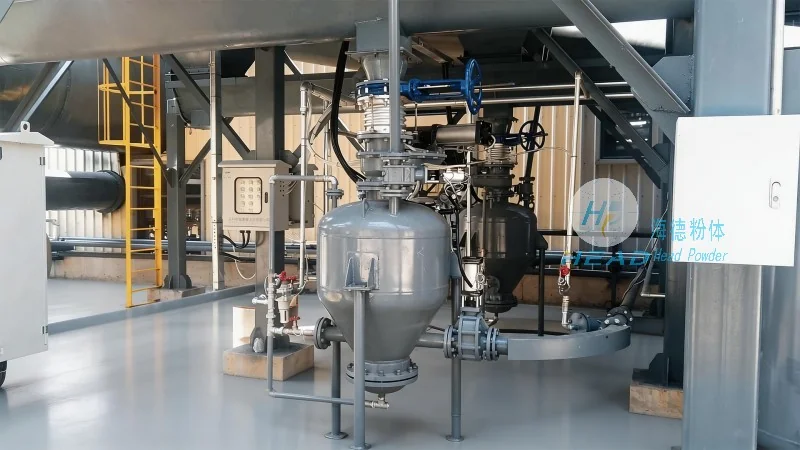
The benefits of using a pneumatic conveying system for MSG are numerous. Unlike traditional mechanical conveying methods, which can cause product degradation due to friction or impact, pneumatic systems use air to move the material, minimizing physical stress on the particles. This helps to preserve the quality and flavor of the MSG, ensuring that it meets the highest standards for food applications. Additionally, pneumatic systems are more hygienic and easier to clean, reducing the risk of contamination and ensuring compliance with food safety regulations.
Another advantage of HeadPowder's MSG pneumatic conveying systems is their flexibility. The systems can be customized to accommodate different production volumes and layouts, making them suitable for a wide range of applications, from small-scale production facilities to large industrial plants. The company's team of experts works closely with clients to understand their specific needs and design a system that meets their requirements, ensuring optimal performance and reliability.
HeadPowder Engineering Co., Ltd., based in Shandong, China, is a trusted partner for businesses in the food processing industry seeking reliable and efficient MSG handling solutions. The company's commitment to quality, innovation, and customer satisfaction has made it a leader in the field of pneumatic conveying systems. By leveraging advanced technology and rigorous quality control, HeadPowder delivers systems that not only meet but exceed industry expectations, helping clients to improve their operational efficiency and product quality.

 Shandong Headpowder Engineering Co., Ltd.
 156-6277-7102(Manager Zhang)
  0531-83386006
  Zhangqiu District, Jinan City, Shandong Province, China
telephone
WeChatconsult
top