With more than 10‑year industry experience, Shandong Headpowder delivers full‑service pneumatic‑conveying systems and blowers, undertaking nationwide turn‑key powder‑handling projects.
When it comes to the delivery of baking soda, various methods are employed in industrial and commercial applications. Understanding the advantages and disadvantages of each method is crucial for selecting the most suitable option based on specific operational requirements. This article provides a detailed comparison of common baking soda delivery methods, focusing on their practical applications and performance characteristics. The information is presented by Shandong HeadPowder Engineering Co., Ltd., a leading manufacturer of material handling solutions based in Shandong, China.
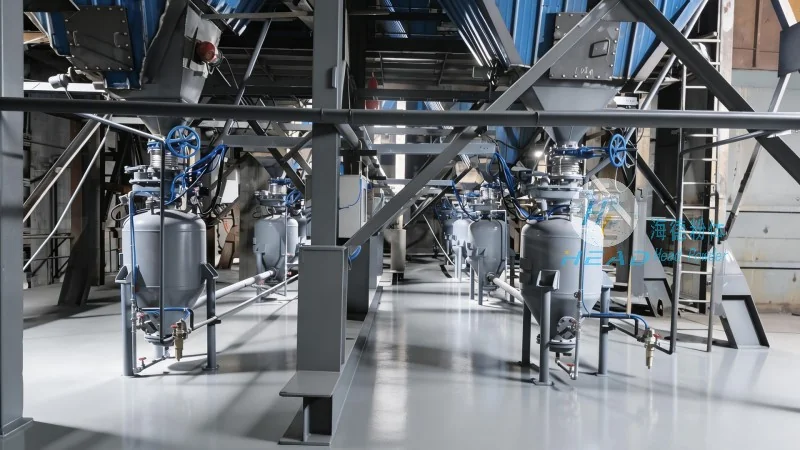
Baking soda, or sodium bicarbonate, is widely used in industries such as food processing, pharmaceuticals, and chemical manufacturing. The choice of delivery method depends on factors like the bulk density of the material, required flow rate, environmental conditions, and the need for dust control. Common delivery methods include pneumatic conveying, mechanical screw conveyors, belt conveyors, and manual handling. Each method has its own set of advantages and limitations that influence its suitability for different scenarios.
Pneumatic conveying is a popular method for transporting dry powders like baking soda, offering several advantages. One of the key benefits is the ability to transport materials over long distances without the need for multiple transfer points. This method is particularly effective for applications requiring high-speed, continuous operation. Pneumatic systems can be designed as positive pressure or negative pressure systems, each with its own operational considerations. Positive pressure systems use air to push the material through the pipeline, while negative pressure systems use suction to draw the material. The choice between the two depends on factors such as the distance and the nature of the material being conveyed.
A significant advantage of pneumatic conveying is its ability to handle materials that are prone to caking or agglomeration. By maintaining a consistent flow of air, the system prevents the material from sticking to the pipeline walls, ensuring smooth and efficient transport. Additionally, pneumatic systems can be integrated with dust collection and filtration equipment, which is essential for maintaining air quality in industrial environments. However, pneumatic conveying also has notable disadvantages. One major drawback is the high energy consumption associated with operating the system, especially when transporting large volumes of material over long distances. The cost of compressed air and the maintenance of air compressors can significantly impact the overall operational expenses. Another limitation is the potential for material degradation due to high air velocities, which may cause attrition or particle breakdown. Furthermore, the system's design complexity and the need for regular maintenance can increase the total cost of ownership.
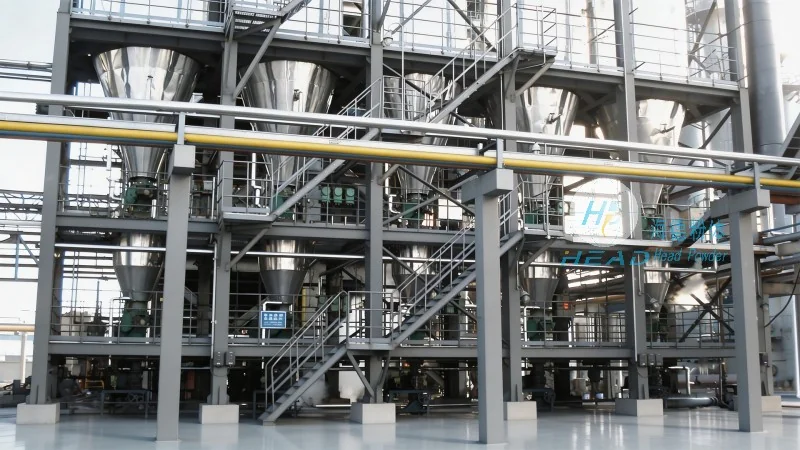
Mechanical screw conveyors are another widely used method for transporting baking soda. These systems consist of a rotating screw (auger) enclosed in a trough or tube, which moves the material along the conveyor path. Screw conveyors are known for their simplicity and reliability, making them a preferred choice for many applications. One of the primary advantages of this method is its low energy consumption compared to pneumatic systems. The mechanical design is straightforward, with minimal moving parts, which reduces the risk of mechanical failure and simplifies maintenance. Screw conveyors are also capable of handling a wide range of bulk materials, including those with varying particle sizes and moisture content. This flexibility makes them suitable for diverse industrial processes.
A key benefit of screw conveyors is their ability to operate in both horizontal and inclined positions, allowing for vertical or inclined transport of baking soda. This versatility enables the integration of the conveyor into existing plant layouts without significant structural modifications. Additionally, screw conveyors can be easily integrated with other equipment, such as hoppers and storage tanks, to form a complete material handling system. The enclosed design of the conveyor helps in controlling dust and preventing material spillage, which is crucial for maintaining a clean and safe working environment. However, screw conveyors also have several disadvantages that must be considered. One major limitation is their limited capacity compared to pneumatic systems, especially for long-distance transport. The screw's rotation speed and the pitch of the screw determine the flow rate, and increasing the capacity often requires larger equipment, which can be costly. Another drawback is the potential for material buildup and clogging, particularly with cohesive or sticky materials like baking soda. This can lead to operational interruptions and increased maintenance needs. Furthermore, the system's design may not be suitable for materials that are highly abrasive or corrosive, as the screw and trough may require specialized materials to prevent wear and damage.
Belt conveyors are commonly used for the transport of bulk materials, including baking soda, in various industrial settings. These systems utilize a continuous belt that moves over rollers or pulleys to transport the material from one location to another. Belt conveyors are known for their high capacity and ability to handle large volumes of material efficiently. One of the primary advantages of this method is its low cost per ton-mile compared to other conveying systems. The simple design and minimal moving parts contribute to lower maintenance costs and longer service life. Belt conveyors are also highly versatile, capable of transporting materials over long distances and in various orientations, including horizontal, inclined, and even vertical lifts with the use of special idlers.
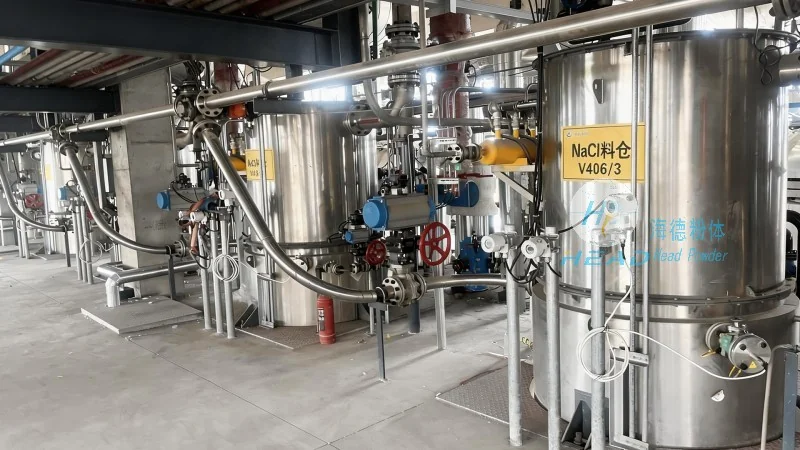
A significant benefit of belt conveyors is their ability to handle a wide range of material types, including dry powders and granules. The smooth surface of the belt allows for easy movement of the material without causing excessive friction or wear. This makes belt conveyors suitable for materials that are prone to abrasion or that require gentle handling. Additionally, belt conveyors can be equipped with various accessories, such as side walls, cleats, and load zones, to enhance their functionality and adapt to specific operational needs. The enclosed design of the conveyor helps in controlling dust and preventing material spillage, which is essential for maintaining a clean and safe working environment. However, belt conveyors also have notable disadvantages. One major limitation is their relatively high initial cost compared to other methods, especially when considering the need for a robust frame and heavy-duty components. The system's design complexity and the need for regular maintenance can increase the total cost of ownership. Another drawback is the potential for material spillage and belt slip, particularly with high-capacity or heavy loads. This can lead to material loss and operational inefficiencies. Furthermore, belt conveyors may not be suitable for materials that are highly cohesive or that require precise control over the flow rate, as the belt's movement may not provide the same level of control as other systems.
For smaller-scale applications or in situations where automated systems are not feasible, manual handling and storage solutions are often employed. This method involves the use of hoppers, bins, and manual loading equipment to transport baking soda. One of the primary advantages of manual handling is its low cost and simplicity, making it suitable for small operations or for transporting small quantities of material. The system does not require complex machinery or extensive infrastructure, which reduces the initial investment and operational expenses. Manual handling also allows for greater flexibility in terms of material storage and retrieval, as the hoppers and bins can be easily adjusted to accommodate different batch sizes or material types.
A key benefit of this method is its ability to handle materials that are difficult to convey with automated systems, such as those with high moisture content or that are prone to caking. The manual process allows for careful handling and inspection of the material, ensuring that only quality product is used. Additionally, manual handling can be integrated with existing storage facilities, such as silos or warehouses, to form a complete material management system. The enclosed design of the hoppers and bins helps in controlling dust and preventing material spillage, which is crucial for maintaining a clean and safe working environment. However, manual handling also has several disadvantages that must be considered. One major limitation is the high labor cost associated with the operation, as it requires continuous human intervention for loading, unloading, and monitoring. This can increase the overall operational expenses, especially for large-scale operations. Another drawback is the potential for human error, which can lead to material loss, contamination, or safety hazards. Furthermore, manual handling may not be suitable for materials that require high-speed or continuous operation, as the process is inherently slower and less efficient compared to automated systems. The system's design may also limit the capacity and throughput, making it unsuitable for high-volume applications.

 Shandong Headpowder Engineering Co., Ltd.
 156-6277-7102(Manager Zhang)
  0531-83386006
  Zhangqiu District, Jinan City, Shandong Province, China
telephone
WeChatconsult
top