With more than 10‑year industry experience, Shandong Headpowder delivers full‑service pneumatic‑conveying systems and blowers, undertaking nationwide turn‑key powder‑handling projects.
Understanding the operation process and working principle of a pulse dust removal material conveying line is crucial for optimizing industrial material handling systems. This equipment is designed to efficiently transport bulk materials while simultaneously removing dust and particulate matter, ensuring a cleaner and safer working environment. The following sections will delve into the key components, operational steps, and technical mechanisms that enable the effective functioning of such a system.
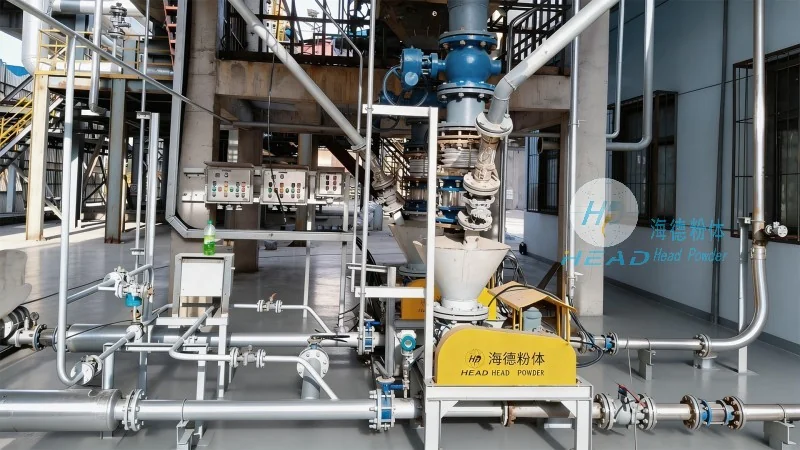
The pulse dust removal material conveying line typically consists of several essential components that work in harmony to achieve its objectives. These include the conveyor system, dust collection hoppers, pulse jet valves, filter bags, and a control system. Each component plays a vital role in the overall performance and efficiency of the equipment.
The conveyor system, often a belt or screw conveyor, is responsible for transporting the bulk material from the source to the destination. It is designed to handle various types of materials, such as powders, granules, or fine particles, with minimal friction and resistance. The dust collection hoppers are strategically placed along the conveyor path to capture airborne dust and particulate matter generated during the material transport process. These hoppers are equipped with filter bags that act as the primary filtration medium, trapping dust particles while allowing clean air to pass through.
Pulse jet valves are a critical component for the dust removal process. These valves are activated periodically to deliver high-pressure air pulses directly into the filter bags. The sudden influx of air creates a reverse airflow that dislodges accumulated dust from the bag surfaces, which then falls back into the dust collection hopper for collection and disposal. The control system manages the timing and frequency of the pulse jet activations, ensuring optimal dust removal without causing excessive wear or damage to the filter bags.
The operation process of the pulse dust removal material conveying line involves several sequential steps that ensure continuous and efficient material transport while maintaining dust control. The process begins with the loading of bulk material into the hopper at the starting point of the conveyor system. As the material is fed into the conveyor, it moves along the path towards the destination, passing through the dust collection hoppers along the way.
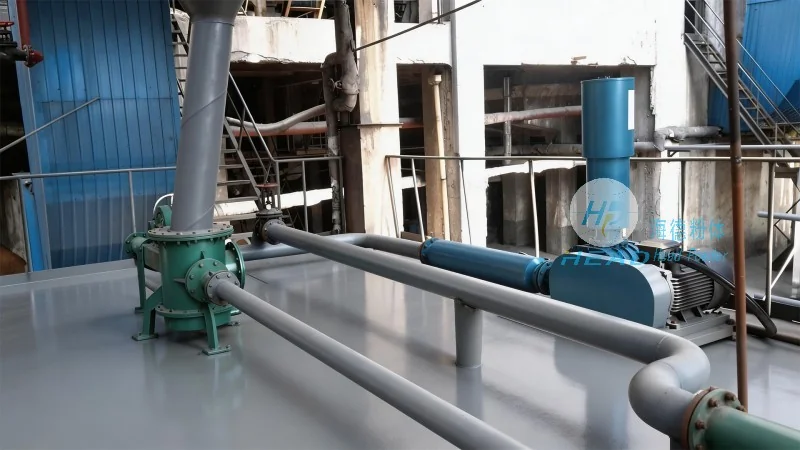
During material transport, dust and particulate matter are generated due to the friction and movement of the material. These particles are captured by the filter bags in the dust collection hoppers. The control system monitors the pressure drop across the filter bags, which indicates the level of dust accumulation. When the pressure drop reaches a pre-set threshold, indicating that the filter bags are clogged with dust, the pulse jet valves are activated.
The pulse jet valves deliver a series of high-pressure air pulses into the filter bags. This action creates a reverse airflow that shakes the filter bags, dislodging the accumulated dust. The dislodged dust falls back into the dust collection hopper, where it is collected and can be disposed of or recycled. The control system then resets the pressure drop, and the process continues as the material continues to be transported through the system.
The conveyor system continues to operate continuously, transporting the bulk material while the dust removal process occurs intermittently. This ensures that the material handling process remains uninterrupted, and the dust control system effectively maintains a clean and safe environment for the workers and equipment.
The working principle of the pulse dust removal mechanism in the material conveying line is based on the concept of reverse airflow and mechanical shaking. The filter bags, typically made of fabric materials such as polyester or polypropylene, are designed to trap dust particles on their surfaces. As the material is transported, dust particles adhere to the bag fibers, gradually building up a layer of accumulated dust.
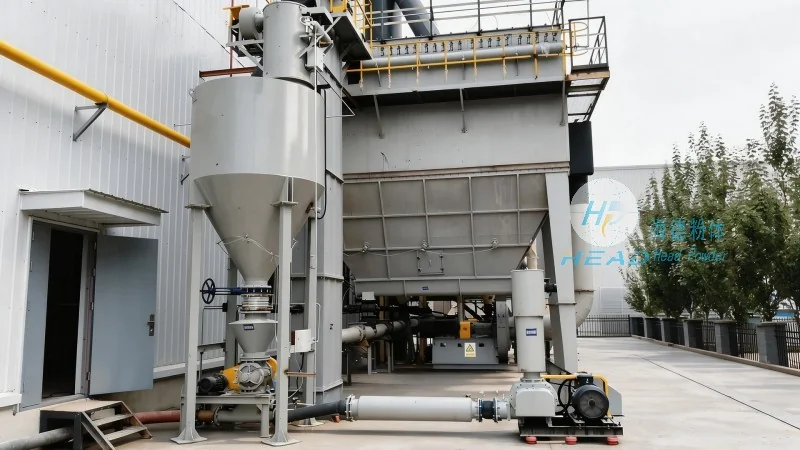
When the pressure drop across the filter bags becomes too high, indicating that the dust layer is too thick, the control system triggers the pulse jet valves. The valves open and release a high-pressure air pulse into the filter bag. This sudden pressure increase causes the bag to expand and contract rapidly, creating a reverse airflow that pulls the dust particles off the bag surface. The dust then falls into the hopper below, where it is collected and can be removed from the system.
This process is repeated periodically to maintain the efficiency of the filter bags. The frequency and duration of the pulse jets are adjustable based on the type of material being transported and the dust load. Proper maintenance and regular cleaning of the filter bags are essential to ensure the long-term performance and reliability of the pulse dust removal system.
Pulse dust removal material conveying lines offer several benefits in industrial applications, making them a preferred choice for material handling in various industries. These benefits include improved air quality, reduced dust-related health hazards, enhanced equipment longevity, and increased operational efficiency.
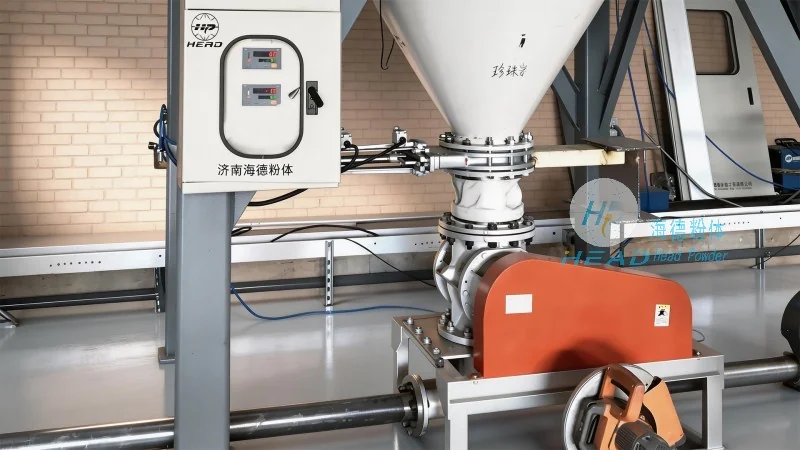
Improved air quality is a primary benefit, as the system effectively captures and removes airborne dust particles, reducing the risk of respiratory issues and other health problems for workers. The clean air environment also helps to prevent dust accumulation on equipment and surfaces, reducing the need for frequent cleaning and maintenance.
Reduced dust-related health hazards is another significant advantage. By controlling dust emissions, the system minimizes the exposure of workers to harmful particulate matter, thereby improving workplace safety and compliance with environmental regulations. This is particularly important in industries such as mining, cement, and chemical processing, where dust is a common byproduct of material handling.
Enhanced equipment longevity is achieved through the effective dust removal process. By preventing dust buildup on conveyor components and other equipment, the system reduces wear and tear, extending the lifespan of the machinery. This leads to lower maintenance costs and increased productivity over time.
Increased operational efficiency is also a key benefit. The continuous operation of the conveyor system, combined with the intermittent dust removal process, ensures that material handling is not interrupted. The system can handle high volumes of material while maintaining optimal dust control, making it suitable for large-scale industrial applications.

 Shandong Headpowder Engineering Co., Ltd.
 156-6277-7102(Manager Zhang)
  0531-83386006
  Zhangqiu District, Jinan City, Shandong Province, China
telephone
WeChatconsult
top