With more than 10‑year industry experience, Shandong Headpowder delivers full‑service pneumatic‑conveying systems and blowers, undertaking nationwide turn‑key powder‑handling projects.
Vanadium oxide powder conveying system equipment is a specialized industrial device designed for the efficient and reliable transportation of vanadium oxide powders. This equipment is crucial in various industrial applications where the handling of fine powders is required, ensuring that the material is moved safely and effectively from one location to another. The system integrates advanced engineering principles and components to address the unique challenges associated with handling vanadium oxide, a material known for its chemical reactivity and fine particle size.
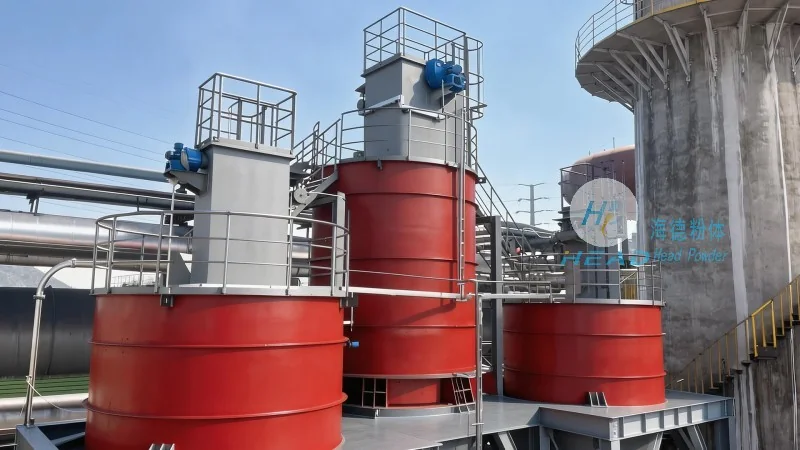
HeadPowder, the manufacturer of this advanced conveying system, is a leading company in the field of powder processing technology. With a strong focus on innovation and quality, Shandong HeadPowder Engineering Co., Ltd. has established itself as a trusted provider of industrial equipment for powder handling. The company's headquarters is located in Shandong, China, where it operates from a state-of-the-art facility dedicated to research, development, and production of high-performance powder conveying solutions. HeadPowder's commitment to excellence is reflected in its adherence to international standards and its dedication to meeting the specific needs of clients across various industries.
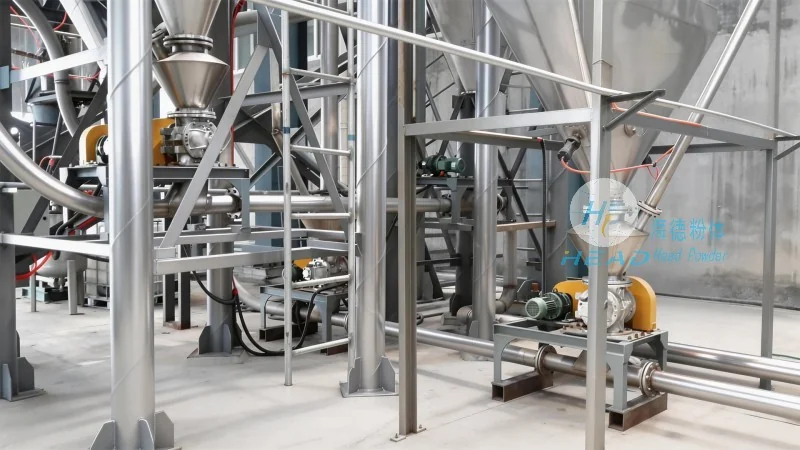
The vanadium oxide powder conveying system typically consists of several key components that work in tandem to ensure smooth operation. The system includes a hopper for material storage, a feeding mechanism to control the flow of powder, a conveyor or pneumatic transport system for moving the material, and a discharge unit for delivering the powder to the desired location. Each component is engineered to handle the specific characteristics of vanadium oxide, such as its fine particle size and potential reactivity. The hopper is designed with a sloped bottom to facilitate uniform material flow, preventing clogging and ensuring consistent feeding. The feeding mechanism, often a rotary valve or a screw feeder, regulates the amount of powder released into the transport system, maintaining a steady flow rate. The conveyor or pneumatic system, depending on the application, uses either mechanical or air pressure to move the powder through the system. This can include pipelines, ducts, or flexible hoses, all designed to minimize particle degradation and maintain product integrity. The discharge unit, such as a rotary valve or a gate valve, controls the release of the powder at the end of the system, ensuring precise delivery to the processing equipment.
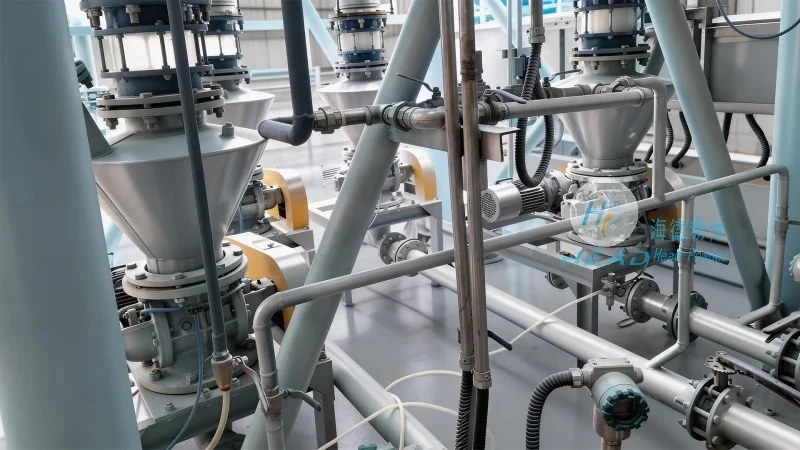
The operation of the vanadium oxide powder conveying system follows a systematic process that ensures efficient material handling. The process begins with the loading of vanadium oxide powder into the hopper. The powder is then fed into the transport system through the feeding mechanism, which controls the flow rate based on the system's requirements. The conveyor or pneumatic system then transports the powder through the pipeline or ducts to the discharge point. Throughout this process, the system monitors key parameters such as pressure, flow rate, and temperature to ensure optimal performance. The feeding mechanism adjusts its speed to maintain a consistent flow, preventing overloading or underloading of the conveyor. The pneumatic system, if used, regulates air pressure to ensure the powder is moved at the correct velocity, avoiding particle segregation or degradation. At the discharge point, the powder is released into the next processing stage, such as a mixer or a reactor. The entire operation is automated, with sensors and control systems providing real-time feedback to adjust the process as needed. This ensures that the system operates efficiently and safely, minimizing downtime and maximizing productivity.
The working principle of the vanadium oxide powder conveying system is based on the principles of fluidization and pneumatic transport. The system uses a combination of mechanical and pneumatic forces to move the powder through the system. The hopper provides a storage area where the powder is held under controlled conditions. The feeding mechanism then introduces the powder into the transport system, where it is either carried by a conveyor belt or suspended in a stream of air. In pneumatic conveying systems, the powder is suspended in the air stream, which is generated by a blower or a fan. The air pressure and velocity are carefully controlled to ensure the powder is transported without causing damage or degradation. The system's design takes into account the particle size distribution and the specific gravity of vanadium oxide, as these factors affect the flow characteristics and the required air velocity. The conveyor system, if used, relies on mechanical forces, such as rollers or belts, to move the powder. The speed and tension of the conveyor are adjusted to maintain a consistent flow rate. The discharge unit then releases the powder at the end of the system, completing the transport process. The entire system is designed to handle the unique properties of vanadium oxide, such as its tendency to agglomerate or its reactivity with moisture. By controlling the temperature and humidity within the system, the equipment ensures that the powder remains in its desired state throughout the conveying process. The control systems monitor and adjust these parameters in real-time, ensuring optimal performance and product quality.
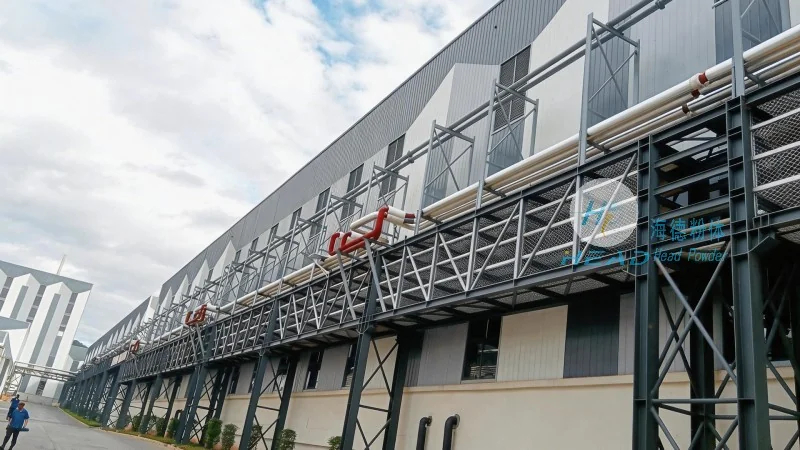
The vanadium oxide powder conveying system offers several advantages that make it suitable for various industrial applications. One of the key advantages is its ability to handle fine powders efficiently, without causing particle degradation or segregation. The system's design minimizes the risk of clogging and ensures consistent flow rates, which is crucial for processes that require precise material control. Another advantage is its flexibility, as it can be adapted to different production scales and environments. The system can be used in both small-scale laboratory settings and large-scale industrial plants, making it a versatile solution for powder handling. The system is also designed for safety, with features such as explosion-proof components and dust collection systems to prevent the release of hazardous particles. This is particularly important when handling vanadium oxide, which can be reactive and pose health risks if not handled properly. The system's efficiency and reliability make it an essential component in industries such as chemical manufacturing, where vanadium oxide is used as a catalyst or a precursor for other materials. It is also used in the production of vanadium compounds, such as vanadium pentoxide, which are used in batteries and other high-tech applications. The system's ability to maintain product integrity and ensure consistent quality makes it a valuable asset for manufacturers who rely on vanadium oxide in their production processes.

 Shandong Headpowder Engineering Co., Ltd.
 156-6277-7102(Manager Zhang)
  0531-83386006
  Zhangqiu District, Jinan City, Shandong Province, China
telephone
WeChatconsult
top