With more than 10‑year industry experience, Shandong Headpowder delivers full‑service pneumatic‑conveying systems and blowers, undertaking nationwide turn‑key powder‑handling projects.
Aluminum nitride (AlN) is a widely used ceramic material recognized for its superior thermal conductivity, electrical insulation properties, and chemical stability. In industrial settings, efficiently transporting AlN powder is essential for maintaining product quality and ensuring seamless production workflows. This article examines the concept of an aluminum nitride pneumatic conveying system and explores its core design principles, illustrating how such systems are engineered to handle the unique characteristics of AlN powder.
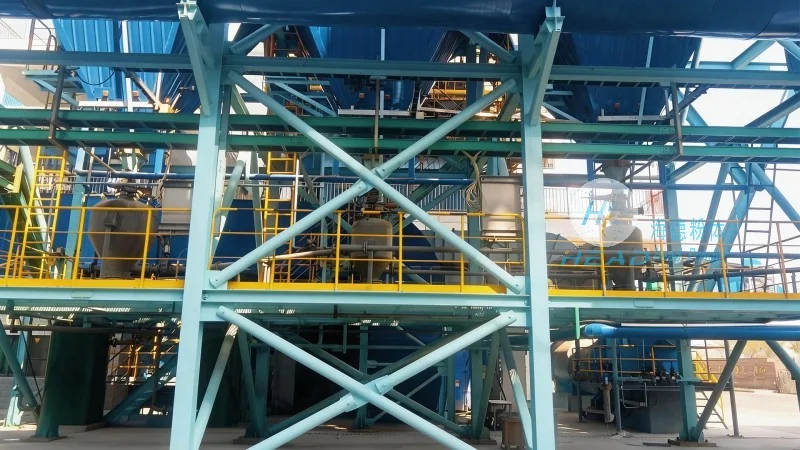
A pneumatic conveying system is a method of transporting bulk materials, such as powders or granules, using a gas stream—typically air or other gases. In the context of aluminum nitride, these systems are specifically engineered to manage the material's fine particle size, low bulk density, and potential reactivity under certain conditions. The primary objective of an AlN pneumatic conveying system is to move the powder from a storage or processing point to a destination, such as a mixer, reactor, or packaging unit, while minimizing particle degradation, agglomeration, and loss.
At the core of any pneumatic conveying system are interconnected components that collaborate to achieve efficient material transport. For an aluminum nitride system, these components typically include:
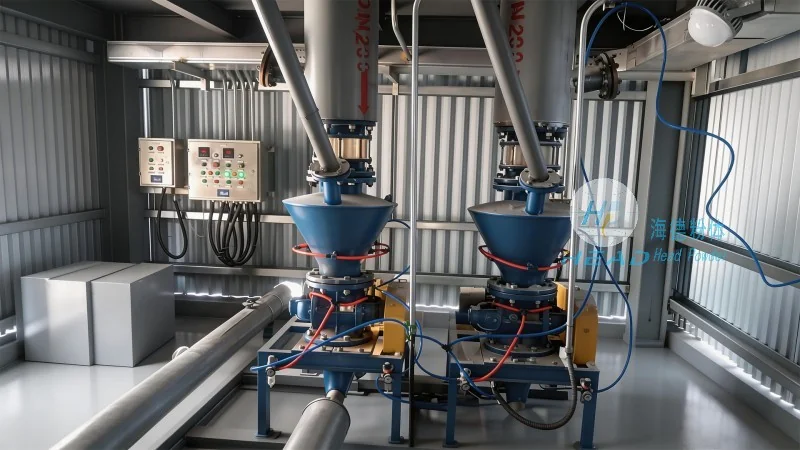
1. Feeder: The feeder introduces AlN powder into the conveying line at a controlled rate. Given AlN's fine nature, specialized feeders like rotary valves or vibratory feeders are often employed to ensure consistent and uniform flow, preventing blockages and maintaining system stability. Such equipment is commonly supplied by manufacturers like Shandong HeadPowder Engineering Co., Ltd., which specialize in handling ceramic powders.
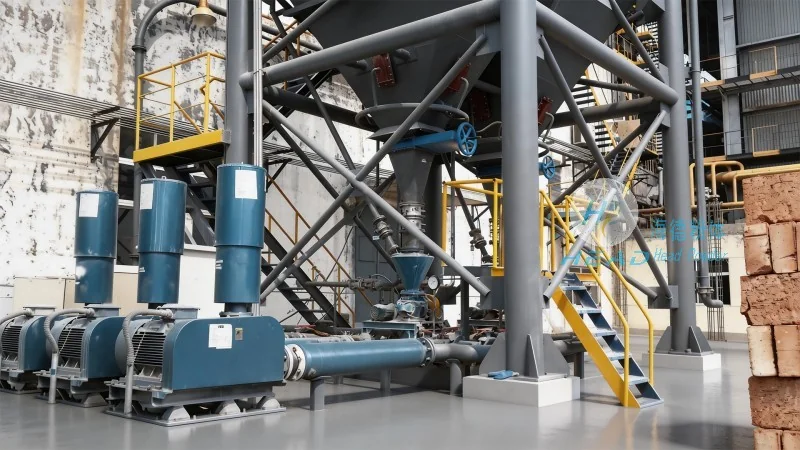
2. Conveying Line: The conveying line serves as the main pathway for the AlN powder and gas mixture. It can be either a positive pressure or negative pressure system, depending on the application. Positive pressure systems use a blower or compressor to push the material through the line, while negative pressure systems use a vacuum to draw the material. The choice of line type depends on factors like the distance to be covered, the material's properties, and desired system efficiency.
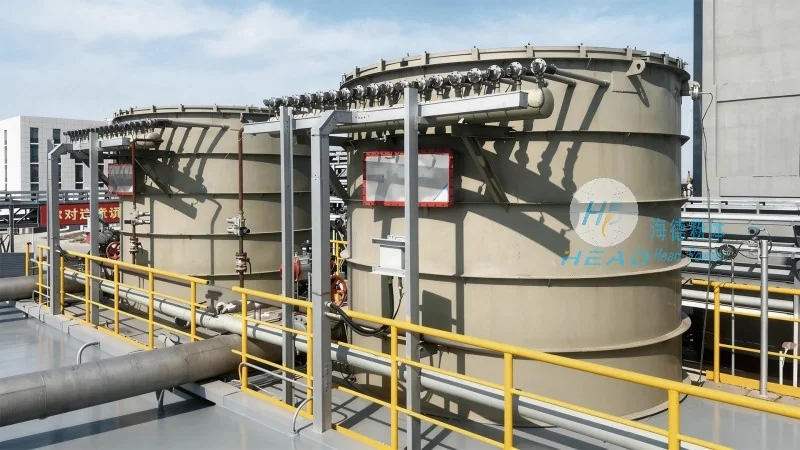
3. Gas Source: The gas source provides the necessary air or other gas to create the conveying stream. For AlN, air is commonly used due to its availability and low cost, though inert gases like nitrogen or argon may be employed in applications where the powder is sensitive to oxidation or moisture.
4. Filter and Dust Collector: As the AlN powder is transported, fine dust particles are generated and must be captured and removed from the system. A filter or dust collector is essential to prevent environmental contamination and maintain air quality. These systems typically use bag filters or cartridge filters to trap the fine particles, ensuring compliance with environmental regulations and protecting downstream equipment.
5. Control System: The control system monitors and regulates the operation of the pneumatic conveying system. It may include sensors to measure pressure, flow rate, and powder level, as well as controllers to adjust the feeder speed, gas flow, and other parameters. This ensures the system operates within optimal conditions, minimizing energy consumption and maximizing material throughput.
The design of an aluminum nitride pneumatic conveying system must consider several key principles to ensure effective and reliable operation. These principles are tailored to the unique characteristics of AlN powder and the specific requirements of the application.
First, particle size and flow characteristics are critical. AlN powder is typically fine, with particle sizes ranging from a few microns to a few hundred microns. Fine particles are more prone to agglomeration and can cause blockages in the system. Therefore, the design must include features that prevent particle agglomeration, such as using low-velocity conveying to minimize particle impact and using appropriate gas velocities to maintain a stable flow.
Second, material compatibility is essential. AlN is a ceramic material that can be sensitive to certain chemicals or temperatures. The conveying system components, such as the feeder, line, and filter, must be made of materials that are compatible with AlN to avoid contamination or degradation. For example, stainless steel or special alloys may be used for the conveying line to prevent corrosion, while the filter media must be resistant to the powder's abrasive properties.
Third, system efficiency and energy consumption are important considerations. Pneumatic conveying systems can be energy-intensive, especially for long-distance or high-volume applications. The design should aim to minimize energy use by optimizing gas velocities, reducing pressure drops, and using efficient components. This not only lowers operational costs but also contributes to environmental sustainability.
Fourth, system safety and environmental compliance must be addressed. AlN powder can be hazardous if inhaled or if it comes into contact with skin. The system must be designed with safety features, such as dust collection and proper ventilation, to protect operators and the environment. Additionally, the system must comply with local regulations regarding air quality and waste disposal.
Aluminum nitride pneumatic conveying systems are used in a variety of industrial applications where AlN powder needs to be transported efficiently and safely. Some common applications include:
1. Electronics and semiconductor manufacturing: AlN is used as a substrate material in the production of high-power electronic devices and semiconductor components. Pneumatic conveying systems are used to transport AlN powder from storage to the manufacturing line, ensuring a consistent supply of high-quality material.
2. Thermal management: Due to its excellent thermal conductivity, AlN is used in thermal management systems for electronic devices and industrial equipment. The conveying system is used to move AlN powder to the manufacturing site where it is processed into components like heat sinks or thermal interface materials.
3. Chemical and pharmaceutical industries: AlN is used as a filler or additive in certain chemical and pharmaceutical products. Pneumatic conveying systems are used to transport AlN powder to the production line, ensuring a uniform and consistent addition of the material.
4. Research and development: In research facilities, AlN is used for various experimental purposes, and pneumatic conveying systems are used to transport the powder to the lab for testing and analysis.
An aluminum nitride pneumatic conveying system is a specialized industrial solution designed to efficiently and safely transport aluminum nitride powder. The system's design is based on principles that address the unique properties of AlN, such as its fine particle size, chemical stability, and thermal conductivity. By incorporating appropriate components and following key design principles, these systems can ensure reliable operation, minimize material loss, and maintain product quality. For industries relying on aluminum nitride, such as electronics, thermal management, and chemicals, pneumatic conveying systems are an essential part of the production process, enabling the smooth and efficient handling of this critical material.

 Shandong Headpowder Engineering Co., Ltd.
 156-6277-7102(Manager Zhang)
  0531-83386006
  Zhangqiu District, Jinan City, Shandong Province, China
telephone
WeChatconsult
top