With more than 10‑year industry experience, Shandong Headpowder delivers full‑service pneumatic‑conveying systems and blowers, undertaking nationwide turn‑key powder‑handling projects.
In the agricultural and industrial sectors, efficient and reliable material conveying systems are crucial for enhancing production efficiency and reducing operational costs. For granular materials like fertilizers, pneumatic conveying technology stands out due to its flexibility and adaptability. This article delves into the comparison of positive pressure and negative pressure conveying, two pneumatic conveying methods, by analyzing their technical features, application scenarios, and pros and cons, providing valuable references for relevant enterprises.
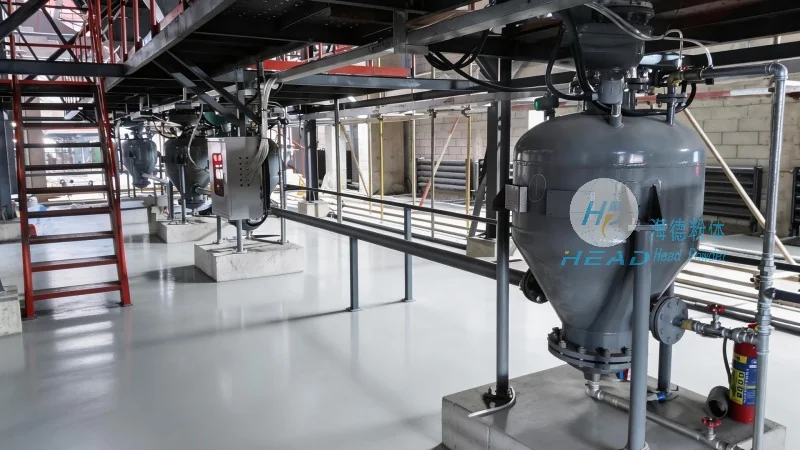
Positive pressure conveying, also known as pressurized pneumatic conveying, pushes materials through pipelines by maintaining an air pressure higher than the ambient pressure. The system typically consists of feeding devices, air supply equipment, conveying pipelines, separators, and receiving devices. The core advantages of positive pressure conveying lie in its high conveying capacity and long conveying distance, making it suitable for handling high-concentration and large-particle materials. The system operates stably and is less affected by external environmental factors. For long-distance, large-scale fertilizer transportation, positive pressure conveying excels.
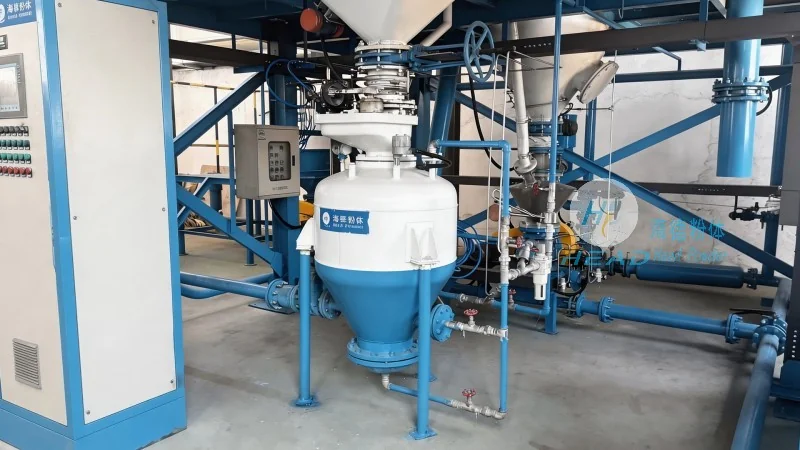
Negative pressure conveying, or aspirated pneumatic conveying, draws materials into pipelines by maintaining an air pressure lower than the ambient pressure. Unlike positive pressure conveying, the air supply equipment is usually located at the receiving end, using vacuum pumps or fans to generate negative pressure. The main characteristics of negative pressure conveying include minimal material wear, relatively short conveying distances (typically within hundreds of meters), and a relatively simple system structure with lower investment costs. For short-distance, low-concentration material transportation, negative pressure conveying has distinct advantages.
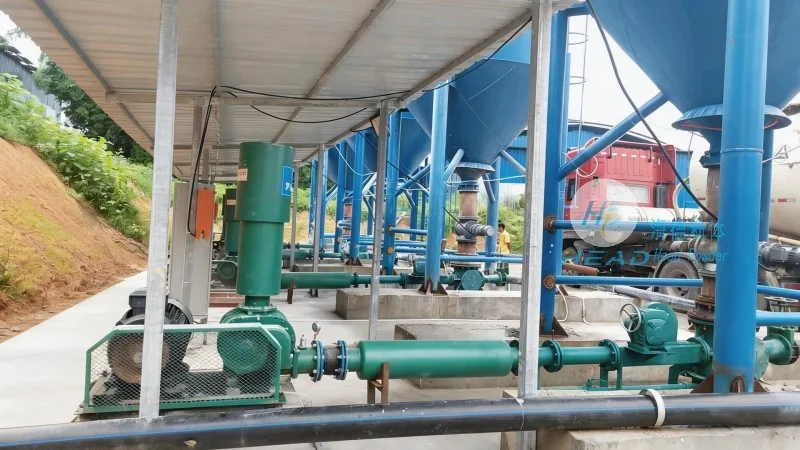
There are significant differences between positive and negative pressure conveying in multiple aspects, directly affecting their practical application choices. First, in terms of conveying distance and capacity, positive pressure conveying can achieve longer distances (up to several kilometers) and larger capacities, while negative pressure conveying is limited by conveying distance and material concentration, typically used for short-distance, low-flow transportation. Second, regarding system pressure and equipment requirements, positive pressure conveying requires higher air source pressure (usually 0.5-1.0 MPa), with higher requirements for equipment sealing and pressure resistance; negative pressure conveying uses a vacuum system with lower pressure (usually -0.1 to -0.5 MPa), with relatively simple equipment. Additionally, in terms of material adaptability, positive pressure conveying has stronger adaptability to material particle size, moisture, and other parameters, capable of handling high-concentration, large-particle fertilizers; negative pressure conveying is more suitable for transporting dry, fine-particle materials to avoid material blockage or equipment wear due to excessive negative pressure.
The application scenarios of positive and negative pressure conveying differ due to their technical characteristics. Positive pressure conveying is widely used in large-scale fertilizer factories and compound fertilizer production lines for long-distance material transportation, such as transporting finished fertilizers from the production workshop to the warehouse or port, achieving continuous, large-scale material transfer and improving production efficiency. Negative pressure conveying is common in small and medium-sized fertilizer processing enterprises for short-distance raw material transportation, such as conveying raw fertilizer from warehouses to production equipment or recycling dust during the production process into storage containers. In practical applications, positive pressure conveying typically has higher conveying efficiency, reducing material loss during transportation, while negative pressure conveying focuses more on protecting materials, reducing particle breakage and wear. For example, for fragile compound fertilizer particles, negative pressure conveying can reduce the breakage rate and maintain the physical properties of the material, whereas positive pressure conveying may cause particle breakage due to high-speed air flow, affecting product quality.
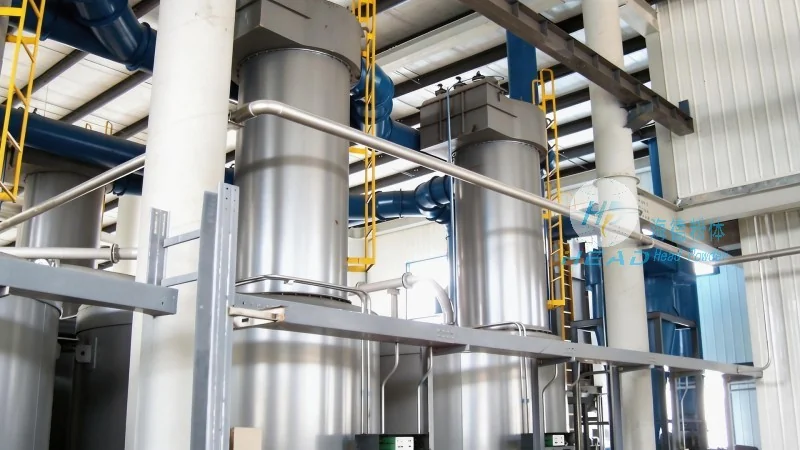
With the advancement of industrial technology, both positive and negative pressure conveying technologies are continuously optimized. For positive pressure conveying systems, improvements focus on enhancing the efficiency of air source pressure utilization, reducing energy loss, and optimizing separator structures to improve material separation efficiency and reduce system blockage risks. For example, in the design of positive pressure conveying equipment by Shandong HeadPowder Engineering Co., Ltd. (headpowder), emphasis is placed on improving air source pressure utilization efficiency while reducing energy consumption. For negative pressure conveying, technical optimization centers on enhancing the suction efficiency of the vacuum system, lowering energy consumption, and strengthening system sealing to prevent external air from entering and affecting conveying effects. In the future, with the application of intelligent technology, pneumatic conveying systems will increasingly focus on automation control and remote monitoring. Through sensors, real-time monitoring of material flow, pressure, and other parameters is achieved, enabling intelligent system regulation and fault warning to further enhance conveying reliability and efficiency.

 Shandong Headpowder Engineering Co., Ltd.
 156-6277-7102(Manager Zhang)
  0531-83386006
  Zhangqiu District, Jinan City, Shandong Province, China
telephone
WeChatconsult
top