With more than 10‑year industry experience, Shandong Headpowder delivers full‑service pneumatic‑conveying systems and blowers, undertaking nationwide turn‑key powder‑handling projects.
In the industrial sector, efficient and reliable material handling systems are crucial for smooth production processes. For silicon dioxide powder, a fine and dust-prone material, traditional conveying methods may face issues such as low efficiency, environmental pollution, or equipment wear. Pneumatic conveying systems, as an advanced technology, demonstrate significant advantages in silicon dioxide powder transport, effectively addressing the limitations of conventional methods. This article delves into the different types of pneumatic conveying systems and their practical applications in this field, while incorporating case studies from Shandong HeadPowder Engineering Co., Ltd. (referred to as HeadPowder) to provide valuable insights for industry users.
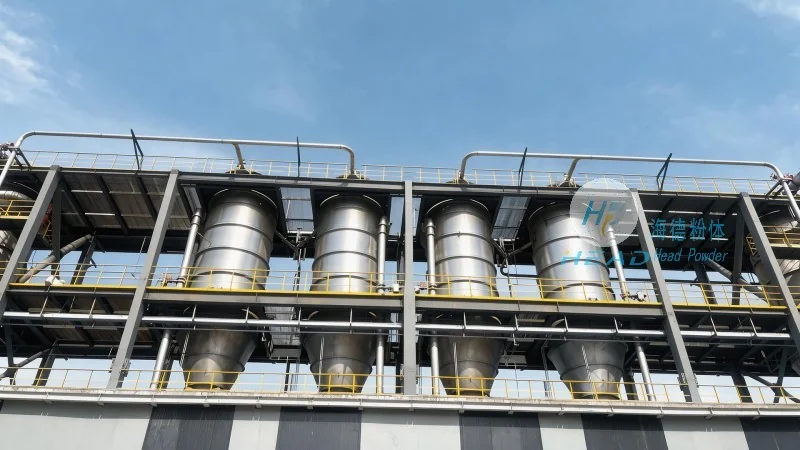
Pneumatic conveying systems utilize compressed air or inert gases as a driving force to transport solid materials (such as silicon dioxide powder) by forming a gas-solid two-phase flow. Compared to traditional mechanical conveying methods (e.g., belt conveyors, screw conveyors), these systems offer several key advantages. First, the conveying process is enclosed, effectively controlling dust dispersion and reducing environmental pollution. Second, the system structure is simple, with minimal floor space requirements and flexible installation. Third, it can achieve horizontal, vertical, or complex path conveying, adapting to various production environments. For silicon dioxide powder, which is prone to caking and wear, pneumatic conveying systems provide a gentler conveying environment, reducing equipment wear and ensuring material purity and quality.
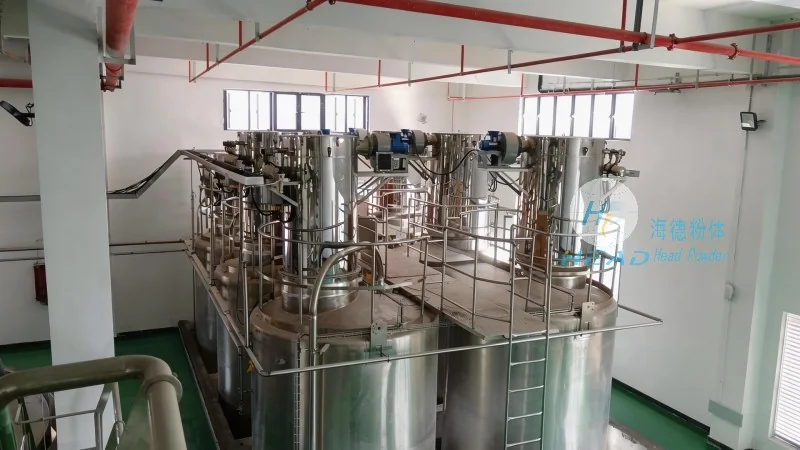
Based on the conveying principle and structure, pneumatic conveying systems are primarily categorized into several types, each with specific application scenarios and advantages for silicon dioxide powder transport. First, the suction-type pneumatic conveying system (also known as a negative-pressure system) uses a vacuum pump to generate negative pressure, drawing material from a hopper into the conveying pipeline and discharging it at the unloading point. This system is suitable for collecting material from multiple dispersed points and concentrating it, such as from multiple silos or production lines. The advantages of suction-type systems include long conveying distances (up to hundreds of meters), lower requirements for material dusting points, and the ability to draw material from low positions or multiple points simultaneously. However, it has a relatively slower conveying speed and requires high vacuum, with strict requirements for pipeline sealing. Second, the compression-type pneumatic conveying system (also known as a positive-pressure system) uses a compressor to pressurize air or inert gases, pushing material from a hopper into the conveying pipeline and discharging it at the unloading point. This system is suitable for transporting material from a central point to multiple dispersed points, such as from a central silo to multiple production workshops or packaging points. The advantages of compression-type systems include faster conveying speeds, longer distances (over a kilometer), and higher requirements for material dusting points, enabling material transport from high positions or a central point. The drawbacks include the need for high pressure, higher requirements for pipelines and equipment, and potential noise generation. Additionally, the combined pneumatic conveying system combines features of both suction and compression types, achieving bidirectional material transport through the coordinated work of a vacuum pump and a compressor. This system is suitable for complex scenarios where material needs to be collected from multiple points and conveyed to multiple points, such as in the processing and packaging of silicon dioxide powder. The advantages of combined systems include high flexibility, adapting to various conveying needs, but they have a more complex structure and higher maintenance costs. Finally, the pneumatic elevator is a specialized vertical conveying device that uses compressed air to lift material from a low position to a high position. For silicon dioxide powder requiring vertical transport, pneumatic elevators offer efficient and continuous conveying capabilities with high flow rates. Their advantages include simple structure, easy maintenance, conveying distances of tens of meters, and minimal material wear. However, pneumatic elevators have limited horizontal conveying capacity and typically require additional equipment for horizontal transport.
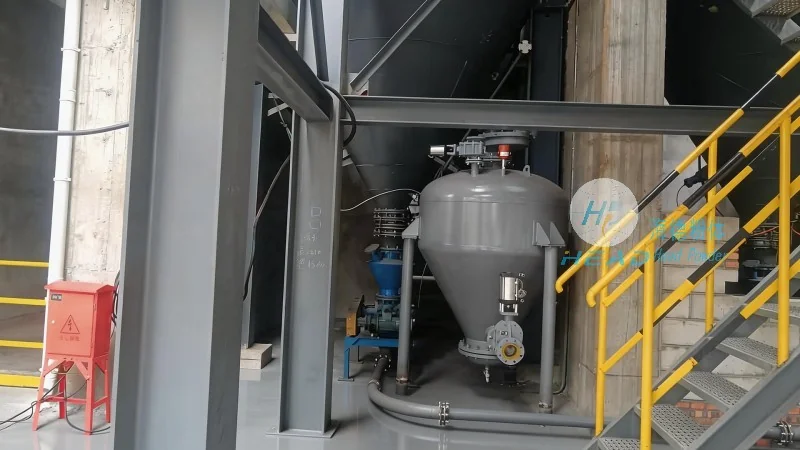
Shandong HeadPowder Engineering Co., Ltd. (HeadPowder), as a professional engineering company, has extensive experience in the design and implementation of pneumatic conveying systems for silicon dioxide powder. The company provides customized solutions tailored to different customer needs. For example, a silicon dioxide powder manufacturing company required transporting material from its silos to the packaging workshop. HeadPowder designed a compression-type pneumatic conveying system for this project. The system uses a high-pressure blower, with a conveying distance of about 800 meters and a flow rate of 10 tons per hour, meeting production demands. During operation, dust dispersion was effectively controlled, equipment wear was minimized, and production efficiency was significantly improved. Another client needed to collect silicon dioxide powder from multiple dispersed silos and concentrate it in a central silo. HeadPowder designed a suction-type pneumatic conveying system for this scenario. The system generates negative pressure via a vacuum pump, simultaneously drawing material from multiple silos, with a conveying distance of about 500 meters and a flow rate of 8 tons per hour. The system operates stably, adapting to different silo positions and heights, and improves material collection efficiency. Additionally, HeadPowder provides combined pneumatic conveying systems for handling mixed silicon dioxide powder of different specifications, such as mixing coarse and fine particles before conveying to the packaging point. This system achieves material mixing and transport through the coordinated work of a vacuum pump and a compressor, ensuring uniform product quality. In practical applications, HeadPowder's pneumatic conveying systems not only enhance production efficiency and reduce operating costs but also meet environmental requirements, earning widespread recognition from clients.

 Shandong Headpowder Engineering Co., Ltd.
 156-6277-7102(Manager Zhang)
  0531-83386006
  Zhangqiu District, Jinan City, Shandong Province, China
telephone
WeChatconsult
top