With more than 10‑year industry experience, Shandong Headpowder delivers full‑service pneumatic‑conveying systems and blowers, undertaking nationwide turn‑key powder‑handling projects.
Heptahydrate magnesium sulfate, commonly known as Epsom salt, is a versatile chemical compound utilized in numerous industrial, agricultural, and pharmaceutical applications. The air-flow transport technology represents a sophisticated method for handling bulk quantities of this material, ensuring efficient and safe movement from storage to processing sites. This article delves into the fundamental principles of air-flow transport for heptahydrate magnesium sulfate, outlines the key classifications of such systems, and explores their practical applications across different industries.
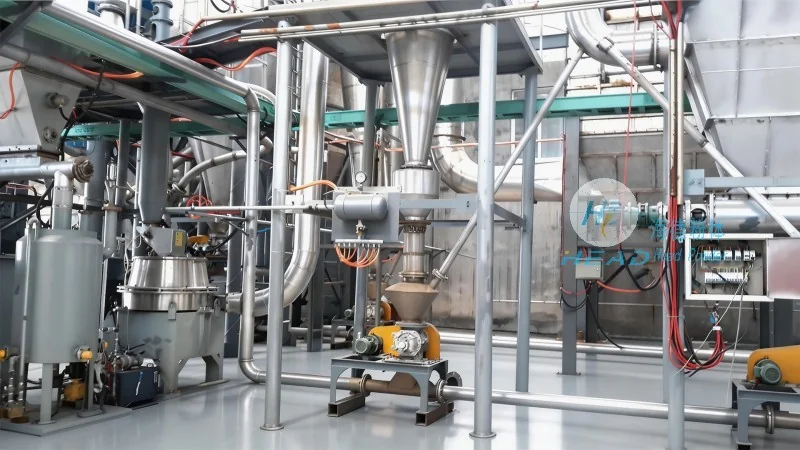
The air-flow transport system for heptahydrate magnesium sulfate operates on the principle of pneumatic conveying, where air serves as the medium to transport bulk material through a pipeline. The process begins with a feeding device, such as a rotary valve or a star feeder, which introduces the material into the pipeline. A blower or fan then generates the conveying air, creating a pressure differential that moves the material along with the air stream. The pipeline design, including the diameter and length, is critical to maintaining optimal air velocity to prevent material settling or blockage. At the discharge end, a separator, typically a cyclone or a bag filter, separates the material from the air, allowing the material to be collected in a container. The air, now free of particles, is either recirculated or released to the environment, depending on the system configuration. This closed-loop or open-loop system ensures efficient material handling while minimizing dust emissions and environmental impact.
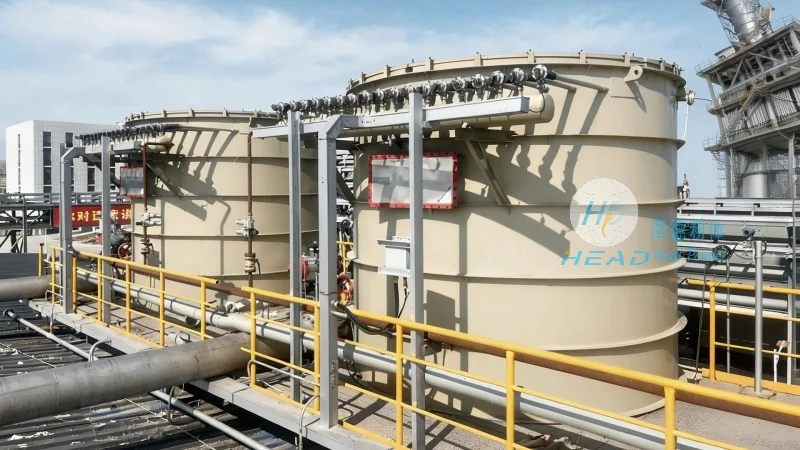
Air-flow transport systems for heptahydrate magnesium sulfate are categorized into two primary types based on the direction of air flow and the method of material movement: suction (or negative pressure) systems and pressure (or positive pressure) systems. Suction systems operate by creating a vacuum at the discharge end, drawing the material from the source through the pipeline. These systems are well-suited for short to medium conveying distances and are commonly employed in applications where the material is transferred from a storage silo to a processing plant. The vacuum created helps to maintain a consistent flow rate and reduces the risk of material spillage. Pressure systems, conversely, utilize a blower to generate positive pressure at the feeding end, pushing the material through the pipeline. These systems are ideal for longer distances and higher material loads, making them suitable for large-scale industrial operations such as mining or construction. The choice between suction and pressure systems depends on factors like the distance to be covered, the material's properties (e.g., particle size, moisture content), and the required throughput.
The classification of air-flow transport systems directly impacts their application in various industrial settings. Suction systems are often preferred for handling fine powders or materials that are prone to dust generation, as the vacuum helps to contain particles and prevent dispersion. They are widely used in the chemical and pharmaceutical industries for transferring heptahydrate magnesium sulfate from storage tanks to mixing or reaction units, ensuring a clean and controlled process. Pressure systems, with their higher conveying capacity and ability to handle larger particle sizes, are extensively used in the mining sector for transporting bulk heptahydrate magnesium sulfate from mines or quarries to processing facilities. Technical considerations for both system types include the selection of appropriate air velocities to prevent material deposition or blockage in the pipeline, the design of the feeding and discharge equipment to ensure consistent material flow, and the maintenance of the air filtration system to prevent dust accumulation and ensure compliance with environmental regulations.
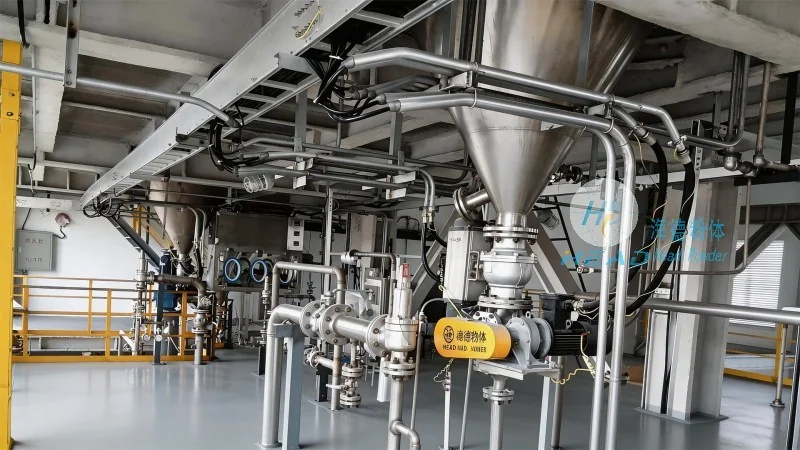
Shandong HeadPowder Engineering Co., Ltd., operating under the brand name HeadPowder, is a leading provider of air-flow transport solutions for bulk materials, including heptahydrate magnesium sulfate. The company specializes in the design, manufacturing, and installation of customized pneumatic conveying systems tailored to the specific needs of clients. With a strong focus on quality and customer satisfaction, HeadPowder leverages advanced engineering expertise and state-of-the-art technology to deliver efficient and reliable material handling solutions. The company's headquarters is located in Shandong, China, where it maintains a robust presence in the chemical processing and material handling industries. HeadPowder's team of experienced engineers and technicians works closely with clients to understand their operational requirements and provide tailored solutions that enhance productivity and reduce operational costs. The company adheres to international quality standards and conducts rigorous testing to ensure that all systems meet the highest performance and safety requirements.

 Shandong Headpowder Engineering Co., Ltd.
 156-6277-7102(Manager Zhang)
  0531-83386006
  Zhangqiu District, Jinan City, Shandong Province, China
telephone
WeChatconsult
top