With more than 10‑year industry experience, Shandong Headpowder delivers full‑service pneumatic‑conveying systems and blowers, undertaking nationwide turn‑key powder‑handling projects.
Latex powder pneumatic conveying systems are essential for efficient material handling in industrial applications, particularly in the processing of latex-based products. These systems utilize air or gas as the conveying medium to transport fine powders like latex over long distances with minimal loss and contamination. Understanding the classification and key components of such systems is crucial for selecting the right equipment for specific operational needs, as exemplified by the solutions offered by Shandong HeadPowder Engineering Co., Ltd., a leading provider of industrial material handling equipment based in China.
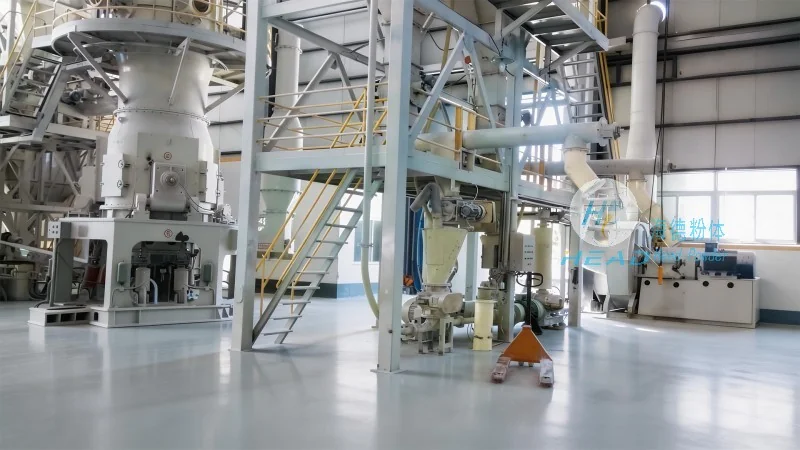
Latex powder pneumatic conveying systems can be broadly classified into two main categories based on the flow characteristics and particle behavior during transport: dilute-phase and dense-phase systems. Each type has distinct advantages and is suitable for different processing scenarios.
Dilute-phase systems operate by suspending the latex powder in a high-velocity air stream, where the particles are carried through the pipeline as a dispersed cloud. This method is ideal for short to medium-distance transport and applications requiring low pressure and minimal energy consumption. The system typically includes a blower or fan to generate the air flow, a hopper for material storage, and a pipeline network to direct the powder to the destination. The key advantage of dilute-phase conveying is its ability to handle fine powders without clogging, making it suitable for latex powders that are prone to agglomeration.
Dense-phase systems, also known as low-pressure or pressure-assisted systems, operate at lower velocities and higher particle concentrations. In this mode, the latex powder forms a slurry-like mixture with the conveying gas, reducing the risk of particle separation and clogging. This type of system is preferred for longer transport distances and when handling materials that are sensitive to high shear or pressure. The dense-phase approach often involves a positive displacement blower or a pressure vessel to maintain the pressure within the system, ensuring stable and reliable transport of the latex powder.
Regardless of the system type, several critical components are integral to the operation of a latex powder pneumatic conveying system. These components work in tandem to ensure efficient and safe material transport. The primary components include:
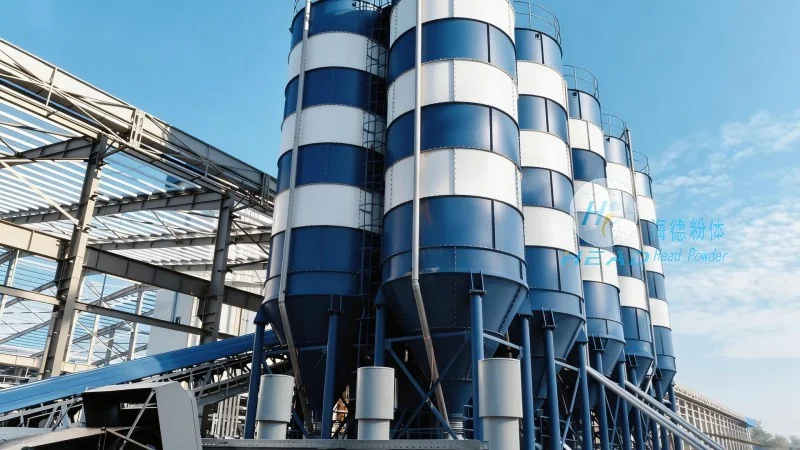
The material hopper serves as the storage vessel for the latex powder, providing a consistent supply of material to the conveying system. It is typically equipped with a feeder, such as a rotary valve or a screw feeder, which controls the flow rate of the powder into the system. The feeder is designed to prevent material bridging and ensure a smooth, continuous feed, which is crucial for maintaining the stability of the pneumatic conveying process. For latex powders, which can be prone to sticking, the hopper may be lined with anti-adhesive materials or equipped with vibration devices to facilitate material discharge.
The pipeline network is the backbone of the pneumatic conveying system, responsible for transporting the latex powder from the source to the destination. The pipeline is usually made of stainless steel or other corrosion-resistant materials to prevent contamination and ensure durability. The design of the pipeline, including the diameter, length, and bends, is critical for maintaining the flow characteristics and preventing pressure drops. Fittings such as elbows, tees, and reducers are used to direct the flow and accommodate changes in direction or size. For latex powders, which may have varying particle sizes, the pipeline diameter is often selected to minimize particle separation and ensure uniform flow.
The air supply unit provides the necessary pressure and flow rate to move the latex powder through the pipeline. The choice of blower or fan depends on the system type and the required pressure. In dilute-phase systems, a centrifugal fan is commonly used to generate high-velocity air, while dense-phase systems may utilize a positive displacement blower to maintain higher pressure. The blower is typically equipped with a motor and a control system to regulate the air flow and pressure, ensuring optimal performance and energy efficiency. For latex powder applications, the air supply unit may also include filters to remove moisture and particulate matter, preventing contamination of the powder.
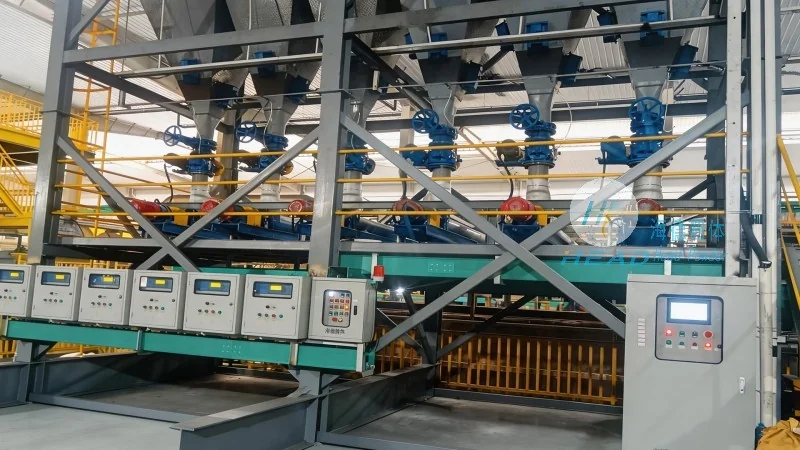
As the latex powder is conveyed through the system, some particles may be entrained in the air stream and need to be separated and collected. This is typically achieved using a dust collector or a cyclone separator. The dust collector is designed to capture the fine particles and return them to the system or to a storage container. The separation efficiency of the equipment is critical for maintaining the quality of the latex powder and preventing environmental contamination. For latex powders, which are often used in applications requiring high purity, the dust collection system must be highly efficient to remove even the smallest particles.
Modern latex powder pneumatic conveying systems are equipped with advanced control and monitoring systems to ensure safe and efficient operation. These systems include sensors to monitor pressure, flow rate, and temperature, as well as control valves to regulate the air flow and material feed. The control system may also include alarms and safety features to detect and respond to abnormal conditions, such as overpressure or material blockages. For industrial applications, the control system is often integrated with a programmable logic controller (PLC) to automate the operation and optimize the performance of the conveying process. This ensures consistent and reliable transport of the latex powder, minimizing downtime and maintenance costs.
Latex powder pneumatic conveying systems are widely used in various industrial applications, including the manufacturing of latex products, such as adhesives, coatings, and sealants. The systems offer several benefits over traditional material handling methods, such as reduced labor costs, improved safety, and increased efficiency. By using air as the conveying medium, the system eliminates the need for mechanical conveyors, which can be prone to clogging and maintenance issues. Additionally, the pneumatic conveying system can transport latex powder over long distances without the need for intermediate storage, reducing the risk of contamination and ensuring a continuous supply of material. The compact design of the system also allows for easy integration into existing production lines, making it a versatile solution for latex powder handling.
In conclusion, latex powder pneumatic conveying systems are a critical component in the efficient processing of latex-based products. The classification of these systems into dilute-phase and dense-phase categories allows for selection based on specific operational requirements, such as distance, material properties, and energy consumption. The key components, including the material hopper, conveying pipeline, air supply unit, and dust collection system, work together to ensure reliable and safe transport of the latex powder. With the integration of advanced control and monitoring systems, these systems offer significant benefits in terms of efficiency, safety, and cost-effectiveness. For industries dealing with latex powders, investing in a well-designed pneumatic conveying system is essential for maintaining high-quality production and meeting the demands of modern manufacturing.

 Shandong Headpowder Engineering Co., Ltd.
 156-6277-7102(Manager Zhang)
  0531-83386006
  Zhangqiu District, Jinan City, Shandong Province, China
telephone
WeChatconsult
top