With more than 10‑year industry experience, Shandong Headpowder delivers full‑service pneumatic‑conveying systems and blowers, undertaking nationwide turn‑key powder‑handling projects.
HeadPowder, a leading engineering company based in Shandong, China, specializes in the design, manufacturing, and installation of advanced pneumatic conveying systems for various industrial applications. The company's expertise lies in providing efficient and reliable solutions for handling polyester fiber materials, which are widely used in textiles, automotive, and other manufacturing sectors. This article delves into the operation process and working principle of a typical polyester fiber material pneumatic conveying line, highlighting the key components, operational steps, and technical aspects that ensure optimal performance.
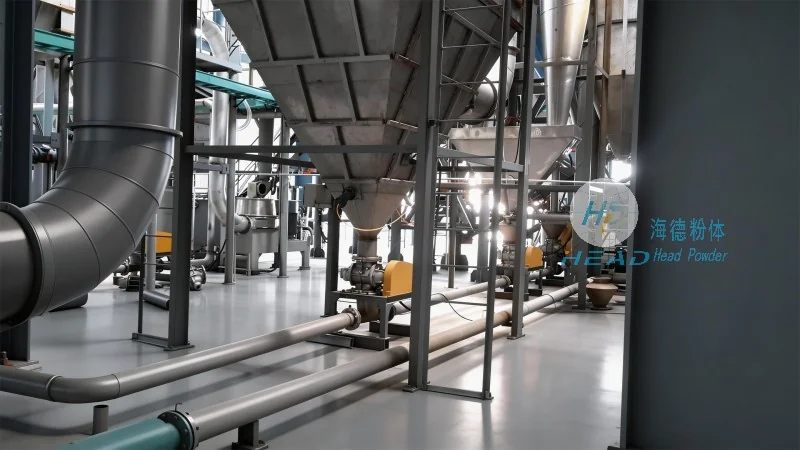
A pneumatic conveying system is a method of transporting bulk materials through a pipeline using compressed air or other gases. For polyester fiber materials, which are often lightweight and can be prone to static charge issues, specialized equipment is required to maintain material integrity and prevent blockages. The system typically consists of several key components, including a material feeder, a conveying line, a separation or filtration unit, and a receiver or discharge point. Each component plays a crucial role in the overall efficiency and effectiveness of the conveying process.
The core components of the system include: 1. **Material Feeder**: This component is responsible for feeding the polyester fiber material into the conveying line at a controlled rate. For fibrous materials, a rotary valve or a screw feeder is commonly used to ensure a consistent flow and prevent material buildup. 2. **Conveying Line**: The pipeline through which the material is transported. The line is usually made of stainless steel or other corrosion-resistant materials to handle the abrasive nature of polyester fibers and to prevent contamination. 3. **Air Supply System**: Compressed air or gas is supplied to the system to create the necessary pressure differential for conveying the material. The air supply is typically regulated to maintain optimal flow rates and to prevent excessive pressure that could damage the fibers or the equipment. 4. **Separation/Filtration Unit**: This unit is used to separate the material from the air stream and to filter out any dust or debris that may be present. For polyester fibers, a cyclone separator or a bag filter is often employed to ensure that the material is collected efficiently and that the air is cleaned before being discharged. 5. **Receiver/Discharge Point**: The final component where the material is deposited. This can be a storage silo, a processing machine, or another container, depending on the application.
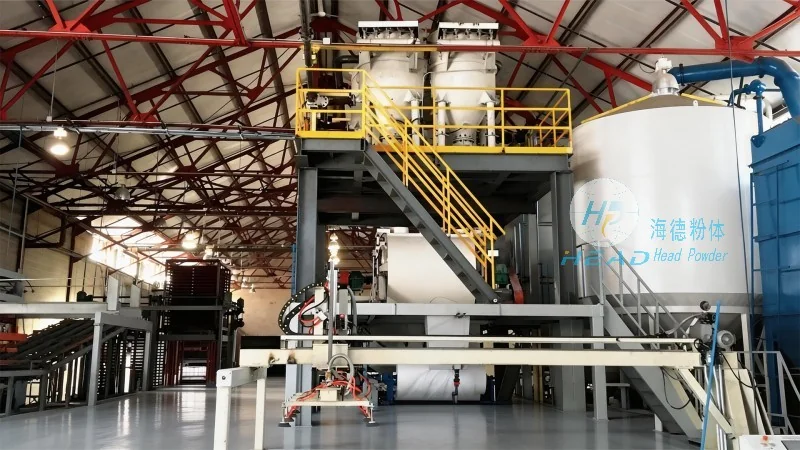
The operation of the polyester fiber pneumatic conveying line involves several sequential steps to ensure smooth and continuous material transport. The process typically begins with the material being fed into the system at a controlled rate. The feeder then delivers the material into the conveying line, where it is mixed with the compressed air. The air stream, moving at a high velocity, carries the polyester fibers through the pipeline. As the material travels, it may encounter bends or changes in direction, which are designed to minimize material degradation and ensure consistent flow. The separation unit then works to separate the material from the air, collecting the fibers in the receiver. The air, now filtered, is either recirculated or discharged safely. The entire process is monitored and controlled by a system of sensors and controls to maintain optimal conditions and prevent issues such as blockages or overpressure.
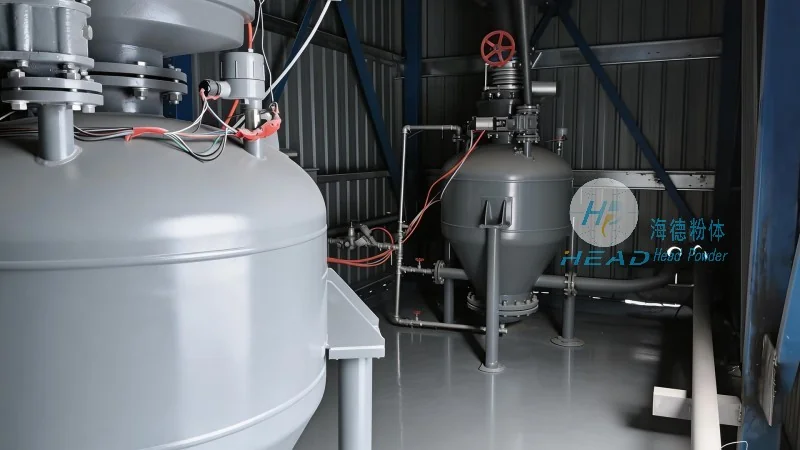
The working principle of the pneumatic conveying system is based on the principle of fluid dynamics and the creation of a pressure differential. When compressed air is introduced into the conveying line, it creates a high-pressure environment at the inlet. The material is then drawn into the line due to the pressure difference between the inlet and the outlet. The air stream, moving at a sufficient velocity, entrains the polyester fibers and transports them through the pipeline. The velocity of the air is critical; it must be high enough to overcome the gravitational force acting on the fibers and to prevent them from settling out of the air stream. The system's design, including the size of the pipeline, the air pressure, and the flow rate, is carefully calculated to ensure that the material is conveyed efficiently without causing excessive wear or damage to the equipment. The separation process relies on the difference in density between the polyester fibers and the air, allowing the fibers to be collected while the air is filtered and returned to the system or discharged.
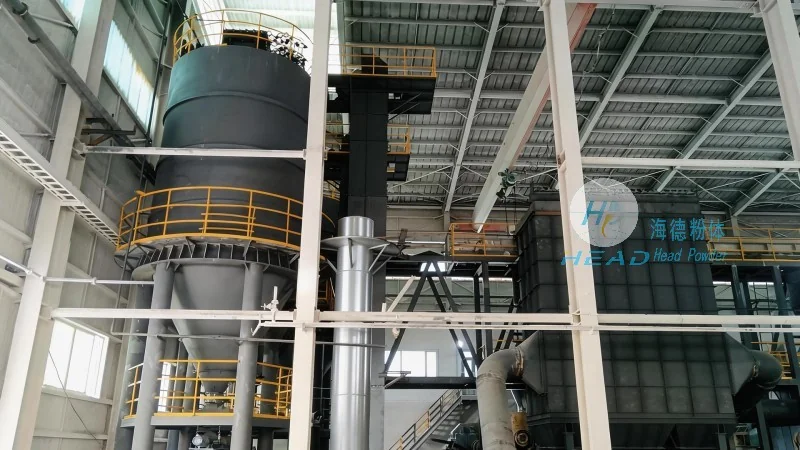
Several technical considerations are essential for the reliable operation of a polyester fiber pneumatic conveying line. First, the material's properties, such as its density, moisture content, and static charge, must be considered when designing the system. Polyester fibers are often lightweight and can generate static electricity, which can cause material buildup or blockages. Therefore, anti-static measures, such as grounding or using conductive materials, are often incorporated into the system design. Second, the system must be designed to handle the abrasive nature of polyester fibers, which can cause wear on the pipeline and components. Stainless steel or other corrosion-resistant materials are commonly used to minimize wear and extend the system's lifespan. Third, regular maintenance is crucial to ensure the system operates efficiently. This includes cleaning the separation unit, checking for air leaks, and inspecting the feeder and pipeline for any signs of wear or blockage. Proper maintenance can significantly reduce downtime and extend the life of the equipment.
The polyester fiber pneumatic conveying line is widely used in various industrial applications, including the textile industry, where it is used to transport raw fibers to spinning machines, and the automotive industry, where it is used to transport fibers for composite materials. The benefits of using a pneumatic conveying system for polyester fibers include improved material handling efficiency, reduced labor costs, and enhanced safety compared to traditional methods such as manual handling or belt conveyors. The system also helps to maintain the quality of the material by preventing contamination and degradation during transport. Additionally, the compact design of the system allows for easy integration into existing production lines, making it a versatile solution for various industrial needs.

 Shandong Headpowder Engineering Co., Ltd.
 156-6277-7102(Manager Zhang)
  0531-83386006
  Zhangqiu District, Jinan City, Shandong Province, China
telephone
WeChatconsult
top