With more than 10‑year industry experience, Shandong Headpowder delivers full‑service pneumatic‑conveying systems and blowers, undertaking nationwide turn‑key powder‑handling projects.
Aluminum hydride powder, a specialized material widely used in various industrial processes, requires efficient and reliable handling methods for safe and effective operation. Pneumatic conveying is a key technology in material handling that enables the transport of aluminum hydride powder through a pipeline system using air or other gases. This method offers advantages such as reduced risk of dust explosion, improved safety, and enhanced process control compared to traditional methods like mechanical conveying. Understanding the working principle and classification of pneumatic conveying systems for aluminum hydride powder is crucial for optimizing industrial applications and ensuring operational efficiency. The expertise in this field is provided by Shandong HeadPowder Engineering Co., Ltd., a leading company specializing in material handling solutions for reactive powders like aluminum hydride.
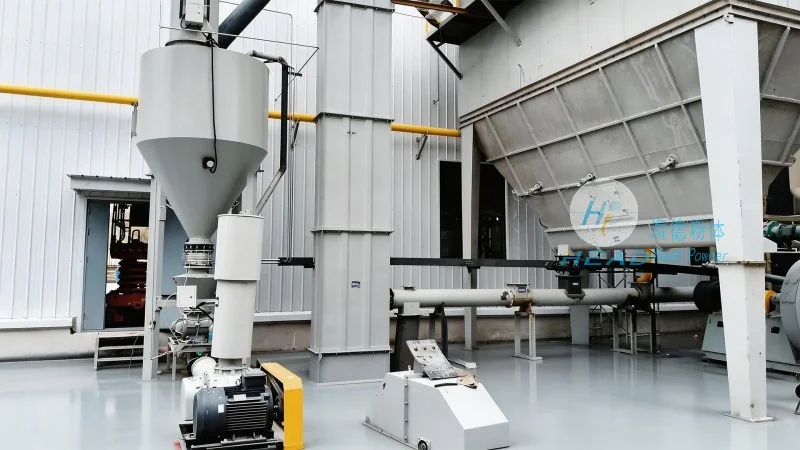
The fundamental working principle of pneumatic conveying for aluminum hydride powder involves the use of a pressure or vacuum system to move the powder through a pipeline. In a pressure system, compressed air is introduced into the material feed point, creating a pressure differential that propels the powder forward. The powder particles are suspended in the air stream, allowing them to travel through the pipeline with minimal friction and loss. Conversely, in a vacuum system, a vacuum is created at the discharge end, drawing the powder from the source to the destination. The design of the conveying system, including the type of air flow (e.g., dilute phase or dense phase), the velocity of the air, and the particle size distribution of the aluminum hydride powder, significantly impacts the efficiency and effectiveness of the conveying process. Proper system design ensures that the powder is transported without clogging, degradation, or loss of quality, which is critical for maintaining the integrity of aluminum hydride powder, a material known for its reactivity and sensitivity to moisture and temperature.
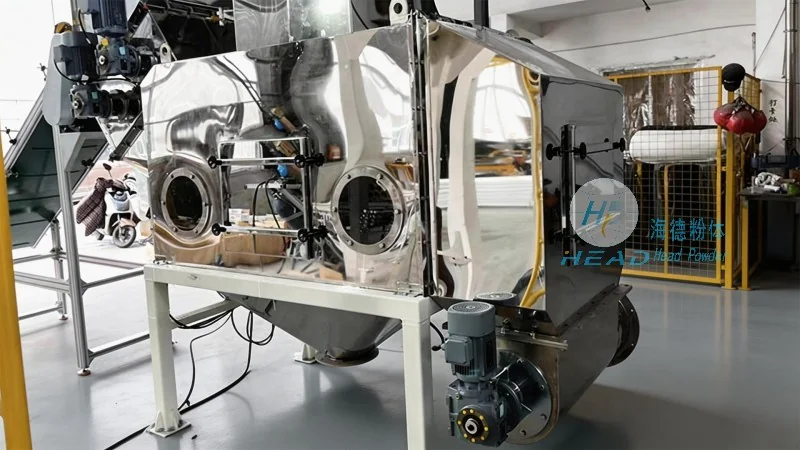
Pneumatic conveying systems for aluminum hydride powder can be classified into several categories based on the air flow characteristics and the method of particle suspension. The primary classifications include dilute phase and dense phase systems. Dilute phase conveying operates at higher air velocities, typically ranging from 20 to 40 meters per second, and the powder is suspended in the air stream as individual particles. This method is suitable for long-distance conveying and is commonly used when the powder is relatively free-flowing and non-abrasive. Dense phase conveying, on the other hand, operates at lower air velocities (around 5 to 15 meters per second) and uses a higher air-to-powder ratio, resulting in a more compact mixture of powder and air. This method is ideal for handling abrasive or sticky powders, as it reduces particle impact and wear on the pipeline and equipment. Additionally, other classifications include pressure and vacuum systems, as well as positive and negative pressure configurations. The choice of system classification depends on factors such as the material properties of aluminum hydride powder, the required conveying distance, the desired flow rate, and the available infrastructure. For aluminum hydride powder, which is highly reactive and requires careful handling, the selection of an appropriate classification is essential to prevent material degradation and ensure safe operation.
The application of pneumatic conveying in aluminum hydride powder handling spans various industrial sectors, including chemical manufacturing, pharmaceuticals, and aerospace. In chemical manufacturing, aluminum hydride powder is used as a reducing agent and a source of hydrogen, and pneumatic conveying enables its transport from storage to reactors without exposing the material to external contaminants or moisture. This is critical for maintaining the reactivity and purity of the powder, which are essential for the success of chemical reactions. In the pharmaceutical industry, aluminum hydride powder is used in the production of certain active pharmaceutical ingredients (APIs), and pneumatic conveying ensures that the powder is handled hygienically and efficiently, meeting stringent quality and safety standards. The aerospace industry also utilizes aluminum hydride powder in the production of lightweight materials and as a fuel additive, and pneumatic conveying systems provide a reliable method for transporting the powder to manufacturing facilities. The versatility of pneumatic conveying systems allows them to be adapted to different application requirements, making them a preferred choice for handling aluminum hydride powder in diverse industrial settings. By optimizing the conveying parameters and system design, manufacturers can enhance the efficiency of aluminum hydride powder handling, reduce operational costs, and improve overall process performance.
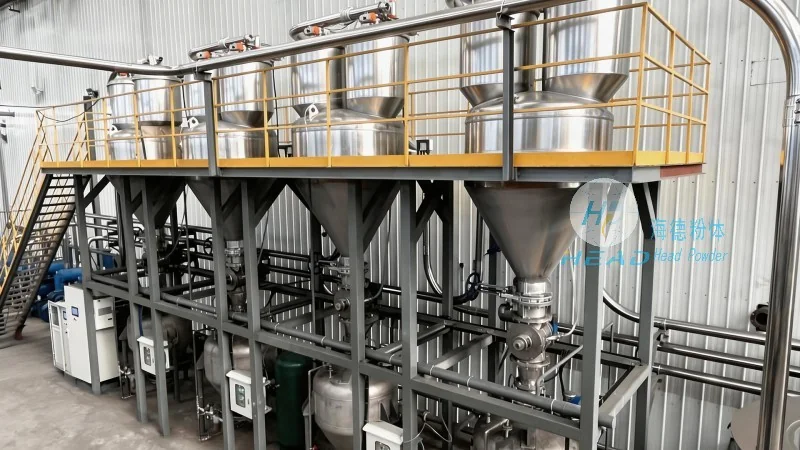
When implementing pneumatic conveying systems for aluminum hydride powder, several key considerations must be addressed to ensure optimal performance and safety. First, the material properties of aluminum hydride powder, such as its particle size distribution, moisture content, and reactivity, must be carefully evaluated. The particle size distribution affects the air velocity required for suspension and the risk of clogging, while moisture content can lead to clumping and degradation of the powder. Proper moisture control and drying processes are essential to maintain the quality of the aluminum hydride powder during conveying. Second, the design of the pipeline system, including the diameter, length, and layout, plays a critical role in the efficiency of the conveying process. The pipeline must be constructed from materials that are compatible with aluminum hydride powder, such as stainless steel or specialized coatings, to prevent corrosion and material interaction. Additionally, the use of appropriate fittings, valves, and filters is necessary to minimize pressure losses and prevent particle accumulation. Third, the control system for the pneumatic conveying system must be robust and responsive, allowing for real-time monitoring of pressure, flow rate, and temperature. This enables operators to detect and address any issues promptly, such as blockages or changes in material properties, which can impact the conveying efficiency. Finally, safety considerations are paramount due to the reactivity of aluminum hydride powder. The system must be designed with explosion-proof components, proper ventilation, and emergency shutdown mechanisms to prevent accidents and ensure the safety of personnel and equipment. By addressing these key considerations, manufacturers can develop effective pneumatic conveying systems that meet the specific requirements of aluminum hydride powder handling, ensuring reliable and safe operation.

 Shandong Headpowder Engineering Co., Ltd.
 156-6277-7102(Manager Zhang)
  0531-83386006
  Zhangqiu District, Jinan City, Shandong Province, China
telephone
WeChatconsult
top