With more than 10‑year industry experience, Shandong Headpowder delivers full‑service pneumatic‑conveying systems and blowers, undertaking nationwide turn‑key powder‑handling projects.
Shandong HeadPowder Engineering Co., Ltd., a leading manufacturer based in Shandong, China, specializes in the design, development, and implementation of advanced pneumatic conveying systems tailored for handling ceramic particles. These systems are engineered to efficiently transport fine to coarse ceramic materials, ensuring minimal product degradation and optimal process reliability. The following overview details the operational workflow and underlying principles of such systems, highlighting their key components and functional mechanisms.
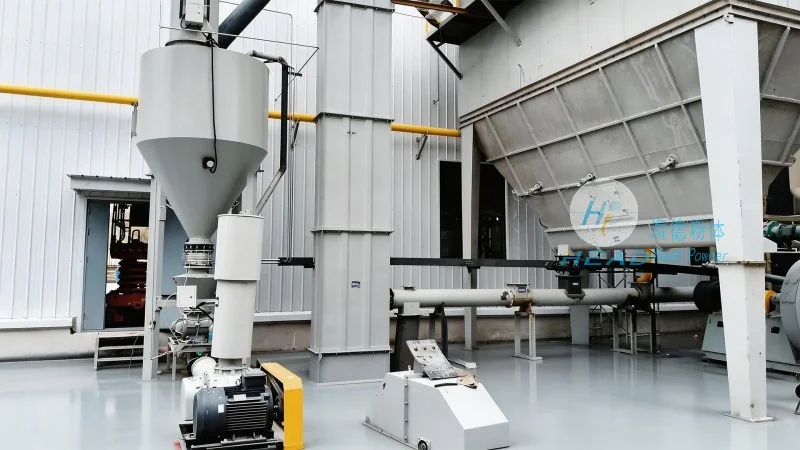
The ceramic particle pneumatic conveying system typically comprises several critical components that work in concert to achieve seamless material transport. These include a material hopper for storage and feeding, a conveying line (often equipped with pressure vessels or vacuum pumps), a control system for regulating air flow and pressure, and a discharge outlet for delivering the material to its destination. Each component is meticulously designed to accommodate the specific characteristics of ceramic particles, such as their size, density, and flowability, ensuring efficient and safe operation.
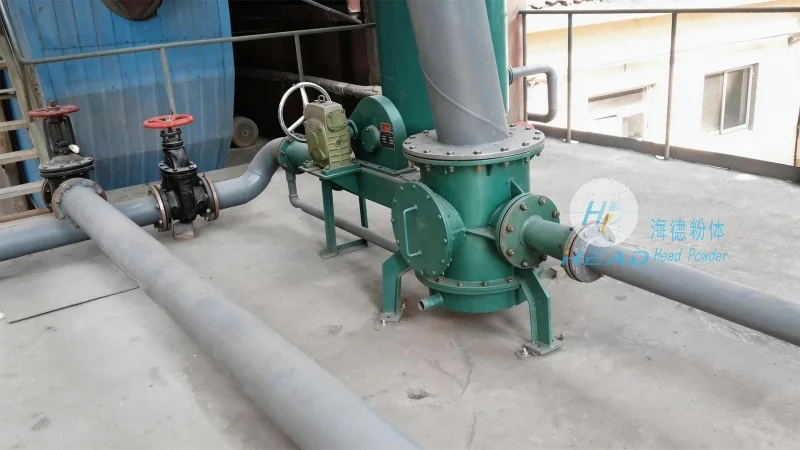
The operational process of the ceramic particle pneumatic conveying system begins with the loading of ceramic particles into the material hopper. The hopper is equipped with a feeding mechanism, such as a rotary valve or a screw feeder, which controls the flow rate of the material into the conveying line. Simultaneously, a compressor or vacuum pump generates the necessary air pressure or vacuum to initiate material transport. As the ceramic particles enter the conveying line, they are entrained by the air stream, forming a dense or dilute phase flow depending on the system design. The conveying line may include sections with bends, expansions, or restrictions to manage the flow dynamics and prevent particle segregation or blockages. The material is then transported through the line to the discharge outlet, where it is released into a receiving container or processing unit. The entire process is monitored and controlled by an automated system that adjusts air flow, pressure, and feeding rates to maintain consistent performance and prevent system overload.
The core working principle of the ceramic particle pneumatic conveying system is air entrainment, where air is used to lift and transport the ceramic particles. In a pressure system, compressed air is introduced into the conveying line, creating a positive pressure that forces the material upward. The air flow velocity is carefully controlled to ensure that the ceramic particles are fully suspended and transported without excessive wear or degradation. In a vacuum system, a vacuum pump creates a negative pressure that draws the material from the hopper into the conveying line. The air flow in both systems serves to maintain the particle suspension and prevent particle settling or clogging. The system’s design, including the type of air flow (dense or dilute phase), the velocity of the air stream, and the geometry of the conveying line, is optimized to achieve efficient material transport while minimizing energy consumption and operational costs.
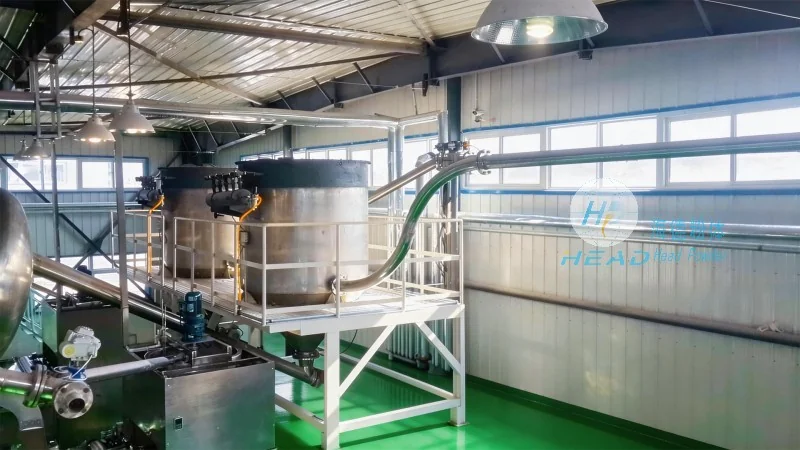
Ceramic particle pneumatic conveying systems offer several advantages over traditional mechanical conveying methods, making them ideal for handling delicate or abrasive ceramic materials. These systems provide gentle handling, reducing the risk of particle breakage or contamination. They also offer high transport efficiency, capable of moving large volumes of material over long distances with minimal downtime. Additionally, the systems are highly flexible, allowing for easy integration into existing production lines and adaptation to varying material characteristics. The applications of these systems span various industries, including ceramics manufacturing, pharmaceuticals, food processing, and chemical processing, where the transport of fine to coarse ceramic powders is required.

 Shandong Headpowder Engineering Co., Ltd.
 156-6277-7102(Manager Zhang)
  0531-83386006
  Zhangqiu District, Jinan City, Shandong Province, China
telephone
WeChatconsult
top