With more than 10‑year industry experience, Shandong Headpowder delivers full‑service pneumatic‑conveying systems and blowers, undertaking nationwide turn‑key powder‑handling projects.
Calcium carbide slag is a byproduct generated during the production of calcium carbide, and its effective handling is crucial for industrial operations. The pneumatic conveying line for calcium carbide slag is a specialized system designed to transport this material efficiently and safely. This article will delve into the operation process and working principle of such a system, highlighting the key components and the systematic approach employed by Shandong HeadPowder Engineering Co., Ltd. based in China.
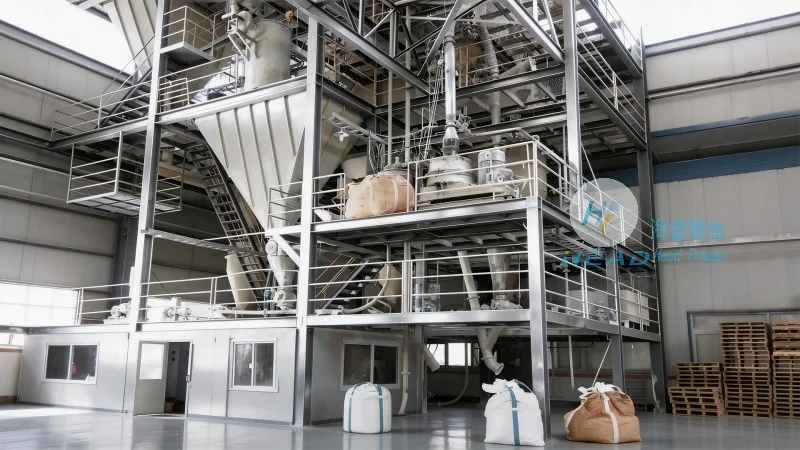
The pneumatic conveying line for calcium carbide slag is engineered to handle the unique properties of this material, which often includes high moisture content, abrasive characteristics, and potential dust generation. The system typically consists of several core components, including a hopper for material storage, a rotary airlock valve for controlled discharge, a pipeline network, a positive displacement blower or air compressor to generate the conveying air, and a collection or discharge unit. Each component plays a vital role in ensuring the smooth and reliable operation of the entire system.
1. Material Hopper: The hopper is the initial storage unit where calcium carbide slag is collected before being conveyed. It is designed with a sloped bottom to facilitate the flow of material into the rotary airlock valve. The hopper may also include a level indicator to monitor the material level and prevent overfilling.
2. Rotary Airlock Valve: This component acts as a gate between the hopper and the conveying pipeline, controlling the flow of material into the system. It is a critical part that prevents backflow of air and ensures a consistent material feed rate. The valve rotates to allow material to pass through while sealing the hopper from the air pressure in the pipeline.
3. Pipeline Network: The conveying pipeline is usually made of corrosion-resistant materials, such as stainless steel or special plastic, to withstand the abrasive nature of calcium carbide slag. The pipeline is laid out to connect the hopper to the discharge point, with appropriate bends and supports to maintain the air flow and material transport efficiency.
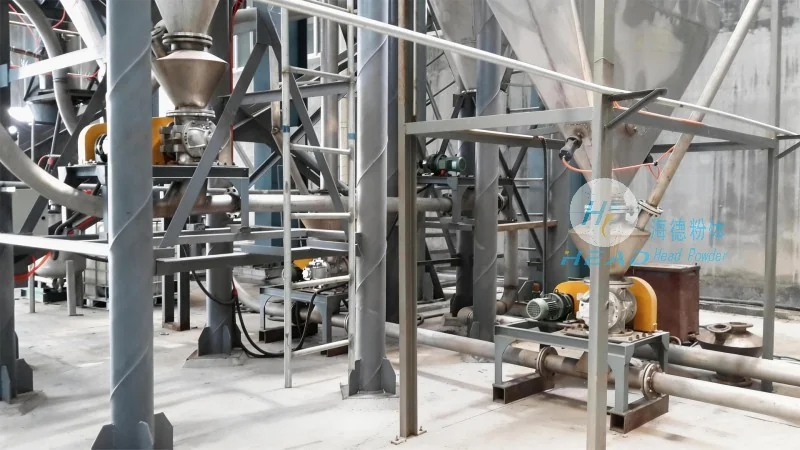
4. Positive Displacement Blower/Compressor: This is the heart of the pneumatic conveying system, responsible for generating the high-pressure air or gas that propels the material through the pipeline. The blower or compressor is selected based on the required conveying capacity and the distance of the material transport. It provides the necessary pressure to overcome the resistance in the pipeline and move the material efficiently.
5. Collection/Discharge Unit: At the end of the pipeline, the collection unit receives the conveyed calcium carbide slag. This unit may include a cyclone separator or a filter to separate the material from the air, ensuring that the slag is deposited in the desired location without dust dispersion. The design of this unit is crucial for maintaining environmental compliance and operational safety.
The operation of the calcium carbide slag pneumatic conveying line follows a systematic sequence of steps to ensure efficient material transport. The process begins with the loading of the hopper with the raw calcium carbide slag. Once the hopper is filled, the rotary airlock valve opens, allowing the material to enter the pipeline under the pressure of the conveying air. The positive displacement blower then starts, generating the required air flow that carries the material particles through the pipeline. As the material travels along the pipeline, it is propelled by the air, and the system maintains a consistent flow rate by adjusting the air pressure and material feed rate.
During the conveying process, the system continuously monitors key parameters such as air pressure, material flow rate, and temperature to ensure optimal performance. Any deviations in these parameters are automatically adjusted by the control system to maintain the stability of the operation. The material is then discharged at the collection unit, where it is collected and prepared for further processing or disposal.
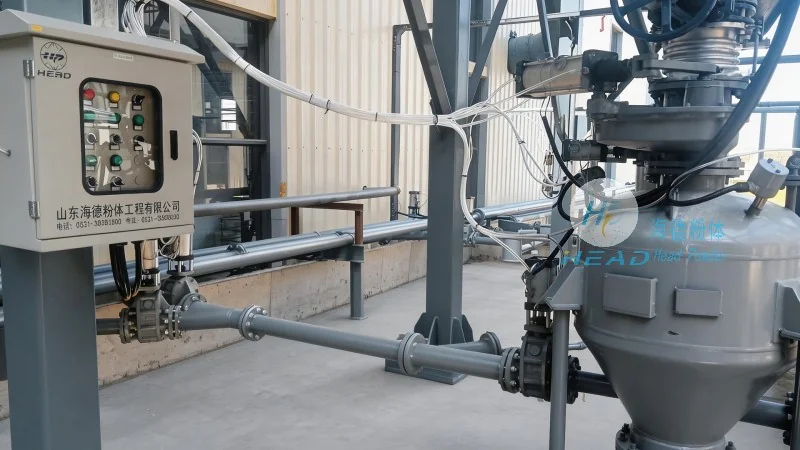
The working principle of the pneumatic conveying line for calcium carbide slag is based on the principle of fluidization and particle suspension. The positive displacement blower generates a high-pressure air stream that flows through the pipeline. As the air passes through the rotary airlock valve and enters the pipeline, it creates a low-pressure zone that draws the calcium carbide slag particles into the air stream. The air flow then suspends the particles, carrying them along the pipeline to the discharge point. The key to efficient conveying is maintaining the right balance between the air velocity and the particle size and density. If the air velocity is too low, the particles may settle and cause blockages; if it is too high, excessive energy consumption and potential damage to the pipeline may occur.
The system also employs a series of control mechanisms to regulate the flow and pressure. The rotary airlock valve controls the material feed rate, while the blower adjusts the air pressure to match the conveying requirements. The cyclone separator at the discharge end separates the material from the air, preventing dust from being released into the environment. This separation process is essential for maintaining air quality and complying with environmental regulations.
Implementing a pneumatic conveying line for calcium carbide slag offers several significant benefits. Firstly, it provides a safe and efficient method for handling abrasive and potentially hazardous materials, reducing the risk of dust explosions and worker exposure. Secondly, the system minimizes the need for manual handling, improving operational safety and reducing labor costs. Thirdly, the enclosed pipeline design prevents dust dispersion, contributing to a cleaner working environment and compliance with environmental standards. Additionally, the system can be integrated with other industrial processes, such as material processing or waste management, to enhance overall operational efficiency.
Shandong HeadPowder Engineering Co., Ltd., located in Shandong, China, specializes in the design, manufacturing, and installation of such pneumatic conveying systems. With years of experience in the industry, the company has developed advanced solutions tailored to the specific needs of calcium carbide slag handling. Their expertise ensures that the systems are not only efficient but also reliable and cost-effective, providing long-term value to their clients.

 Shandong Headpowder Engineering Co., Ltd.
 156-6277-7102(Manager Zhang)
  0531-83386006
  Zhangqiu District, Jinan City, Shandong Province, China
telephone
WeChatconsult
top