With more than 10‑year industry experience, Shandong Headpowder delivers full‑service pneumatic‑conveying systems and blowers, undertaking nationwide turn‑key powder‑handling projects.
Bentonite, a critical material in numerous industrial sectors, demands efficient and safe handling. The pneumatic conveying equipment engineered by Shandong HeadPowder Engineering Co., Ltd. from China offers a sophisticated solution for transporting bentonite with precision and minimal loss. This article delves into the operation process and working principle of such equipment, emphasizing its technical advantages and practical applications.
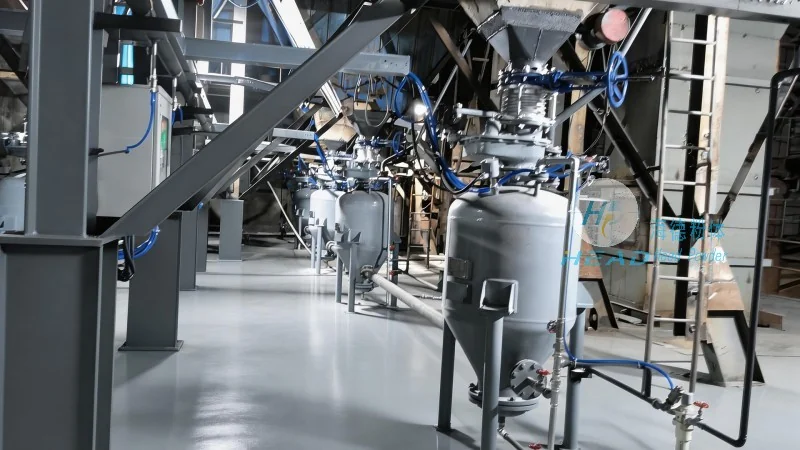
Bentonite, a natural clay primarily composed of montmorillonite, is widely utilized in industries like drilling fluids, paper production, and foundry casting due to its unique properties. Traditional handling methods, including manual loading or mechanical conveyors, often result in dust generation, material degradation, or operational inefficiencies. Pneumatic conveying systems provide a dust-free, continuous, and controlled method for transporting bentonite, making them an ideal choice for modern industrial operations.
Shandong HeadPowder Engineering Co., Ltd., headquartered in Shandong, China, specializes in the design, manufacturing, and supply of advanced material handling equipment. With years of industry experience, the company has established a reputation for producing high-quality, durable, and energy-efficient pneumatic conveying systems tailored to client-specific needs. Their expertise in bentonite handling has enabled them to create solutions that enhance productivity and safety in industrial processes.
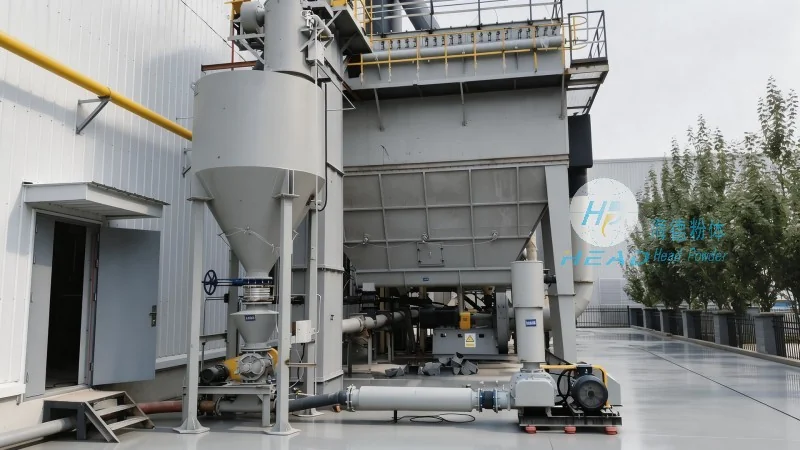
The pneumatic conveying system for bentonite typically comprises several key components that function in unison to ensure smooth operation. These include the hopper for material storage, a feeder to regulate flow rate, a conveying line (often with bends and valves), a dust collector to capture airborne particles, and a receiver for discharged material. Each component plays a crucial role in maintaining bentonite integrity and optimizing the conveying process.
The operation process of bentonite pneumatic conveying starts with material loading into the hopper. The feeder then controls the flow rate of bentonite into the conveying line, ensuring consistent feed. Compressed air, supplied by a blower or compressor, is introduced into the conveying line, creating a pressure differential that propels the bentonite particles forward. As the material travels through the system, it may encounter bends, valves, or other components that guide its path to the receiver. The dust collector captures fine particles, preventing contamination and ensuring a clean discharge. The entire process is automated and can be monitored for efficiency and performance.
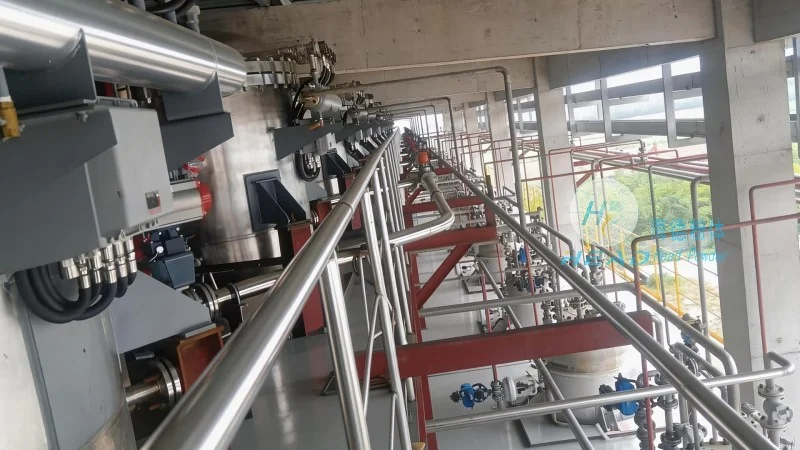
The working principle of pneumatic conveying relies on air to transport solid materials. For bentonite, the system operates under positive pressure, where compressed air is used to push the material through the conveying line. Air velocity is carefully controlled to ensure bentonite particles are suspended and transported without blockages or excessive equipment wear. The pressure differential between the hopper and receiver creates the necessary force to move the material, while the conveying line design minimizes friction and energy loss. This principle enables efficient and safe transport of bentonite over short to medium distances, suitable for various industrial settings.
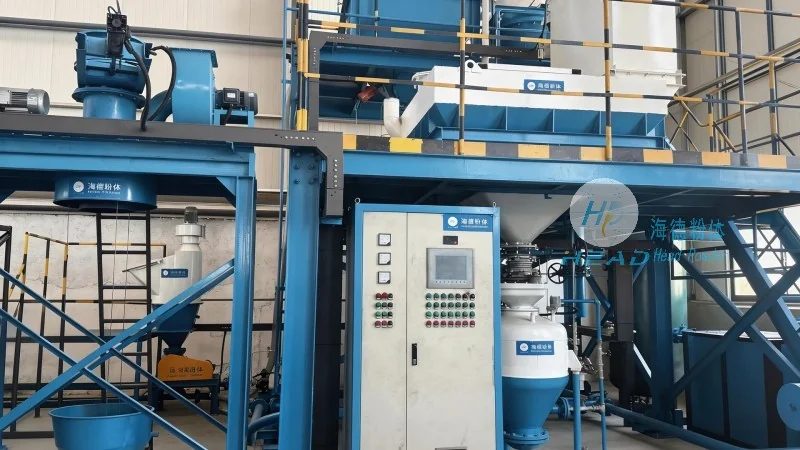
Implementing a pneumatic conveying system for bentonite offers several advantages over traditional methods. Firstly, it provides a dust-free environment, reducing health hazards and improving workplace safety. Secondly, it minimizes material degradation by avoiding mechanical contact or excessive vibration. Thirdly, the system offers high throughput and can handle varying material loads with ease. Additionally, automation reduces labor costs and increases operational efficiency. These benefits make pneumatic conveying an attractive option for industries requiring reliable and efficient bentonite handling.
Bentonite pneumatic conveying systems are widely used in industries such as oil and gas drilling, paper manufacturing, foundry casting, and chemical processing. The system design depends on factors like distance, material characteristics (e.g., moisture content, particle size), and required throughput. Proper maintenance, including regular dust collector cleaning and air pressure checks, is essential for long-term performance. Shandong HeadPowder Engineering Co., Ltd. provides comprehensive support, including installation, training, and after-sales service, to help clients maximize the benefits of their pneumatic conveying systems.

 Shandong Headpowder Engineering Co., Ltd.
 156-6277-7102(Manager Zhang)
  0531-83386006
  Zhangqiu District, Jinan City, Shandong Province, China
telephone
WeChatconsult
top