With more than 10‑year industry experience, Shandong Headpowder delivers full‑service pneumatic‑conveying systems and blowers, undertaking nationwide turn‑key powder‑handling projects.
Shandong HeadPowder Engineering Co., Ltd. specializes in the design, manufacturing, and installation of advanced pneumatic conveying systems for various industrial applications. Based in Shandong, China, the company leverages decades of experience to deliver efficient and reliable solutions for transporting bulk materials like potassium carbonate. This article explores the operational process and underlying principles of such a system, highlighting key components and their functions.
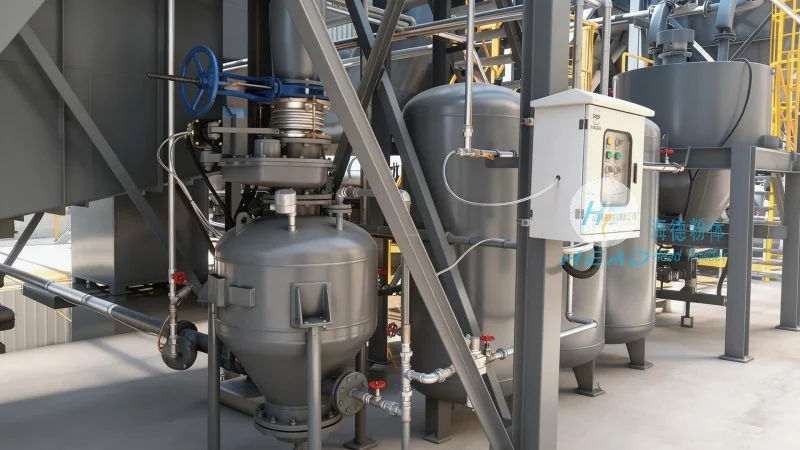
The potassium carbonate pneumatic conveying system typically consists of several critical components that work in tandem to ensure smooth material transport. These include a material hopper, a rotary feeder, a conveying pipeline, a pressure vessel or receiver, and a control system. The material hopper stores the bulk potassium carbonate, while the rotary feeder regulates the flow rate of the material into the system. The conveying pipeline, often made of stainless steel or other corrosion-resistant materials, carries the material through the system under pressure. The pressure vessel or receiver collects the material at the destination point, and the control system monitors and adjusts the operation parameters to maintain optimal performance.
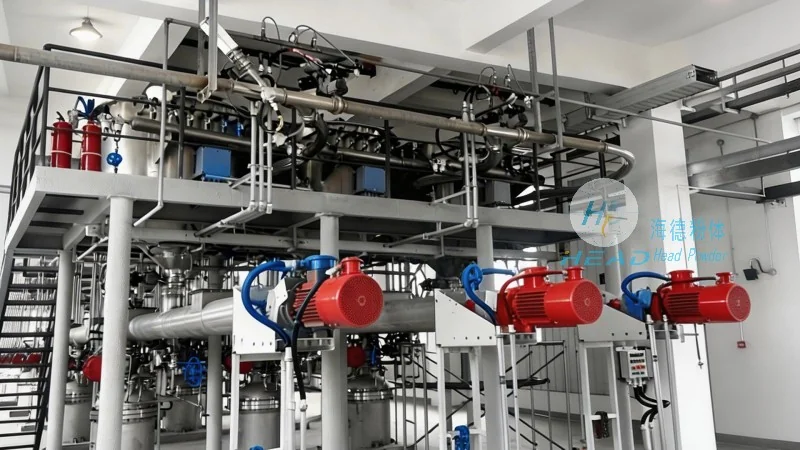
Pneumatic conveying operates by using compressed air or gas to transport bulk materials through a pipeline. In the case of a positive pressure system, which is commonly used for potassium carbonate, compressed air is introduced into the conveying pipeline, creating a pressure higher than the ambient air pressure. The material is then drawn into the pipeline by the pressure differential and carried to the destination. The system can be further classified as either a dilute phase or a dense phase system, depending on the velocity and pressure of the air. Dilute phase systems use higher velocities and lower pressures, suitable for short to medium distances, while dense phase systems use lower velocities and higher pressures, ideal for longer distances and more delicate materials.
The operational process of the potassium carbonate pneumatic conveying system begins with the loading of the material into the hopper. The rotary feeder then starts, feeding the material into the conveying pipeline at a controlled rate. Simultaneously, the compressed air is supplied to the system, creating the necessary pressure to move the material. As the material travels through the pipeline, it is mixed with the air, forming a slurry-like mixture that is propelled forward. The control system continuously monitors the pressure, flow rate, and material level, adjusting the air supply and feeder speed as needed to maintain stable operation. Upon reaching the destination, the material is discharged from the receiver into a storage or processing unit. The system then returns to the initial state, ready for the next cycle of material transport.
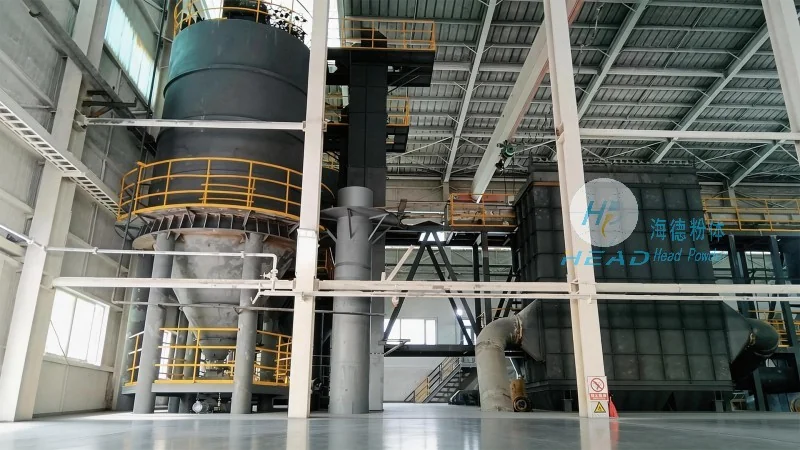
Shandong HeadPowder Engineering Co., Ltd.'s pneumatic conveying systems offer several advantages over traditional mechanical conveying methods. These include reduced labor costs, improved safety by eliminating manual handling, and enhanced material handling efficiency. The system is particularly suitable for transporting potassium carbonate in chemical and pharmaceutical industries, where precision and cleanliness are paramount. The company's expertise in designing customized systems ensures that clients receive solutions tailored to their specific operational needs, whether for small-scale or large-scale production facilities.

 Shandong Headpowder Engineering Co., Ltd.
 156-6277-7102(Manager Zhang)
  0531-83386006
  Zhangqiu District, Jinan City, Shandong Province, China
telephone
WeChatconsult
top