With more than 10‑year industry experience, Shandong Headpowder delivers full‑service pneumatic‑conveying systems and blowers, undertaking nationwide turn‑key powder‑handling projects.
The calcium phosphate pneumatic conveying system is a critical component in the industrial processing of phosphate-based materials. It plays a vital role in efficiently transporting calcium phosphate powders from one location to another within a production facility. This system is designed to handle the unique properties of calcium phosphate, such as its fine particle size and potential for dust generation, ensuring safe and reliable material transfer. The system's operation is based on the principles of pneumatic conveying, which utilizes air or gas to move bulk materials through a pipeline network.
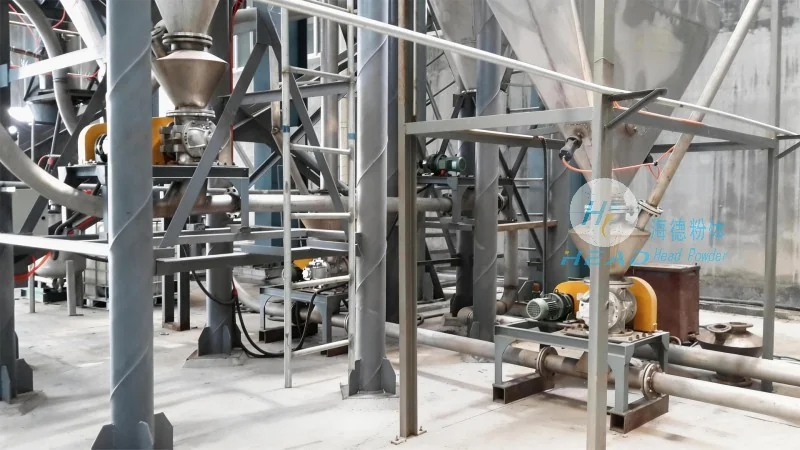
The calcium phosphate pneumatic conveying system consists of several key components that work in tandem to ensure smooth operation. These components include the material feed hopper, the air compressor or blower, the conveying pipeline, the control valves, and the discharge unit. The feed hopper is responsible for storing and feeding the calcium phosphate powder into the system. The air compressor provides the necessary pressure and airflow to move the material through the pipeline. The control valves regulate the flow of air and material, allowing for precise control over the conveying process. The discharge unit then delivers the material to its final destination, such as a storage silo or processing equipment.
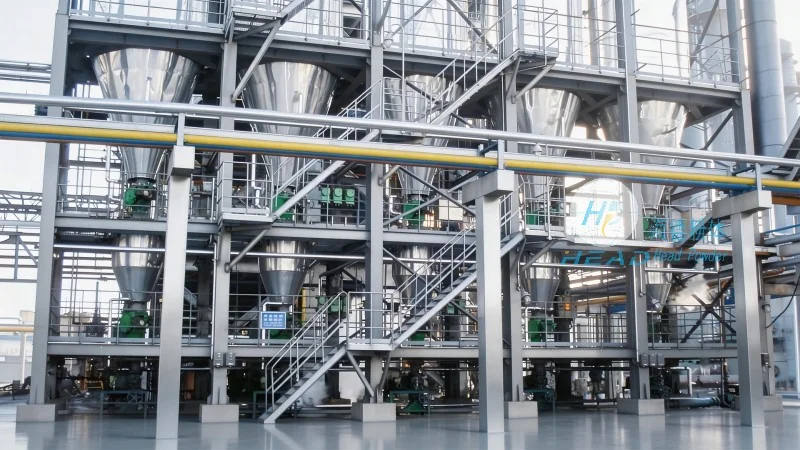
The operation of the calcium phosphate pneumatic conveying system follows a systematic process. First, the calcium phosphate powder is loaded into the feed hopper. The system then activates the air compressor, which generates the required airflow. The powder is then drawn from the hopper and mixed with the air stream, creating a slurry-like mixture. This mixture is then transported through the conveying pipeline under pressure. As the mixture travels through the pipeline, it may encounter various components, such as bends or filters, which help maintain the flow and prevent blockages. The system's control system monitors the pressure and flow rates, ensuring that the conveying process is efficient and safe. Finally, the material is discharged from the pipeline at the destination point, where it is collected and used in the next stage of production.
The working principle of the calcium phosphate pneumatic conveying system is based on the Bernoulli principle and the principles of fluid dynamics. The system uses a pressure differential to move the material through the pipeline. The air compressor creates a high-pressure air stream, which is then mixed with the calcium phosphate powder. The air stream provides the necessary momentum to carry the powder particles through the pipeline. The velocity of the air stream is crucial, as it must be sufficient to overcome the gravitational force acting on the powder particles and maintain a stable flow. The system's design ensures that the air-to-material ratio is optimized to achieve efficient conveying with minimal energy consumption. The use of positive pressure or negative pressure (suction) can be employed depending on the specific application and the distance of material transport.
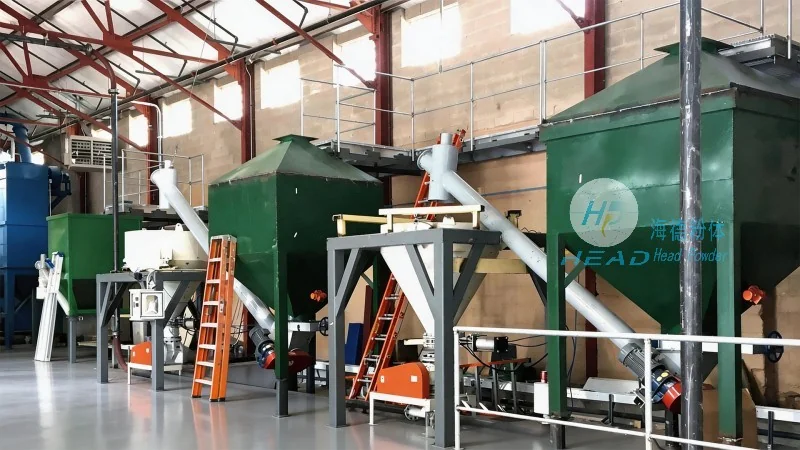
Shandong HeadPowder Engineering Co., Ltd., commonly known as HeadPowder, is a leading manufacturer and supplier of industrial conveying systems, including calcium phosphate pneumatic conveying solutions. The company is headquartered in Shandong, China, and has a strong reputation for providing high-quality, reliable, and efficient equipment for the chemical and mining industries. HeadPowder specializes in designing and manufacturing customized pneumatic conveying systems tailored to the specific needs of its clients. The company's team of engineers and technicians has extensive experience in the field, ensuring that each system is designed to meet the highest standards of performance and safety. HeadPowder's commitment to quality and customer satisfaction has made it a trusted partner for many companies in the industry.

 Shandong Headpowder Engineering Co., Ltd.
 156-6277-7102(Manager Zhang)
  0531-83386006
  Zhangqiu District, Jinan City, Shandong Province, China
telephone
WeChatconsult
top