With more than 10‑year industry experience, Shandong Headpowder delivers full‑service pneumatic‑conveying systems and blowers, undertaking nationwide turn‑key powder‑handling projects.
Fly ash, a byproduct of coal combustion in thermal power plants, requires efficient and reliable handling methods for safe disposal and resource utilization. Pneumatic conveying technology has emerged as a critical solution for transporting fly ash over long distances and varying terrains. This article explores the fundamental principles of fly ash material pneumatic conveying and highlights the key characteristics of its working scenes, providing insights into the technology's application and operational efficiency.
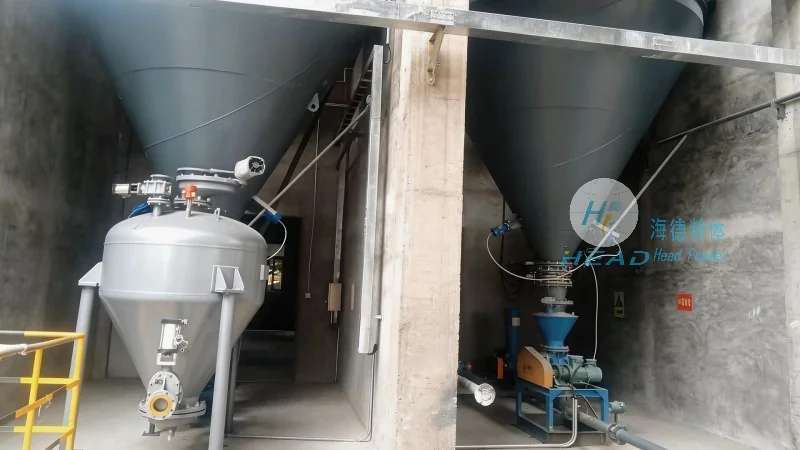
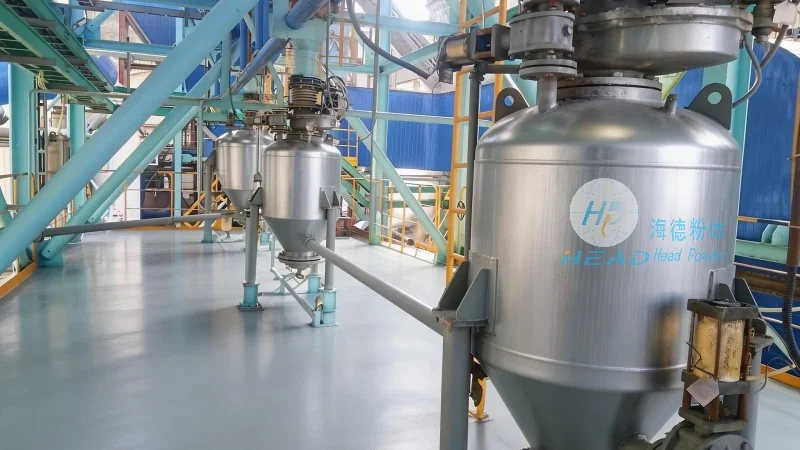
Pneumatic conveying systems utilize air or gas as the medium to transport solid particles, such as fly ash, through a network of pipes. The technology operates on two primary modes: positive pressure and negative pressure systems. In positive pressure systems, air is forced into the conveying line, creating a pressure higher than the ambient air, which propels the fly ash particles forward. Conversely, negative pressure systems create a vacuum in the line, drawing the material and air mixture into the system. The choice between these modes depends on factors like the distance to be covered, the particle size and density of the fly ash, and the required system pressure. For fly ash, which typically consists of fine, abrasive particles, the system design must account for the potential for particle degradation and system wear. Advanced materials and robust construction are essential to ensure long-term reliability. The interaction between the fly ash particles and the air stream is governed by fluid dynamics principles, including drag force, lift force, and particle trajectory. Proper air velocity and pressure are critical to prevent particle deposition or blockage in the pipes. The system's efficiency is directly linked to the balance between air flow rate and particle loading, as excessive air velocity can lead to increased energy consumption and particle attrition, while insufficient velocity may cause system clogging. Engineers must carefully calibrate these parameters to achieve optimal performance.
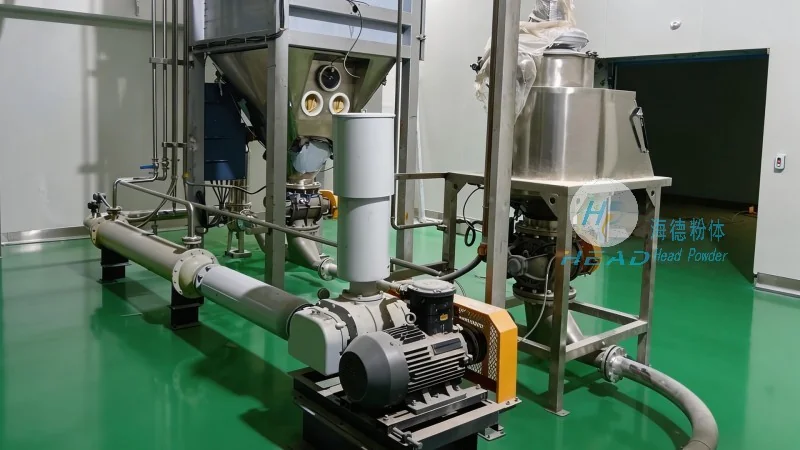
The working scenes of fly ash pneumatic conveying systems are diverse and tailored to the specific requirements of power plants and industrial facilities. One common application is the transportation of fly ash from the bottom of a boiler to a storage silo or a disposal site. This process often involves long horizontal and vertical pipe runs, requiring the system to handle both upward and downward movements. The design must consider the gravitational forces acting on the particles and the need for consistent air flow to maintain particle suspension. In such scenarios, the system's ability to handle varying particle sizes and moisture content is crucial. For example, some power plants may process fly ash with higher moisture levels, which can affect the air-particle mixture's density and flow characteristics. The system must be equipped with moisture control mechanisms or adjustable air flow to accommodate these variations. Another working scene involves the integration of pneumatic conveying with other ash handling equipment, such as rotary valves or screw conveyors. This integration requires seamless coordination between the systems to prevent material buildup or air leakage. The design must ensure that the transition points between different equipment are smooth and efficient, minimizing energy losses and particle loss. In industrial settings, the system may need to transport fly ash to a recycling facility or a landfill, where the distance and terrain may vary significantly. The system's flexibility in terms of pipe layout and routing is a key characteristic, allowing for adaptation to complex site layouts. Additionally, the working scene may involve the need for multiple conveying lines to distribute fly ash to different storage or disposal locations. This requires a modular system design that can be expanded or reconfigured as the facility's needs change. The operational characteristics of the system, such as start-up and shutdown procedures, are also critical in these working scenes. Proper start-up protocols ensure that the system is primed with air and particles, preventing air lock or blockage. Similarly, safe shutdown procedures minimize the risk of material spillage or system damage. The system's reliability and maintenance requirements are also important considerations in the working scene. Regular inspections and maintenance of the pipes, valves, and air compressors are necessary to ensure continuous operation and prevent downtime. The use of durable materials and advanced monitoring systems can help identify potential issues before they lead to system failure.

Shandong HeadPowder Engineering Co., Ltd., a leading provider of ash handling solutions, specializes in designing and implementing pneumatic conveying systems for fly ash applications. The company's expertise lies in understanding the unique challenges of fly ash transportation, such as particle abrasiveness and varying moisture content. By leveraging advanced engineering principles and robust system design, HeadPowder has developed solutions that meet the demanding requirements of power plants and industrial facilities. The company's systems are tailored to the specific working scene characteristics of each project, ensuring optimal performance and reliability. For example, in a large thermal power plant, HeadPowder designed a positive pressure pneumatic conveying system to transport fly ash from the boiler to a storage silo over a distance of 500 meters. The system was equipped with high-efficiency air compressors and wear-resistant pipes to handle the abrasive fly ash particles. The design considered the vertical lift of 30 meters and the horizontal run of 470 meters, ensuring consistent air flow and particle suspension. The system has been in operation for over five years, with minimal maintenance and high efficiency. Another application involved a negative pressure system for transporting fly ash to a landfill site, where the distance was 2 kilometers and the terrain was hilly. The system was designed with a vacuum pump and flexible pipe routing to adapt to the terrain. The company's engineers carefully calculated the air velocity and pressure to prevent particle deposition and ensure smooth operation. The system has successfully handled fly ash with moisture content up to 10%, demonstrating its adaptability to varying conditions. HeadPowder's commitment to quality and customer satisfaction is evident in its approach to system design and implementation. The company works closely with clients to understand their specific needs and provide customized solutions that meet their operational and budgetary requirements. By focusing on the core principles of pneumatic conveying and the unique characteristics of fly ash, HeadPowder has established itself as a trusted partner in the ash handling industry. The company's systems are not only efficient and reliable but also environmentally friendly, as they minimize the risk of fly ash spillage and air pollution. The use of advanced materials and technology has also reduced the system's energy consumption, making it a cost-effective solution for power plants and industrial facilities.

 Shandong Headpowder Engineering Co., Ltd.
 156-6277-7102(Manager Zhang)
  0531-83386006
  Zhangqiu District, Jinan City, Shandong Province, China
telephone
WeChatconsult
top