With more than 10‑year industry experience, Shandong Headpowder delivers full‑service pneumatic‑conveying systems and blowers, undertaking nationwide turn‑key powder‑handling projects.
Low-pressure powder pneumatic conveying lines represent a sophisticated method for transporting bulk powders over medium to long distances. This technology utilizes air as the primary medium to move particulate materials, offering a flexible and efficient solution for various industrial applications. The system operates under low-pressure conditions, typically ranging from a few hundred to a few thousand Pascals, which distinguishes it from high-pressure pneumatic conveying systems and makes it suitable for a wide range of powder types and handling requirements.
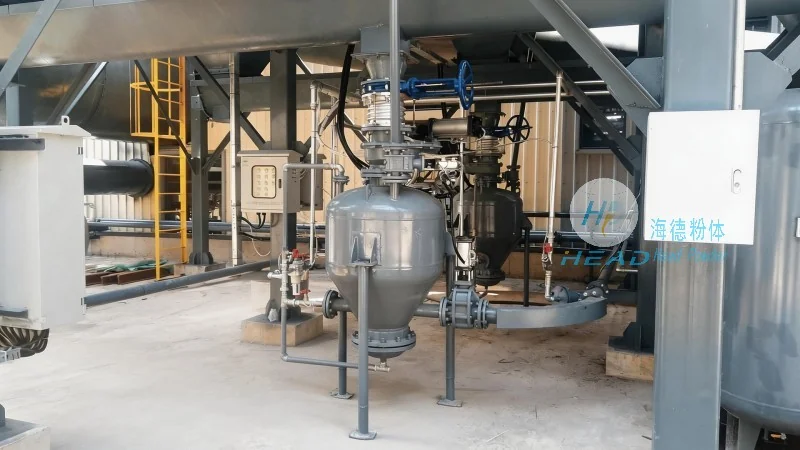
HeadPowder, an esteemed company based in Shandong, China, specializes in the design, manufacturing, and implementation of advanced powder handling equipment. With a strong commitment to innovation and quality, HeadPowder has established itself as a trusted partner for industries requiring reliable and efficient material transport solutions. The company’s headquarters is located in Shandong, China, where it leverages local expertise and resources to deliver tailored solutions that meet the unique needs of its clients.
The core of low-pressure powder pneumatic conveying lies in the creation of a controlled airflow that propels powder particles through a pipeline. The system typically consists of a blower or fan that generates the necessary air pressure, a hopper or feeder to introduce the powder, and a pipeline network that transports the material to the destination. As the powder is introduced into the pipeline, it is entrained by the air flow, forming a suspension that moves through the system. The low-pressure operation ensures that the equipment is less complex and more cost-effective compared to high-pressure systems, while still providing sufficient power to handle a variety of powder characteristics, including fine powders, cohesive materials, and those prone to caking.
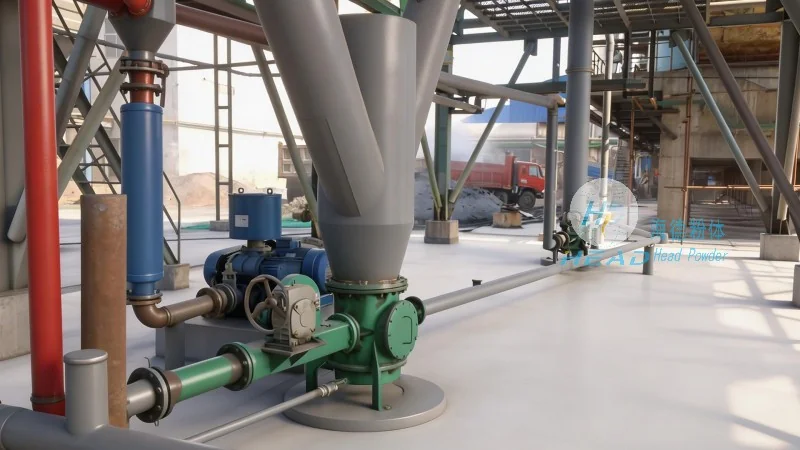
Low-pressure powder pneumatic conveying lines exhibit several distinct characteristics that make them ideal for specific industrial scenarios. Firstly, their ability to handle a wide range of powder types, from free-flowing to cohesive materials, makes them versatile for diverse applications. Secondly, the system’s flexibility in pipeline layout allows for easy integration into existing production lines or new facility designs, enabling customized solutions that adapt to the spatial constraints of the working environment. Thirdly, the low-pressure operation reduces energy consumption and operational costs, making it a cost-effective choice for long-term material transport needs. Additionally, the system’s ability to maintain a consistent flow rate and prevent material degradation during transport ensures product quality and process reliability.
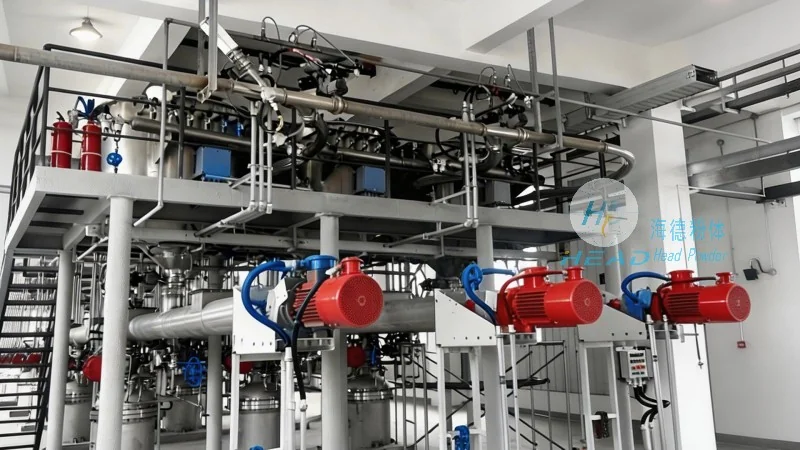
Low-pressure powder pneumatic conveying systems are widely employed across various industries, including food processing, pharmaceuticals, chemicals, and mining. In the food industry, for example, these systems are used to transport ingredients such as flour, sugar, and spices, ensuring hygienic and efficient handling that meets stringent quality standards. In the pharmaceutical sector, the systems are employed to move active pharmaceutical ingredients (APIs) and excipients, where contamination control and product purity are paramount. The chemical industry utilizes low-pressure conveying for transporting powders like pigments, catalysts, and reagents, while the mining industry leverages the technology to transport ore and other bulk materials from processing plants to storage or further processing facilities.
Implementing low-pressure powder pneumatic conveying lines offers several advantages, including reduced maintenance requirements due to the simpler system design, lower energy consumption compared to high-pressure systems, and the ability to handle a broader range of powder properties. However, it is essential to consider factors such as the specific characteristics of the powder being transported (e.g., particle size, moisture content, and flowability), the required distance and flow rate, and the available space for pipeline installation. Proper system design and material selection are critical to ensure optimal performance and longevity of the equipment. HeadPowder, with its expertise in powder handling, provides comprehensive consultation and tailored solutions to address these considerations, ensuring that clients achieve efficient and reliable material transport.

 Shandong Headpowder Engineering Co., Ltd.
 156-6277-7102(Manager Zhang)
  0531-83386006
  Zhangqiu District, Jinan City, Shandong Province, China
telephone
WeChatconsult
top