With more than 10‑year industry experience, Shandong Headpowder delivers full‑service pneumatic‑conveying systems and blowers, undertaking nationwide turn‑key powder‑handling projects.
For industrial applications that require the efficient and reliable transport of catalyst powders, understanding the underlying principles and operational characteristics of specialized conveying systems is crucial. This article delves into the technical aspects of catalyst powder conveying lines, exploring how these systems function and the specific scenarios where they excel in material handling.
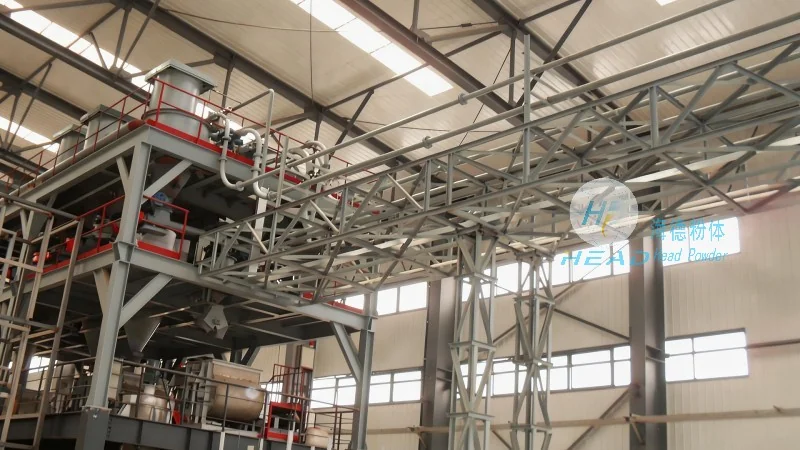
At Shandong HeadPowder Engineering Co., Ltd., based in Shandong, China, we specialize in the design and implementation of advanced powder handling solutions. Our expertise lies in creating customized conveying systems tailored to the unique demands of catalyst production and processing. Catalyst powders, often used in chemical reactions as catalysts to accelerate processes, require precise handling to maintain their integrity and effectiveness. Conventional methods may struggle with issues such as dust generation, material degradation, or inefficient transport, making specialized conveying lines essential for optimal performance.
The fundamental principle behind catalyst powder conveying lines is the use of controlled, low-energy methods to move powders from one location to another without compromising their quality. Unlike traditional bulk material handling, which may involve high-velocity air or mechanical forces that can degrade the powder's structure, our systems employ gentle yet effective mechanisms. The primary goal is to ensure that the catalyst particles remain intact, preserving their surface area and catalytic activity. This is achieved through a combination of vacuum or pressure differential systems, often integrated with specialized ducting and filtration components. The design of these lines prioritizes minimizing particle attrition, preventing agglomeration, and maintaining consistent flow rates, all of which are critical for maintaining the powder's performance in downstream processes.

Each application of catalyst powder conveying lines presents distinct characteristics that influence system design and performance. The following scenarios highlight the versatility and adaptability of our solutions:
1. Continuous Production Lines: In large-scale chemical plants, where catalysts are used in continuous reaction processes, the conveying line must support uninterrupted material flow. This requires high-capacity systems capable of handling large volumes of powder at consistent speeds. The design often includes multiple feed points, variable speed drives, and real-time monitoring to ensure seamless integration with production schedules. The system must also be robust enough to withstand continuous operation, with minimal maintenance requirements to avoid downtime.
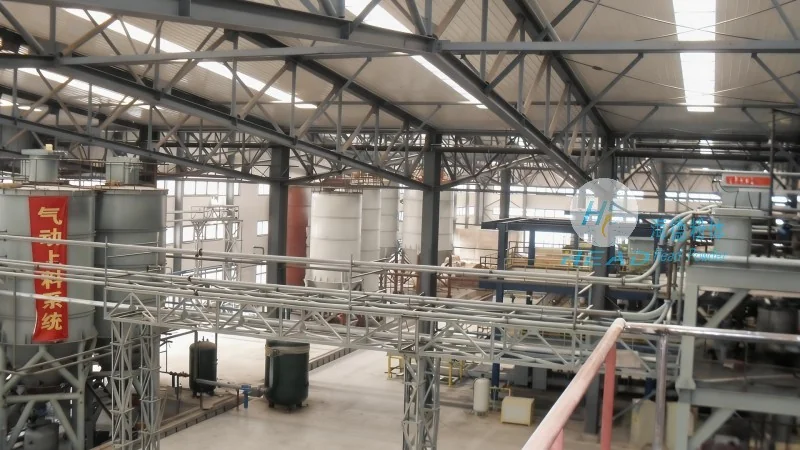
2. Batch Processing Environments: For applications involving batch production or laboratory-scale testing, the conveying line needs to be flexible and capable of handling smaller quantities with precision. These systems may incorporate adjustable flow controls, sampling mechanisms, and quick-disconnect connections to facilitate efficient batch handling. The focus here is on accuracy and reproducibility, ensuring that each batch of catalyst is transferred without contamination or loss.
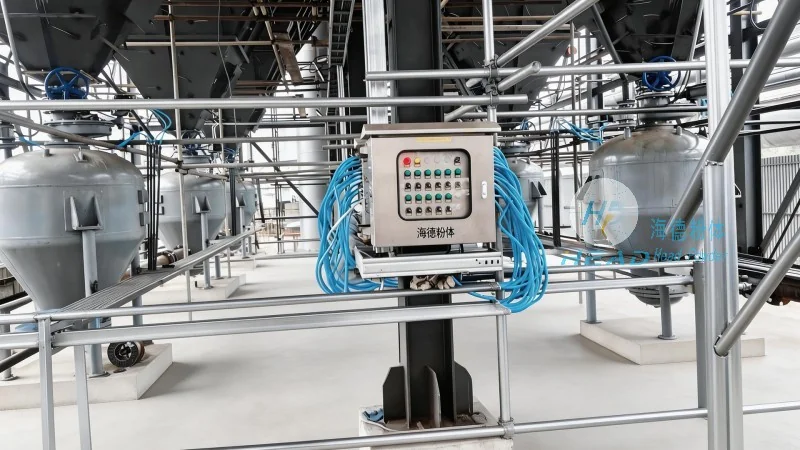
3. Vertical and Horizontal Transport Challenges: Catalyst powders often need to be transported over significant vertical or horizontal distances, requiring systems that can handle both elevation changes and long runs. Our solutions address these challenges through the use of inclined ducts, rotary airlock valves, and pressure vessels that maintain consistent material flow. The design considers factors such as gravitational effects, air pressure, and particle size distribution to optimize transport efficiency. For vertical lifts, specialized vacuum lifters or pressure boosters are employed to overcome the force of gravity, while horizontal systems utilize airlocks and rotary valves to control flow direction and prevent backflow.
4. Integration with Downstream Equipment: Catalyst powder conveying lines are often part of a larger processing system, connecting to reactors, mixers, or storage silos. The design must ensure seamless integration with downstream equipment, maintaining consistent flow rates and particle size distribution. This involves matching the conveying line's output parameters with the input requirements of the next stage, such as adjusting air flow rates or particle velocity. The system may also include pre-treatment components, like classifiers or de-dusters, to further refine the powder before it reaches the processing equipment, ensuring optimal performance in the final application.

 Shandong Headpowder Engineering Co., Ltd.
 156-6277-7102(Manager Zhang)
  0531-83386006
  Zhangqiu District, Jinan City, Shandong Province, China
telephone
WeChatconsult
top