With more than 10‑year industry experience, Shandong Headpowder delivers full‑service pneumatic‑conveying systems and blowers, undertaking nationwide turn‑key powder‑handling projects.
HeadPowder, a leading manufacturer based in Shandong, China, specializes in the design and production of pneumatic conveying equipment tailored for cement and other dry powder materials. This article delves into the working principle and key features of such equipment, providing a comprehensive overview for industry professionals seeking reliable solutions for material handling.
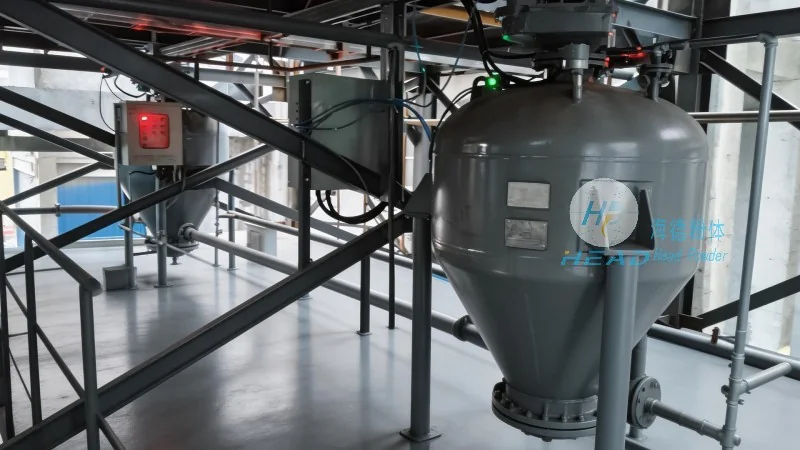
Pneumatic conveying systems are essential in modern industrial applications, particularly for transporting cement and other fine dry powders. These systems utilize air or gas as the conveying medium to move bulk materials from one location to another without the need for mechanical components like belts or buckets. The technology offers significant advantages in terms of efficiency, safety, and environmental friendliness compared to traditional methods.
The core mechanism of pneumatic conveying equipment involves the creation of a pressure differential between the inlet and outlet of the system. In a typical positive pressure system, a blower or compressor generates high-pressure air that is introduced into the material hopper. As the air flows through the pipeline, it entrains the dry powder particles, forming a dense mixture known as a "pneumatic stream." The air and powder mixture is then transported through the pipeline to the discharge point, where the air is separated from the powder and either recirculated or vented. The pressure differential ensures that the powder is continuously drawn from the source and delivered to the destination, maintaining a consistent flow rate.

Several critical features make pneumatic conveying equipment ideal for cement and similar dry powders. Firstly, the system offers high efficiency in material transport, with the ability to handle large volumes of material over long distances with minimal energy consumption. Secondly, it provides excellent dust control and environmental protection, as the enclosed pipeline system prevents dust emissions and ensures compliance with industrial safety standards. Thirdly, the equipment is highly flexible, allowing for easy integration into existing production lines and adaptation to varying material flow rates. Additionally, the system is relatively simple in structure, requiring fewer moving parts compared to mechanical conveyors, which reduces maintenance costs and enhances operational reliability. Finally, pneumatic conveying is a clean and hygienic method, suitable for applications where product contamination must be strictly avoided, such as in food processing or pharmaceutical industries, although this specific application focuses on cement.
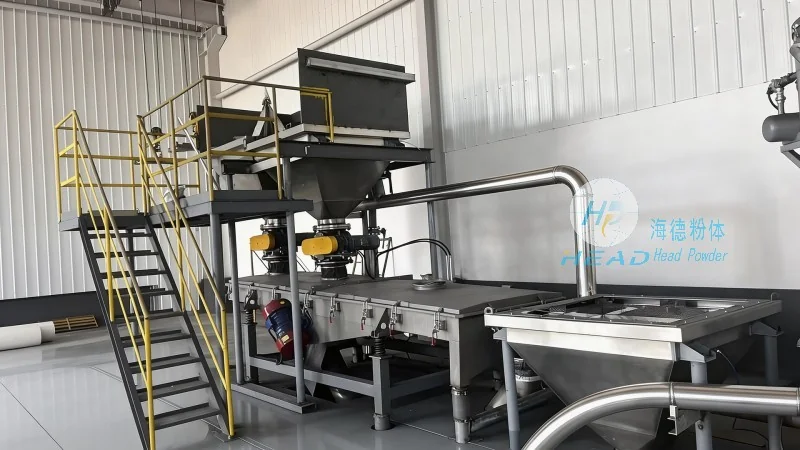
In the cement industry, pneumatic conveying equipment is widely used for transporting raw materials, clinker, and finished cement products. The technology enables seamless integration between different production stages, such as from raw material storage to the clinker grinding plant, and from the clinker storage to the cement packaging facility. The benefits extend beyond material transport, as the system also contributes to improved plant safety by eliminating the need for manual handling of bulk materials, reducing the risk of accidents and occupational health hazards. Furthermore, the enclosed system minimizes the risk of material spillage and contamination, maintaining product quality and consistency throughout the supply chain.
HeadPowder's pneumatic conveying equipment for cement dry powder materials exemplifies advanced engineering and practical application. By understanding the working principle and leveraging the key features of these systems, cement manufacturers can achieve efficient, safe, and environmentally responsible material handling solutions. The company's commitment to quality and innovation ensures that their equipment meets the demanding requirements of the cement industry, providing reliable performance and long-term value to clients in Shandong and beyond.

 Shandong Headpowder Engineering Co., Ltd.
 156-6277-7102(Manager Zhang)
  0531-83386006
  Zhangqiu District, Jinan City, Shandong Province, China
telephone
WeChatconsult
top